
Mistake Recovery / Rescue guide
Dry chicken rescue
What to do when cooked chicken is dry: slicing, saucing, folding into wet dishes and avoiding more heat damage.
How to use this guide as a complete beginner
When something goes wrong, pause before adding more ingredients. Turn down heat, move the pan if needed, and identify the problem in plain words: too salty, too wet, too thick, burnt, split, bland or dry.
Look for the main failure first. Is the texture wrong, the flavour wrong, or the heat wrong? Fixing the wrong problem can make the dish harder to rescue.
Make one correction at a time and taste after it is mixed in. Rescue cooking is calm diagnosis, not panic adding.
Go slowly enough to notice
Speed hides information. The first few attempts are for seeing the change, hearing the sound, naming the texture and learning what happens when you adjust.
Use the image as a checkpoint
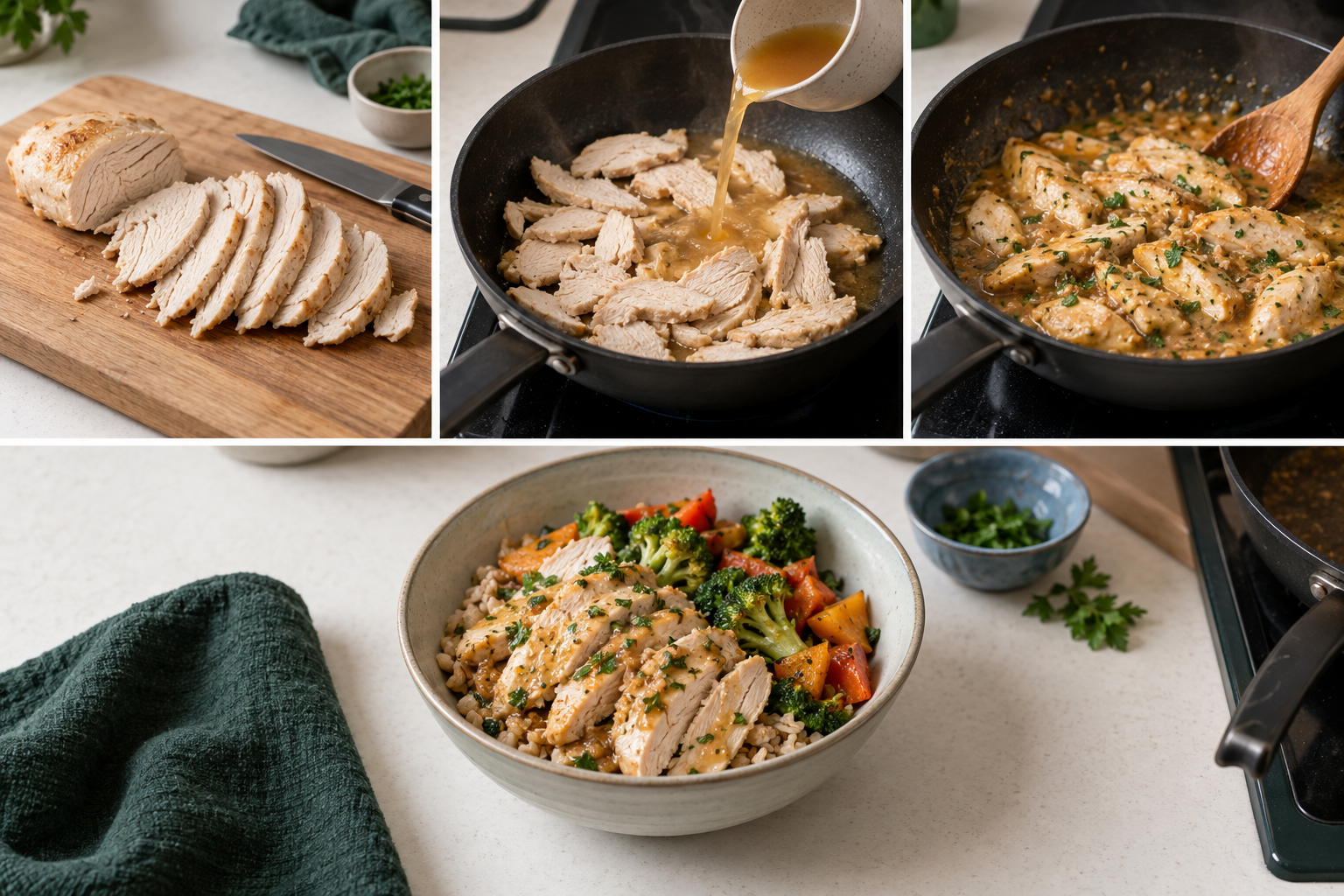
The linked KINALO image is not decoration. Compare it with your pan, board, bowl or tool so you know what stage you are looking for.
Good enough counts
Beginner cooking improves through repeatable attempts. If the food is usable and you learned the cue, the guide has done its job.
First-attempt checklist
Read the whole guide once before starting, then choose the smallest useful version of the task. Put the tools and ingredients where you can reach them. Decide what you will watch for first, such as colour, sound, texture, thickness, smell or how easily food moves.
During the attempt, change only one thing at a time. If the heat feels wrong, fix the heat before adding more ingredients. If the texture feels wrong, name the texture before trying to correct the flavour. This keeps the lesson clear.
Afterwards, write down one sentence: what worked, what changed too quickly, or what you would do earlier next time. That note matters more than a perfect result because it turns one cooking attempt into the next useful attempt.
If you only remember one thing, remember the cue rather than the instruction. Recipes tell you what to do; cooking confidence comes from recognising what is happening. Once you can name the cue, you can slow down, adjust and recover with less guesswork next time.
Dry chicken cannot become uncooked again
Dry chicken has lost moisture or been cooked longer than ideal. You cannot fully reverse that texture, but you can change how it is served so each bite feels less dry.
This guide is about rescuing chicken that is already cooked. Food-safety advice needs proper source-checked wording before publishing detailed temperature claims.
Make the pieces easier to eat
- Slice thinly across the grain if possible.
- Chop or shred it instead of serving a thick dry piece.
- Fold it into sauce, soup, curry, stew, pasta or rice.
- Add moisture around it rather than cooking it hard again.
- Use it in sandwiches or wraps with yoghurt, mayo, salsa or dressing.
Avoid making it worse
Do not put dry chicken back over high heat for a long time. Warm it gently in sauce or add it near the end of a dish so it does not dry further.