
Sauces
Make a simple tomato sauce from passata
A first sauce without chopping: learn a gentle simmer, watch thickness change and season a small quantity before serving.
Before you begin
- How to use hob heat without guessingFind the control and learn how your pan responds.
- Measuring accurately without stressMeasure the passata, water and oil before heating.
What you are making
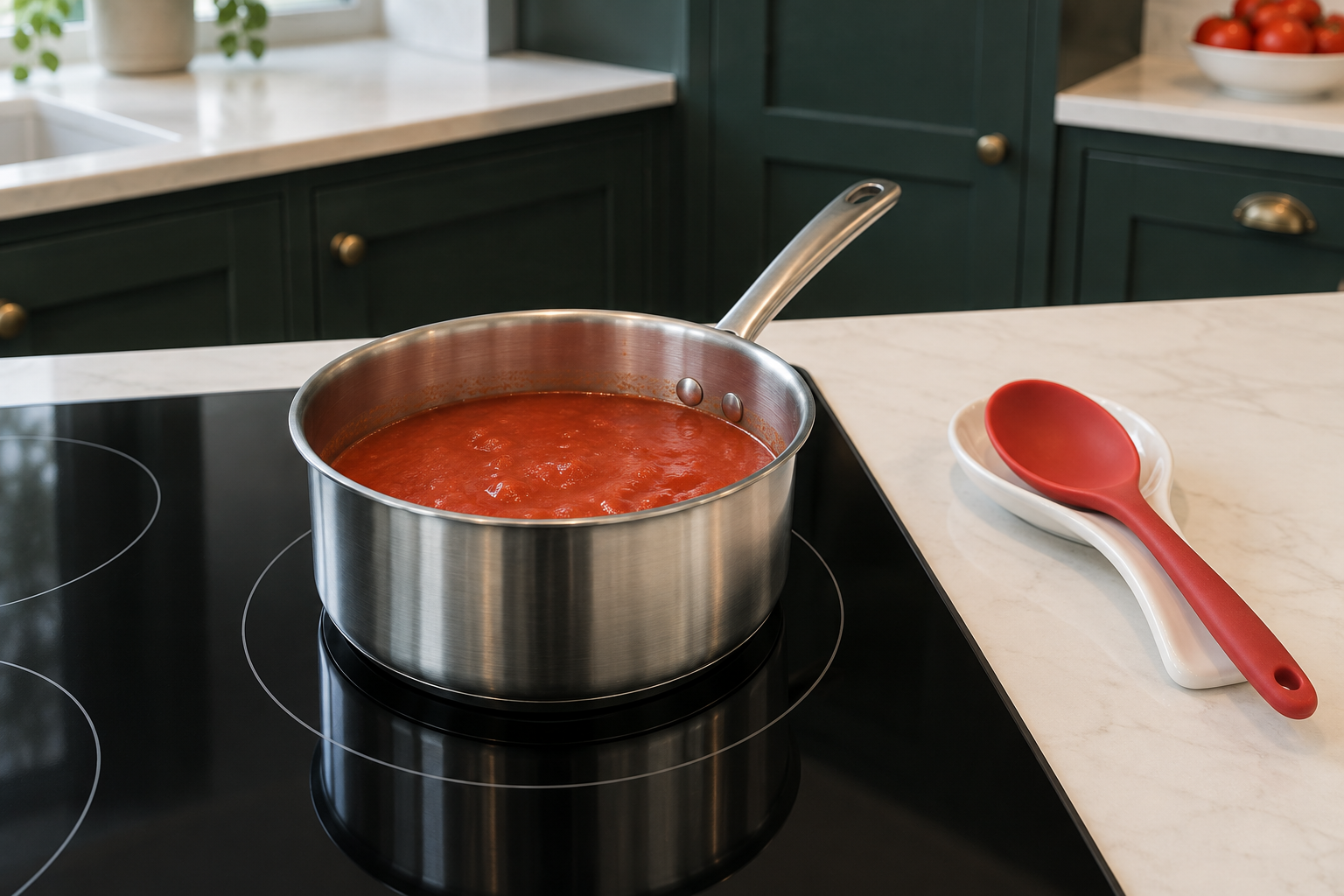
Passata is strained tomato, normally smooth and pourable. It is not concentrated tomato puree from a small tube. This practice makes enough sauce for roughly two modest pasta portions, depending on how much sauce you like. It leaves out onion and garlic so you can learn simmering without doing several new jobs at once.
Allow about 20 minutes including preparation, plus any pasta cooking time. You need a saucepan holding at least 1 litre, a wooden or heat-resistant silicone spoon, scales for the passata, a measuring jug or measuring spoons for the water, a lid to sit partly over splashes if needed, clean tasting spoons and a saucer. Put a trivet beside the hob and have dry oven gloves for a hot handle or lid. Leave generous headroom; this is a small sauce quantity, not a full pan.
Ingredients for the practice
- 250 g plain passata, not a strongly seasoned ready-made sauce.
- 1 teaspoon olive or rapeseed oil; 2 tablespoons water (30 ml).
- Optional: 1/4 teaspoon dried oregano and a small pinch of fine salt to adjust at the end. Check the passata's salt content first.
- To serve: separately cooked pasta, cooked beans or bread. The sauce method does not include cooking those foods.
Cook the sauce gently
- Simmer versus boilRecognise gentle bubbles instead of a hard boil.
- Stir, whisk, fold and turn: four different movementsMove the spoon across the base so sauce does not catch.
- Wash your hands and check the saucepan and spoon are clean. Open the passata using the pack's opening method and measure 250 g. Refrigerate the unused portion as its label directs.
- Put the passata, water, oil and optional oregano in the cold saucepan. Stir them together. There is no need to preheat oil for this version.
- Place the pan on a matching ring with its handle away from the edge. Set medium-low heat and stir across the bottom every minute while it warms.
- When small bubbles begin to break the surface, lower the heat enough to keep gentle occasional bubbling. A thick sauce may spit; step back, lower the heat and partly cover with the lid if necessary, leaving a gap for steam. Use dry gloves as needed. To lift the lid, open its far edge first so steam escapes away from your face, tilt condensation back into the pan and place the lid on the trivet.
- Cook gently for about 10 to 15 minutes after bubbling begins, stirring across the base and edges every minute or two. The sauce should gradually lose its raw tomato smell and become a little thicker.
- Put a small spoonful onto a clean spoon or saucer, let it cool and taste. Do not taste from the stirring spoon and return it to the shared pan. Add a small pinch of salt only if needed, stir and retaste with a clean spoon.
- Switch off when the flavour is pleasantly tomato-like and the sauce coats the spoon but still falls from it. Serve with the prepared food, or keep off the heat briefly while you finish the immediate next step.
Too thick, too thin or sharp?
If a spoon leaves a dry-looking trail and the sauce barely moves, add one tablespoon water, stir and reassess. If watery liquid pools around the tomato, simmer uncovered a little longer at low heat, checking and stirring often. Do not increase the heat just to finish faster.
A sharp tomato flavour may need a little longer gentle cooking. If the texture is already right, try a few drops of oil in a cooled sample and compare. A small amount of sugar is an optional flavour choice, not a way to repair burnt sauce. For a scorched base, move unburnt sauce to a clean pan without scraping; if it tastes bitter or smoky, start again.
Finish a first plate of pasta
- Pasta doneness: why tasting mattersCook and check the pasta before combining it.
- Pasta water and sauce clingBring the cooked pasta and sauce together.
Make the sauce first, then switch off and cover while you cook the pasta in the same cooking session. This short pause is not a way to store sauce for later. For a two-portion meal use 160 g dried pasta and the larger pan and water quantity directed in the pasta lesson; for one 80 g portion, use roughly half this sauce and begin cooling the other half promptly.
After draining, return the pasta to its empty warm cooking pan, off the heat on a trivet. Warm the sauce separately over medium-low heat, stirring until steaming throughout, then switch off. Carefully pour the sauce over the pasta, protecting your hand from a hot handle. The finishing lesson explains the brief low-heat mixing and tablespoon-by-tablespoon water adjustment. Keep this a continuous preparation; if plans change, cool and refrigerate promptly using the storage lesson.
Store what you are not eating
- Storage and reheating basicsCool, label and reheat a portion safely.
Portion leftover sauce into clean shallow containers, cool promptly and refrigerate within one to two hours. Use within 48 hours or freeze. Reheat only once until steaming hot throughout, stirring so the centre heats as well as the edges. A mixed rice dish needs the shorter rice storage limits rather than the sauce's limit.