
Essentials / Source-checked guide
Storage and reheating basics
A beginner overview of cooling, labelling, fridge organisation and reheating without pretending every food follows the same rule.
How to use this guide as a complete beginner
A tool is useful when it makes a repeated job safer, clearer or easier. Before buying or using equipment, ask what job it does and where it will live when you are finished.
Notice whether the tool feels stable, cleanable and comfortable. If it wobbles, slips, hides in a cupboard or takes too much effort to clean, it may not help a beginner cook more often.
Use one tool for several real meals before deciding you need a more specialised version. Familiarity beats clutter.
Go slowly enough to notice
Speed hides information. The first few attempts are for seeing the change, hearing the sound, naming the texture and learning what happens when you adjust.
Use the image as a checkpoint
The linked KINALO image is not decoration. Compare it with your pan, board, bowl or tool so you know what stage you are looking for.
Good enough counts
Beginner cooking improves through repeatable attempts. If the food is usable and you learned the cue, the guide has done its job.
First-attempt checklist
Read the whole guide once before starting, then choose the smallest useful version of the task. Put the tools and ingredients where you can reach them. Decide what you will watch for first, such as colour, sound, texture, thickness, smell or how easily food moves.
During the attempt, change only one thing at a time. If the heat feels wrong, fix the heat before adding more ingredients. If the texture feels wrong, name the texture before trying to correct the flavour. This keeps the lesson clear.
Afterwards, write down one sentence: what worked, what changed too quickly, or what you would do earlier next time. That note matters more than a perfect result because it turns one cooking attempt into the next useful attempt.
If you only remember one thing, remember the cue rather than the instruction. Recipes tell you what to do; cooking confidence comes from recognising what is happening. Once you can name the cue, you can slow down, adjust and recover with less guesswork next time.
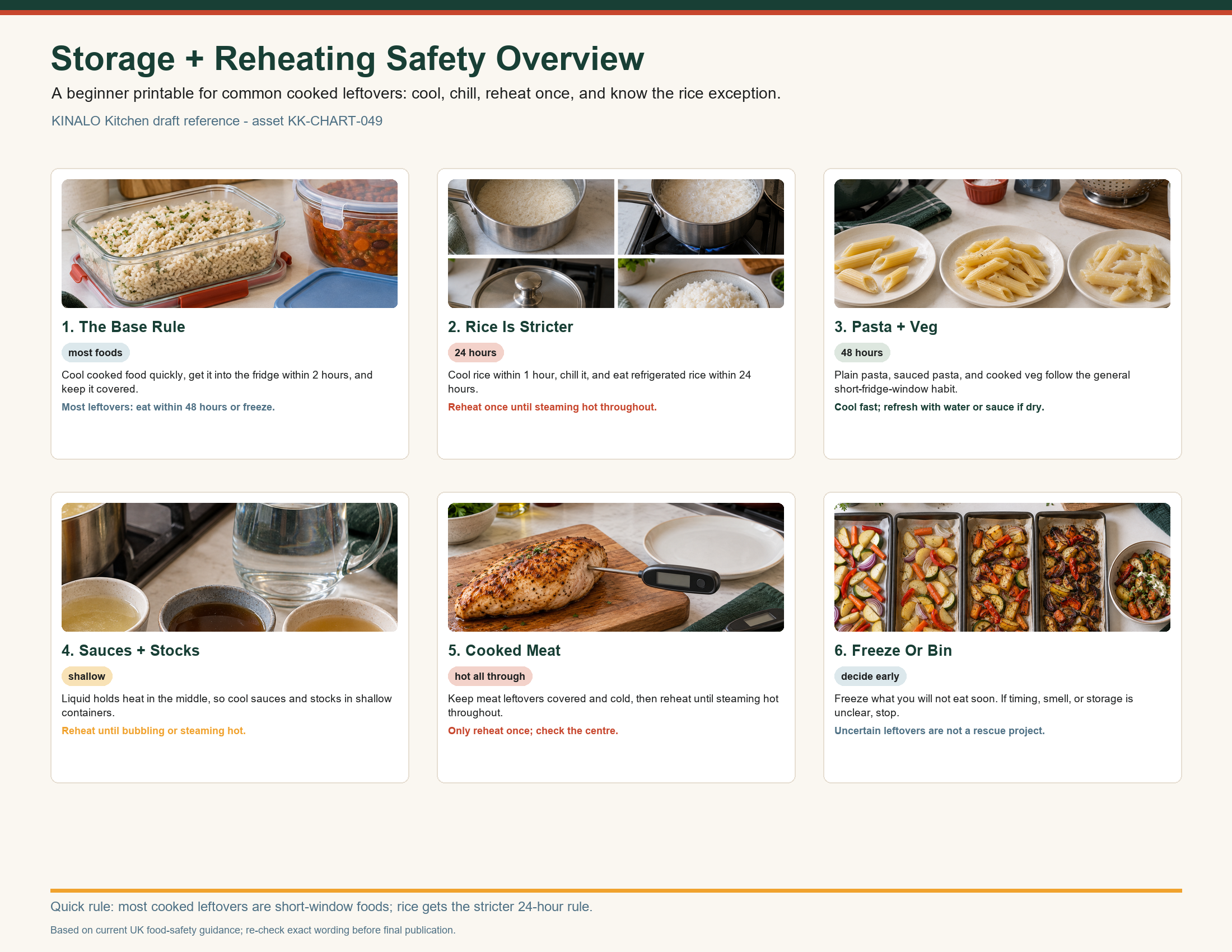
Leftovers are a system
Leftovers are useful only if you can trust them later. That means cooling, storing, labelling and reheating need to be part of the cooking process, not an afterthought when you are tired.
Beginner leftover flow
- Cool food sensibly and do not leave it forgotten on the side.
- Move it into a clean container.
- Label it if you will not remember what it is or when it was made.
- Store it where it will stay cold and visible.
- Reheat appropriately for the food, using official guidance where safety matters.
Fridge visibility helps
A use-first box or front shelf zone helps you see what needs eating. Food hidden behind jars is more likely to become waste.
Source-checked notes
This guide includes food-safety or confidence guidance checked against the sources below. Use official guidance first where safety matters.