
Flavour
Which salt to use and when to add it
Use fine and flaky salt deliberately, understand why spoon measures differ and season without losing track of the total.
Before you begin
- Make a simple tomato sauce from passataMake the complete plain sauce used for the flavour practice.
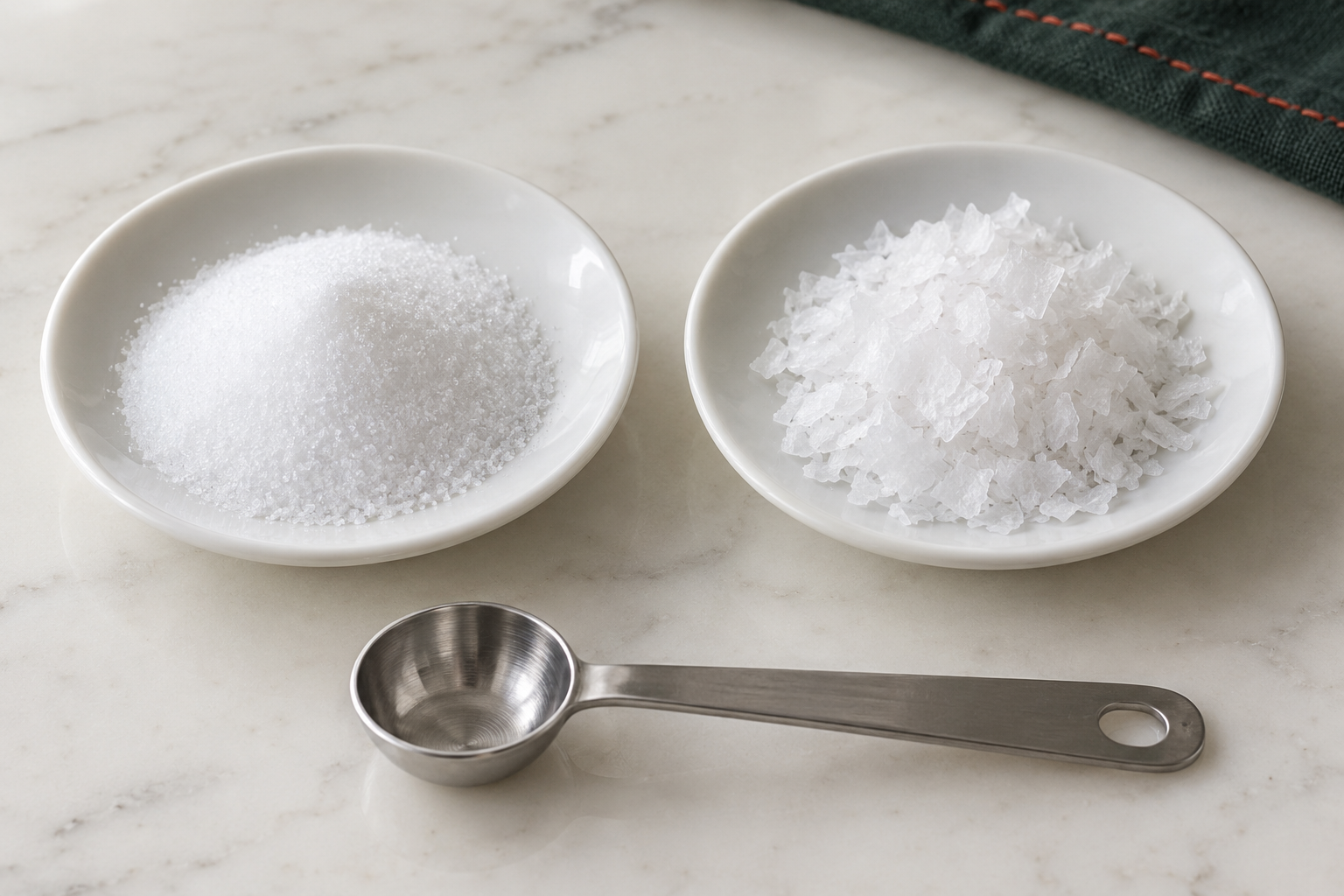
Sea salt is not automatically the wrong choice
Fine and flaky describe crystal size, not two rules for good and bad cooking. Fine cooking salt dissolves readily and gives a more repeatable level spoonful than loose flakes. Thin large flakes can give a crunchy salty moment on a finished surface. You can learn with one familiar fine salt; an expensive collection is not required.
Changing crystal size can change the weight in the same teaspoon. A loose spoonful of flakes need not equal a spoonful of fine salt. Follow a recipe's named type or specified weight; do not apply one brand's conversion chart to all salts. Morton explicitly limits its published conversions to its own products. More attractive crystals are not a reason to use more salt.
A simple starting kit
- Read food labels before you cookCheck existing seasoning in the actual sauce ingredients.
- Make a simple tomato sauce from passataGather and cook the full first sauce.
- For the first task, prepare the complete small passata sauce: 250 g plain passata, 1 teaspoon oil and 30 ml water, with optional oregano and salt left out. Gather that lesson's full pan, measure, stirring, lid, timer, glove and trivet equipment.
- Have your familiar fine salt, a clean dry small salt dish, a heat-safe stirring spoon, clean tasting saucer and several clean tasting spoons, plus a note of any salt listed in the passata. Do not taste from the pan spoon and return it.
- Flaky salt is optional for the later potato surface comparison, not required for the sauce. Keep it dry and closed as its label directs. The two comparisons teach different jobs, so do not add both salts to the first sauce.
Season a two-portion tomato sauce
- Make a simple tomato sauce from passataCook to the full flavour and texture stopping point first.
- Seasoning food without guessingCompare an alternative without changing the whole pan.
- Storage and reheating basicsFollow the full shallow-portion cooling and labelling routine.
- Fully cook the measured plain sauce using its complete gentle-simmer method. Switch off and park the pan level on the trivet with dry gloves for a hot handle. Transfer a small spoonful to the clean saucer, let it cool and taste with a separate clean spoon.
- If it already tastes pleasantly seasoned, stop; no addition is required. If muted and not already salty, put a little fine salt into the dry dish. With clean dry finger and thumb, pick up just a few grains, not a piled pinch, and add to the pan. Close the main salt container. A few grains are a cautious first adjustment; a pinch is not a precise teaspoon measure.
- Stir across the base and through the whole sauce with the heat-safe spoon. Wait around 30 seconds for the small grains to disperse and dissolve in the warm sauce. Take a fresh sample to the cleaned saucer, cool and taste with a clean spoon.
- Compare tomato flavour and saltiness separately. Repeat one small addition only while it helps. Stop before salt becomes the dominant flavour. If it is already salty but still disappointing, do not add another pinch by habit; check cooking, texture or a separate flavour comparison.
- Serve promptly with ready-to-eat bread for the single-hot-task practice, or use the complete pasta finish. If saving sauce, reserve it promptly and follow cooling from when cooking finished. Never return a tasted spoonful to the main pan. On the next attempt, note the product and number of small additions rather than assuming every passata has the same starting salt.
Earlier and later seasoning
- Pasta doneness: why tasting mattersFollow the measured pasta method before seasoning cooking water.
- Stock cubes, stock pots and strengthAccount for salt already in stock and later reduction.
Cooking water can season pasta during cooking; the complete pasta method sets out its optional salt rather than requiring a new guessed spoonful here. Salt in stock, cheese or a topping also counts. Taste the final combination before adding a finishing pinch.
In a soup or sauce, water can evaporate while salt remains. If you already seasoned and then keep reducing, check again at the end instead of repeating the first amount automatically. Cautious earlier seasoning leaves room for that final choice. Do not keep a sauce bubbling while distracted by a tasting experiment.
What about steak?
- Steak: browning, turning and restingRead the whole separate meat method before preparing a steak.
Salt timing changes with the food and method. For a later steak practice, follow its full raw-food handling, surface preparation, heat and centre-check instructions; salt alone is not a browning or safety method. If a method calls for advance seasoning, keep raw meat refrigerated for the specified interval rather than leaving it on the worktop for hours.
Learn sauce seasoning first if the meat-handling and pan-cooking tasks are unfamiliar. The steak guide is a separate later lesson, not something you must complete while the tomato sauce is waiting.
A useful practice
- Roast potato texture: from hard centres to crisp edgesPrepare, roast and check the full potatoes before comparing seasoning.
- Storage and reheating basicsFollow the full shallow-portion cooling and labelling routine.
- For the later texture comparison, make the complete roast-potato practice without optional salt. Set out a stable clean plate, fork, table knife, small dry salt dishes and optional flaky salt before cooking. Use the roasting lesson's full hot-tray, timing and centre-check equipment; this is not a way to taste raw potatoes.
- Once fully cooked, serve onto the stable plate, switch off the oven and let a few pieces cool enough to handle with utensils and taste. With the fork holding each piece and the table knife moving on the plate away from your hand, cut three small bite-sized pieces. Do not hold a hot potato in your fingers.
- Leave one piece plain. Add just a few fine grains to the second. If using flakes, place one small flake on the third with clean dry fingers. Taste the separate cooled bites and notice even saltiness versus an occasional surface crunch. Keep mouth-used utensils out of food other people will eat.
- Do not heavily season the whole tray for this comparison. The first task here is the sauce; this later practice shows when an optional different crystal texture is useful. Store untouched saved potatoes promptly using their complete cooling routine.
Sources and further reading
- Morton Salt: crystal size, density and product-specific conversions
- Maldon Salt: flakes for cooking and a finishing crunch
- Escoffier School of Culinary Arts: the roles of salt, fat, acid and heat
- GOV.UK: allergen labels and ingredients
- Food Standards Agency: cooking and reheating food
- Food Standards Agency: chilling, freezing and defrosting