
Flavour
Seasoning food without guessing
How to taste food, name what is missing, and adjust with salt, acid, fat, heat, herbs or sweetness one step at a time.
Before you begin
- Make a simple tomato sauce from passataMake a safely cooked plain sauce for the tasting practice.
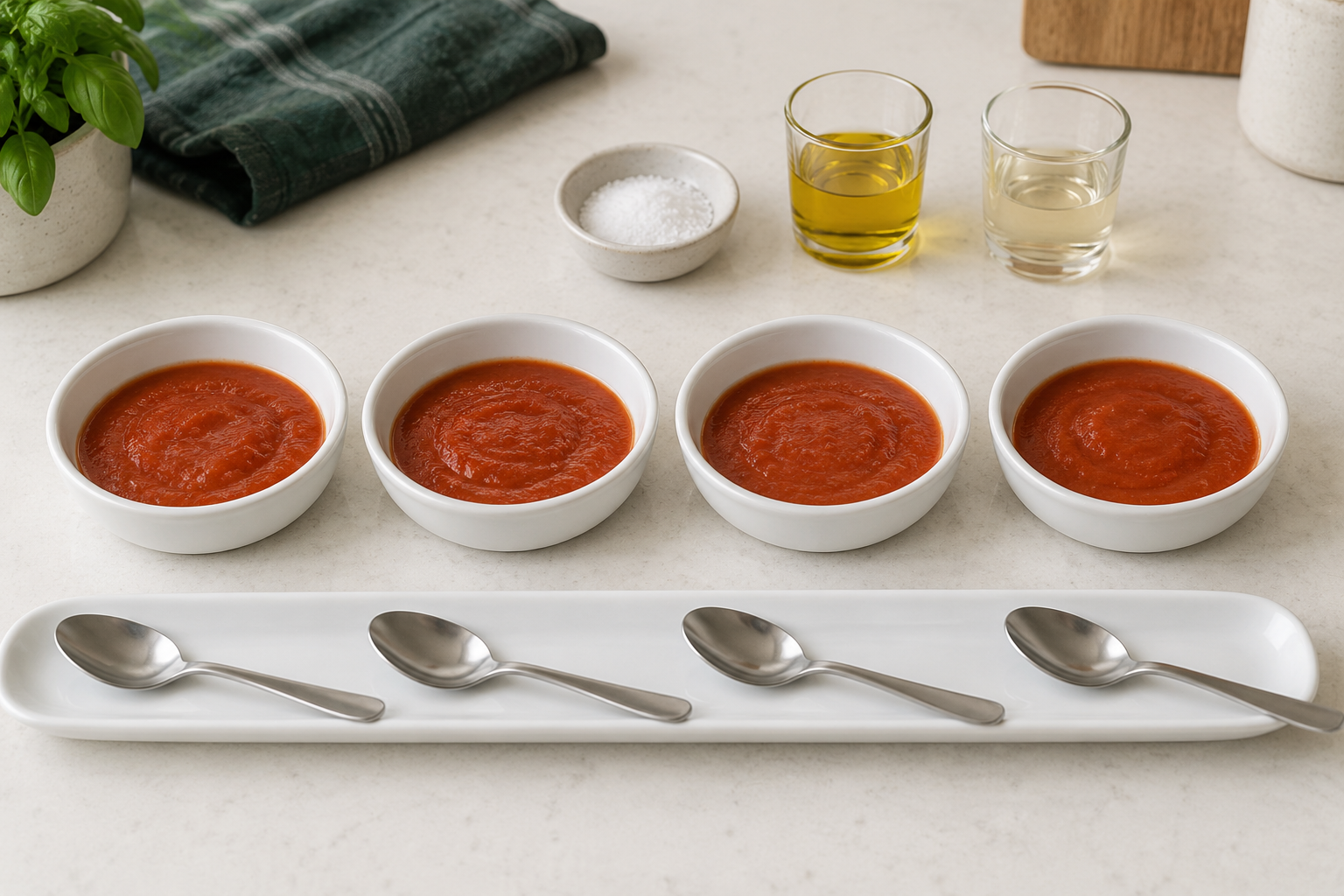
Seasoning starts with a clear taste
Seasoning is adjusting flavour, not simply adding salt. Begin with an ordinary description: muted tomato flavour, too sharp, too salty, pleasantly rich or unpleasantly greasy. You do not need professional tasting vocabulary. A watery sauce may need a texture correction before another ingredient.
Use freshly and completely cooked food for this practice. Do not taste raw meat mixtures or uncooked flour batter. Let hot samples cool before tasting; a fresh clean spoon for each mouthful keeps saliva out of shared food. Seasoning cannot correct unsafe storage or unfinished cooking.
Set up a small flavour practice
- Read food labels before you cookCheck the actual sauce, oil and acid ingredients.
- Measuring accurately without stressDistinguish spoon volume from ingredient weight.
- Make one fresh small sauce with the required passata lesson: 250 g plain passata, 1 teaspoon oil and 30 ml water. Leave out its optional oregano and final salt so the comparisons are easier to notice. Read its complete pan, simmering and tasting procedure first.
- In addition to that lesson's equipment, have four small bowls or saucers, a clean 15 ml tablespoon measure, 5 ml teaspoon and 1/4 teaspoon measure, a small clean dry salt dish and separate clean spoons for mixing each sample. Have at least four clean tasting spoons; wash them fully before another round, not just a quick wipe. Put used mouth-contact spoons in a separate washing-up area.
- Choose fine salt, food-grade cider or wine vinegar or bottled lemon juice, and olive or rapeseed oil suitable to eat in this amount. Check labels and suitability. Bottled juice avoids a new lemon-cutting task. The vinegar is food, not a cleaning product. Do not use all the available flavourings in the whole pan.
- Arrange and name the bowls in a note: plain, salt, acid and oil. Use 2 measured tablespoons sauce, 30 ml, in each. Four samples take 120 ml out of the sauce: the remaining pan is smaller than the original batch. Do not assume that 250 g passata gives exactly 250 ml finished sauce.
Taste, change and compare
- Make a simple tomato sauce from passataComplete cooking before beginning comparisons.
- Storage and reheating basicsFollow the full shallow-portion cooling and labelling routine.
- Prepare the cold equipment first, then fully cook the plain sauce. Switch off and put its pan securely on the trivet, with dry gloves for a hot handle. Keep it off the heat throughout the comparisons, so it does not reduce while you taste.
- Use the clean tablespoon to divide 2 tablespoons into each bowl. Let the shallow samples cool to a comfortable tasting temperature. Leave the first unchanged. Do not use your finger to test hot sauce.
- Put a little salt into its dry dish away from the pan. With clean dry finger and thumb, pick up just a few fine grains and add them to the salt sample, then stir with its separate clean spoon. This is deliberately smaller than a heaped pinch. Close the main salt container.
- Pour a little vinegar or bottled lemon juice onto a clean teaspoon over the acid bowl, then tilt it gently to release two drops into that sample. Keep the remaining acid on the spoon out of other samples; rinse the measure before another use. Do not pour from a bottle straight into a small sample.
- Measure 1/4 teaspoon oil into the oil sample and stir with its own clean mixing spoon. Leave the plain sample free of any additions. Mixing spoons must not go into your mouth and back into the food.
- Taste a small cooled spoonful of plain sauce, then the three adjusted samples, using a fresh tasting spoon each time. Compare clearer flavour, sharper taste and richer or oilier mouthfeel. The most pleasant version can be the unchanged one. There is no requirement to like all three changes.
- Keep the main pan unchanged if you are unsure. If choosing one adjustment, start very small in what actually remains: two drops of acid, 1/4 teaspoon oil or a few fine salt grains. Stir across the whole pan, wait about 30 seconds, transfer a fresh small sample to a clean saucer, cool and retaste with a clean spoon. Repeat only if it still improves the food. Do not add all three merely because they were on the worktop.
- Finish the exercise promptly, ideally within about ten minutes of switching off. Eat or discard tasted samples separately, never returning them to the pan. Serve the remaining sauce with ready-to-eat bread, or follow the full pasta/bean method. For food you are saving, begin the cooling routine from when cooking finished, not from the last taste.
What the common adjustments do
Salt can make existing flavours more noticeable, but a food that is already salty does not need more by default. Acid supplies a sharper taste; oil changes richness and the way food feels in the mouth. Describe what you actually notice rather than assuming any one ingredient will always fix blandness.
Herbs and spices add their own aromas. Chilli heat is a different sensation from a richer or clearer flavour. Sweetness may suit a sharp sauce, but changes its flavour too. Extra fat, acid or sugar does not remove salt or make a burnt base unburnt. Use the separate deeper lessons for those questions rather than escalating every addition.
Season in stages without losing the total
- Which salt to use and when to add itUnderstand crystal size and the total salt already present.
- Stock cubes, stock pots and strengthCheck concentrate strength before adding extra seasoning.
Count salty ingredients already present, including stock, cheese, soy sauce and bought sauces. Start cautiously when a dish will lose water as it cooks. Check after the final cooking and any salty topping, not just at the beginning.
The first exercise changes a finished plain sauce with its ring off. On later meals, follow the recipe for herbs and spices that need cooking. A handful of uncooked ground spice is not the same as a few drops of food vinegar. Read the relevant technique before heating instead of stopping mid-cook to learn it.
Keep one useful note
Write the sample size, addition and result: for example, two drops of cider vinegar made a 30 ml sauce sample too sharp. A disliked change is useful information; you have learned it without changing the entire meal. Record what the main pan received separately because its size changed during sampling.
Next time change one thing, keeping the base familiar. Ingredients and preferences vary, so a previous amount is a starting point, not a universal correct dose. This tasting routine is the foundation for the separate balance and substitution exercises.