Pasta And Rice / Core skill
Pasta doneness: why tasting matters
A beginner guide to undercooked, just-right and overcooked pasta, and why the best timer is still your mouth.
How to use this guide as a complete beginner
Choose the pan, water, salt, timer, draining tool and serving bowl before the food is close to done. Pasta and rice become stressful when the draining or resting step is improvised at the last second.
Taste and look rather than trusting the clock alone. Pasta should be bitten. Rice should be checked for water, steam and grain texture. Texture is the lesson.
Make a small batch when practising. Notice what happens at underdone, just done and overdone stages. Once you can name the texture, recipes become much easier to follow.
Go slowly enough to notice
Speed hides information. The first few attempts are for seeing the change, hearing the sound, naming the texture and learning what happens when you adjust.
Use the image as a checkpoint
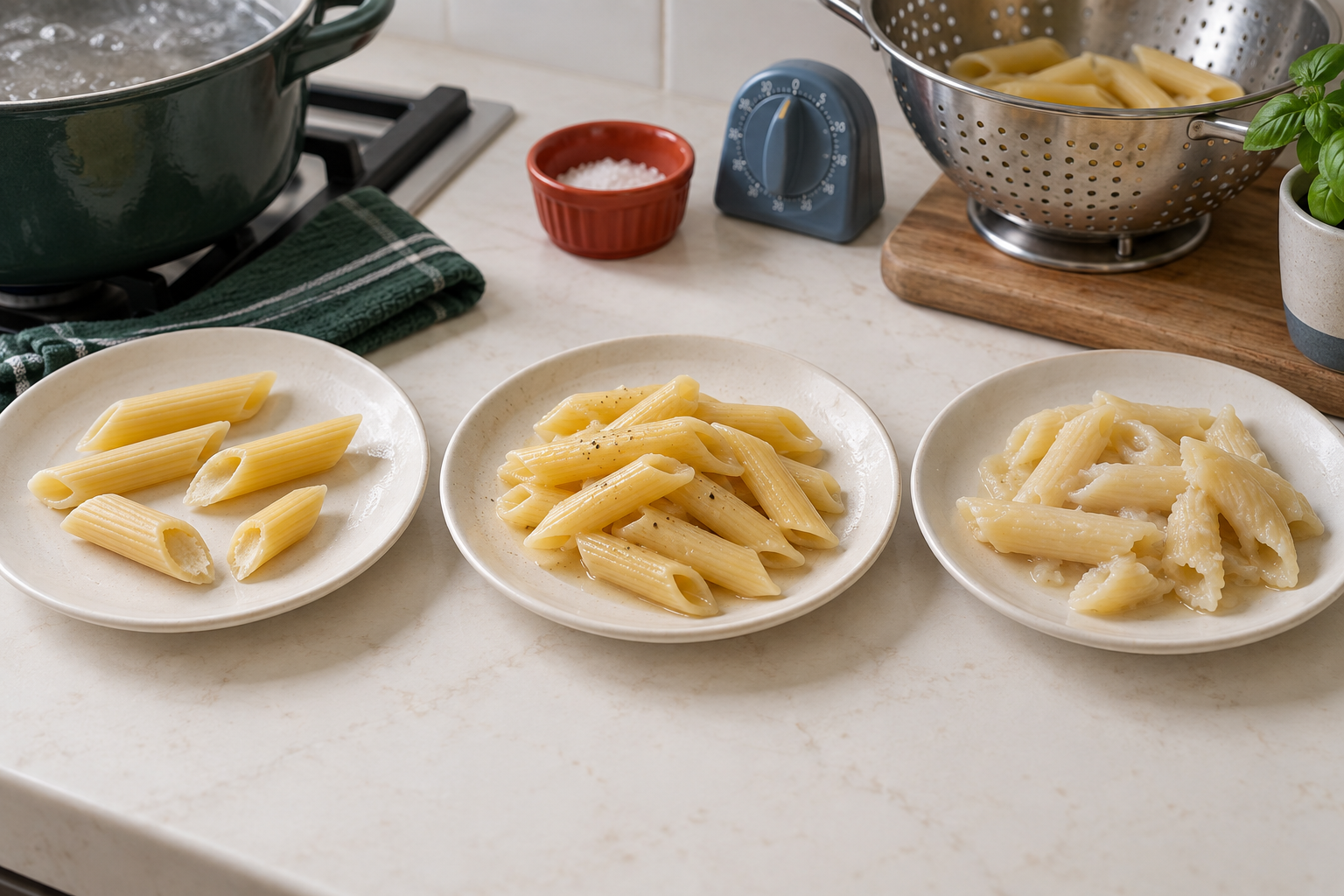
The linked KINALO image is not decoration. Compare it with your pan, board, bowl or tool so you know what stage you are looking for.
Good enough counts
Beginner cooking improves through repeatable attempts. If the food is usable and you learned the cue, the guide has done its job.
First-attempt checklist
Read the whole guide once before starting, then choose the smallest useful version of the task. Put the tools and ingredients where you can reach them. Decide what you will watch for first, such as colour, sound, texture, thickness, smell or how easily food moves.
During the attempt, change only one thing at a time. If the heat feels wrong, fix the heat before adding more ingredients. If the texture feels wrong, name the texture before trying to correct the flavour. This keeps the lesson clear.
Afterwards, write down one sentence: what worked, what changed too quickly, or what you would do earlier next time. That note matters more than a perfect result because it turns one cooking attempt into the next useful attempt.
If you only remember one thing, remember the cue rather than the instruction. Recipes tell you what to do; cooking confidence comes from recognising what is happening. Once you can name the cue, you can slow down, adjust and recover with less guesswork next time.
The packet time is a guide
Pasta packets give a useful starting time, but pan size, water amount, pasta shape and your preferred texture all matter. The only reliable way to know is to taste a piece near the end.
This is not advanced cooking. It is a basic habit that stops pasta being hard in the middle or soft and swollen.
Texture stages
- Undercooked: hard, chalky or stiff in the centre.
- Firm but cooked: tender outside with a pleasant bite.
- Soft: easy to chew but starting to lose shape.
- Overcooked: swollen, floppy, sticky or breaking apart.
How to taste safely and calmly
Lift one piece out with a fork or spoon, cool it for a moment, then bite it. If it is almost ready and you plan to finish it in sauce, drain slightly earlier than if you are serving it straight away.
If it goes too far
Overcooked pasta will not become firm again. Use a thicker sauce, bake it, turn it into pasta salad, or accept a softer dish. The lesson is to start tasting earlier next time.