
Everyday Kitchen
Substitutions and small cooking experiments
Work out what an ingredient does, choose a sensible replacement and change one thing at a time.
Before you begin
- Make a simple tomato sauce from passataMake the fully cooked plain base with optional herbs and salt left out.
- Read food labels before you cookCheck both original and replacement ingredients.
- Fresh herbs: storing them and using them upWash, dry and finely chop parsley for the first comparison.
Replace the job, not just the appearance
An ingredient may supply aroma, liquid, salt, acid, fat, sweetness, thickening or structure. Decide its job in this particular recipe before choosing a replacement. Lemon juice and food vinegar both add acidity; chopped parsley adds a leafy aroma, not the same sharpness. Looking fresh or green does not make an ingredient a replacement for acid.
The first exercise compares these jobs in separate portions of fully cooked tomato sauce. A cake gives less room to improvise: flour, eggs, fat and raising agents help form its structure. For major baking or dietary substitutions, choose a reliably tested recipe designed for them rather than guessing from a sauce comparison.
Useful everyday swaps
- A useful starter cupboard, herbs and spicesFollow the measured cooked oregano practice.
- Stock cubes, stock pots and strengthDistinguish stock liquid from concentrate.
- Boil and steam vegetables without guessingChange the cut size and timing with the vegetable.
- Passata, chopped tomatoes and tomato pasteFor later tomato substitutions, use the appropriate form and liquid adjustment.
- Fresh and dried herbs differ in strength, texture and timing. For a first dried-herb sauce use the complete oregano practice's 1/4 teaspoon in 250 g passata, cooked in from the start. For a fresh parsley finish use the measured comparison below. Do not treat the same spoonfuls as a universal fresh-to-dried conversion or substitute dried leaves for the texture of a fresh garnish.
- Lemon juice and mild food vinegar both provide acidity but taste different and vary in strength. Test a single drop in a small cooked portion before changing a pan. This is the direct substitution in the first comparison.
- Vegetables need their own piece sizes and cooking checks. For example, the boiling lesson compares prepared carrot half-rounds with broccoli florets; choosing broccoli changes the preparation and timing, not just the name on the shopping list.
- Water can replace correctly diluted stock as liquid, but does not supply its salt and savoury flavour. Follow a complete water-based soup first; do not compensate by adding a whole extra cube without its directed dilution.
- Passata is smooth; chopped tomatoes are chunky; tomato puree or paste is concentrated. A similar red colour does not mean equal volumes perform the same job. Use the separate tomato-form lesson before changing a full recipe.
Test a change on a small portion
- Measuring accurately without stressRead the real liquid mark on a standing jug.
- Storage and reheating basicsFollow the shallow-portion cooling and labelling routine.
- Read the whole method and identify where the missing ingredient is used. Leaving out an optional garnish may be easier than inventing a replacement. If an ingredient supplies structure or a safety-critical preservation step, stop and use a method designed for the change.
- Choose a replacement with the same intended job and check its actual label. For an already fully cooked sauce, transfer 2 level tablespoons, 30 ml, with a clean measure into a small bowl. Keep another 30 ml sample plain. Add a tiny measured change, mix and cool before tasting with separate utensils.
- If you need a scale-up estimate, prepare a stable heatproof measuring jug of at least 500 ml with readable graduations, ladle and trivet before cooking. Switch off and let bubbling settle. With the pan supported, ladle untouched remaining sauce into the standing jug to read its approximate volume at eye level after steam has cleared, without leaning over the jug. Do not lift and pour a full hot pan. Ladle it back into the supported pan afterwards. Keep tasted bowls and utensils out of this jug.
- For example, only if the jug actually reads 180 ml, it contains six 30 ml samples. If 1 drop improved a sample, 6 drops is a rough proportional estimate, not a command: start with 3, stir and taste a new cooled clean sample. If the measured volume differs, the estimate differs. Drops vary in size and preference need not scale exactly.
- You can also avoid the arithmetic: for the small remaining pan in the first practice below, begin with just 1 drop of the acid you preferred, or 1/4 teaspoon prepared parsley if choosing aroma. Stir, take a new clean cooled sample and stop when it suits the meal. Do not put both additions in merely because they were available.
- Record ingredient, sample size, addition and result. Serve promptly with ready-to-eat bread or follow the full sauce lesson's linked meal and cooling routine. Keep the original cooking time: measuring and tasting do not restart it.
Know where experimentation stops
- Open a can and use cooked beansUse their own opening, draining and heating sequence.
- Storage and reheating basicsRetain cooling, use-by and once-only reheating history.
Do not improvise cooking safety endpoints, use-by limits, room-temperature preservation or claims that an allergen has been removed. A suitable allergy replacement depends on actual labels and the person's requirements, including cross-contact during preparation. A different ingredient name does not establish safety.
Do not taste raw meat or mixtures containing it before their full safe cooking method is complete. Do not taste raw flour, dough or batter unless sold and labelled ready to eat; this applies to gluten-free flour too. Adding salt, acid or sugar cannot make spoiled food safe. This exercise uses a freshly cooked base, not a doubtful leftover.
Replacing raw chicken with cooked canned beans changes the handling and heating method, not just flavour. Use the complete cooked-bean lesson, not the chicken timer. In baking or preservation, large ingredient changes need a method developed for those changes.
A first comparison
- Fresh herbs: storing them and using them upPrepare the small fresh parsley addition.
- Make a simple tomato sauce from passataUse its full cooking endpoint.
- Storage and reheating basicsFollow the shallow-portion cooling and labelling routine.
- Before heating, set out the complete sauce equipment and 250 g passata, 1 teaspoon oil and 30 ml cold drinking water. Leave its optional oregano and salt out. Also prepare four small clean bowls, a marked 15 ml tablespoon, 5 ml teaspoon, 1/4 teaspoon measure, separate mixing and tasting spoons, used-utensil plate, labels, ready-to-eat bread and clean plate. If using the volume calculation, prepare the heatproof jug and ladle described above.
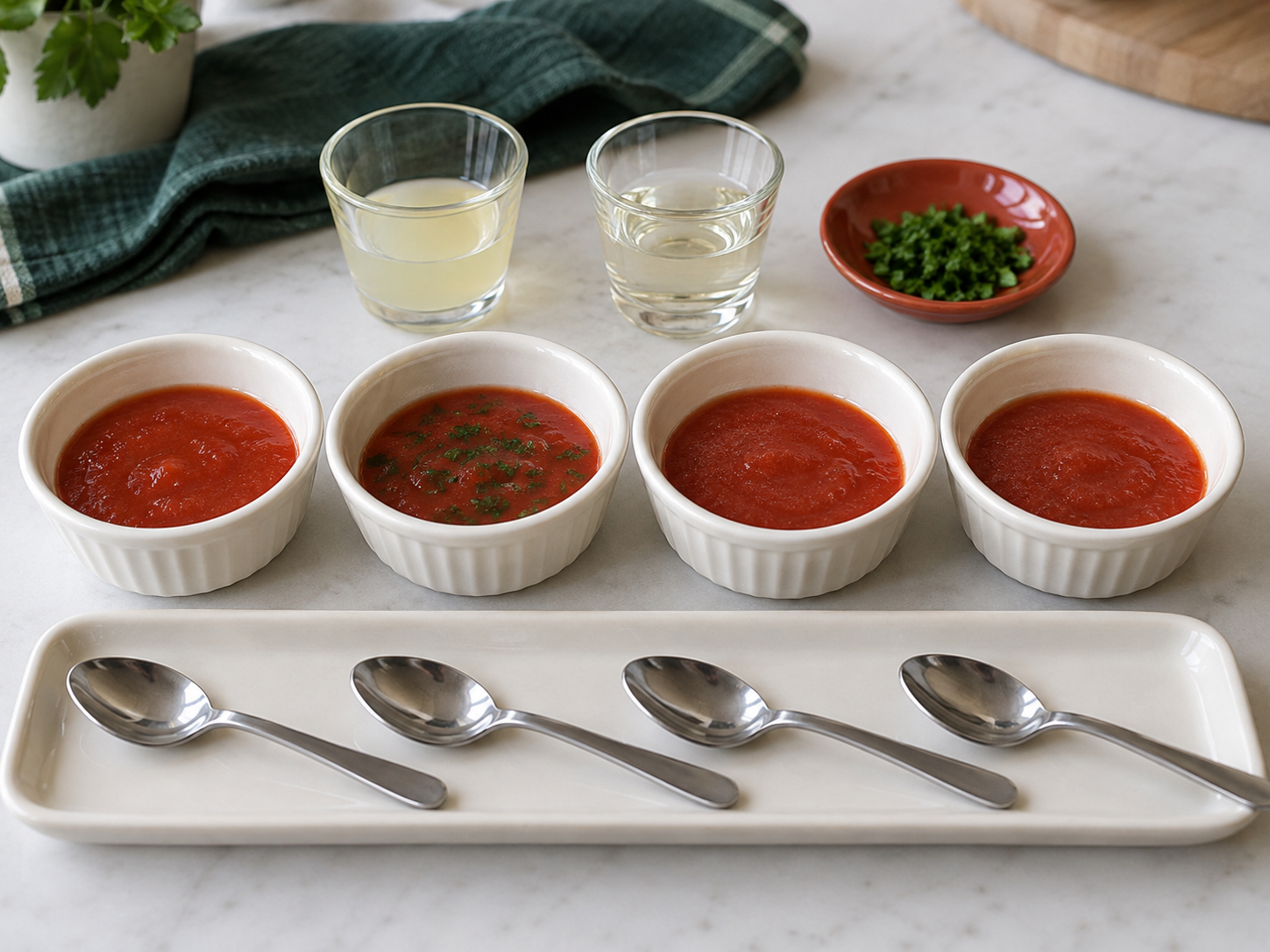
- Prepare a little washed, dried and finely chopped parsley using the full herb lesson. Keep it in a clean dish. Pour small amounts of bottled lemon juice and mild food vinegar into two separate clean cups and identify them from their labels, not their colours. Do not use cleaning vinegar.
- Cook the sauce fully, switch off and put its pan level on the prepared trivet, using dry gloves for a hot handle. Transfer 2 level tablespoons, 30 ml, into each bowl with the clean measure. Identify them in order as plain, herb, lemon and vinegar. This removes 120 ml from the pan; do not assume the remaining sauce is still the whole original batch.
- Leave plain unchanged. Stir 1/4 level teaspoon chopped parsley into herb. Use separate clean teaspoons to tip just 1 drop lemon juice into lemon and 1 drop vinegar into vinegar. Stir each with its own mixing spoon, keeping that spoon out of mouths and the remaining pan.
- Let each sample cool to comfortable tasting warmth, then taste with separate clean spoons. Notice aroma in herb versus sharpness in the two acids. Compare lemon with vinegar as candidates for the same job; the herb is a different addition, not an acid replacement. Also try a little on separate bite-size bread pieces using a serving spoon, not dipping bitten bread.
- Record which change, if any, helped. If changing the remaining pan, follow the small-start or measured estimate above, then stir and taste a fresh clean sample. Eat your tasted samples promptly or discard them, never return them to the pan. Serve or begin the linked cooling routine without leaving the food out for a long comparison.