
Baking Basics
Can you replace sugar with a sweetener in baking?
A product-specific example, not a universal swap
- A first muffin bake: measure, mix and check the centreUse the movement, case-height and glove actions, with THIS formula's quantities and setting.
- A first muffin bake: measure, mix and check the centreFollow the supported skewer, short recheck and safe cooling steps; distinguish berry juice from raw batter.
- Washing vegetables and keeping prep cleanUse the full fresh-produce washing principles for berries.
- Storage and reheating basicsRetain the original clock and prompt chilling limits for this moist-fruit example.
The current UK Splenda Granulated page describes spoon-volume sweetness equivalence but says its granules are ten times lighter by weight. Its listed ingredients include maltodextrin and sucralose (1%). That does not authorise a gram-for-gram sugar swap or a carbohydrate-free claim. Check your actual pack; different countries, forms and blends are not covered.
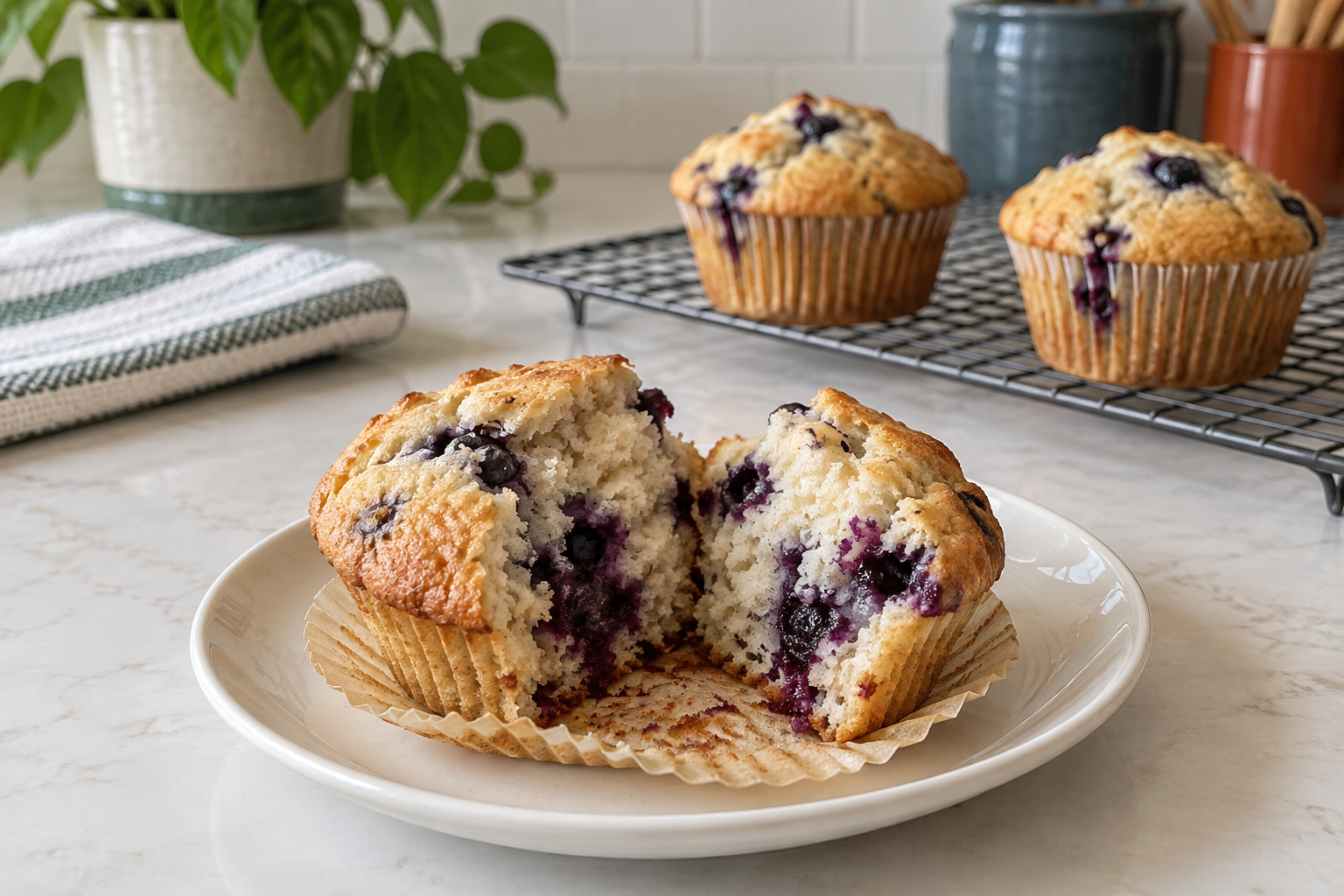
Its published twelve-muffin example uses 200 g plain flour, 2 level 5 ml teaspoons baking powder, 175 ml milk or buttermilk, 1 egg, 4 level 15 ml tablespoons vegetable oil, 1 level 5 ml teaspoon vanilla extract, 200 g blueberries and 5 level 15 ml tablespoons Splenda Granulated. Here choose ordinary milk; the maker does not specify egg size. For our teaching interpretation use one medium egg, acknowledging the added choice. This is neither a KINALO physically tested batch nor a formula to insert into a different cake.
Use the plain-muffin equipment and handling lesson, plus dry sieve and the tools for fresh produce washing. Before mixing, read the oven-function boundary below and preheat to our chosen 180 degrees C conventional setting. Have twelve fitting cases supported in a standard muffin tin and rehearse its cold handling first. Wash hands; rinse sound berries in a clean colander under drinking water, remove damaged fruit and drain/dry gently on clean kitchen paper. No soap on fruit. Measure milk in a jug with readable 175 ml marks; if unavailable, use eleven level 15 ml measures plus two level 5 ml measures. Weigh flour/berries separately; level powder and granules with a table-knife back without packing. Five 15 ml measures of granules are VOLUME, not 75 g or liquid sweetener.
Sift the flour/powder into the large bowl and stir granules through. Separately crack and beat the egg, then combine milk, measured oil and vanilla with it. The maker says fold wet into dry and then beat well before adding berries. Our gentler teaching interpretation is to scrape/fold until dry pockets disappear, then fold in berries just enough to spread them. This method choice is an adaptation, not a claim that we exactly reproduced its tested directions. Do not transfer the plain formula's sugar or optional salt into this bowl.
The manufacturer gives 180 degrees C WITHOUT naming an oven function. For this bounded teaching example we choose 180 degrees C normal conventional cooking; that function choice is ours, not a manufacturer-confirmed setting. It is not permission to use 180 fan. If your appliance only has fan cooking, choose the complete plain practice or a product-specific recipe explicitly giving your mode, rather than guessing a conversion for this example. Preheat and rehearse handling as in the oven lesson.
Fill supported cases around two-thirds of their height, leaving headroom; use a separate suitable supported tin for any excess, never loose paper. Follow the first-bake two-spoon fill and two-glove lift. Set a first check at 20 minutes; the maker gives roughly 20 to 25, not a guarantee for every oven. Land on the trivet, close the door and check crumb with a clean skewer. A berry can leave purple juice: check another spot away from fruit for sticky raw BATTER and another large muffin too. Continue the linked short checks if needed. Do not keep baking a set centre solely to force a darker top.
Switch heat controls off, cool briefly in the supported tin, then use the first-bake safe transfer/rack and comfortably cooled crumb check. For this moist-fruit example our cautious storage choice is to cool promptly in small spaced portions, refrigerate in a covered food-safe container within one to two hours of finishing, retain its original date/time and use within 48 hours or freeze promptly. Keep any shorter ingredient limit. This is our application of the linked chilling guidance, not a storage instruction on the manufacturer recipe.
For later frozen berry muffins, thaw covered in the fridge and use within 24 hours of fully defrosting, within any shorter original limit. They need not be reheated simply to eat cold; if you choose to reheat, use the linked once-only thorough reheating method and appropriate appliance-safe dish. Assess the cooled crumb and note actual product, amounts and mode. No sugar-free, carbohydrate-free, allergy-safe or medical-diet suitability is established by making this change.
Understand sugar's role beyond sweetness and use product-specific recipes when making a major substitution.
Before you begin
- Measuring accurately without stressUse scales, a marked jug and level measuring spoons.
- A first muffin bake: measure, mix and check the centreLearn supported cases, wet/dry mixing and centre checks before changing the ingredient formula.
Sweetness is only one job
Sugar affects moisture, browning, spread and the way a mixture sets. Its crystals also help incorporate air when beaten with butter. A sweetener that tastes equally sweet in tea may supply almost none of the bulk of the sugar it replaces. A cake can therefore be sweet enough but turn out dense, pale or dry.
Sugar alternatives vary. A concentrated tabletop sweetener, a baking blend containing fillers and a liquid syrup are different products. Some are designed for certain baking uses; others are not. Read the actual pack instead of treating the category as one interchangeable ingredient.
Questions to answer before substituting
- Does the product specifically say it can be used for baking at the required temperature?
- Does its replacement instruction refer to weight, volume or sweetness equivalent? One-to-one wording needs a defined unit.
- Does the recipe rely on creaming butter and sugar, making a meringue, caramelising sugar or achieving a crisp biscuit? These uses need more than sweet taste.
- Are there other changes to liquid or dry ingredients in a recipe tested for that product?
- Are you choosing it for a dietary need? Ingredient substitution alone does not establish that the finished food meets that need.
Make a useful trial
- First identify the exact product and form on the pack, not just the brand. Granules, concentrated drops, tablets and a sugar blend are not the same ingredient. Check the baking directions and allergens. You do not need to buy a sweetener merely to complete the plain-muffin lesson.
- For a concrete example, the separate formula below uses UK Splenda Granulated, not its tablets, a stevia product or a sugar blend. Keep that formula separate from the plain-muffin ingredients: it changes more than the sweetening ingredient.
- Use the specified measuring units. Five level 15 ml tablespoons mean a volume of granules; they do not mean five heaped eating spoons, 75 g or 75 ml of liquid sweetener. Level each spoon without packing it down.
- Use the first-bake lesson for the supported tin, cold-glove rehearsal, filling and crumb-check actions, NOT its 125 g sugar, 1 1/2 teaspoons powder, ten-case yield or 200 conventional setting. The separate example below supplies its own quantities and oven boundary. It is a comparison exercise, not a controlled one-ingredient experiment.
- Cool a muffin before assessing the crumb. Note whether it is soft, dry, fragile or dense and whether the sweetness suits you. Colour alone is a poor comparison with a sugar-sweetened batch, so do not keep baking a set muffin solely to darken it.
Honey and syrup change the mixture too
Honey and maple syrup are sugars in liquid form. They add moisture and their own flavours, so they are not neutral replacements for dry sugar. A tested liquid-sweetener recipe accounts for that difference. Do not assume that a different name removes sugar from the dish or makes a particular health claim true.
When to keep the original recipe
While learning a new cake method, using the written sugar helps establish what the recipe should do. If you want a less sweet result, choose a recipe designed that way, or follow a tested reduction for that specific style. A topping or a fruit accompaniment may offer an easier place to adjust sweetness than the structure of a sponge.
The beginner takeaway
Artificial sweeteners are not automatically unsuitable for all baking, and they are not automatically interchangeable with sugar. The practical answer depends on the exact product and recipe. Keep those details together in your notes so the successful result can be repeated.
Sources and further reading
- King Arthur Baking: how sugars behave
- King Arthur Baking: baking trials with sugar alternatives
- Splenda UK: manufacturer blueberry-muffin formula for Splenda Granulated
- Food Standards Agency: handling flour and flour products safely
- Food Standards Agency: chilling, freezing and defrosting
- Splenda UK: actual Original Granulated product, spoon-volume versus weight and ingredients