
Pantry And Ingredients
A useful starter cupboard, herbs and spices
Build a small cupboard around meals you cook, and learn what each staple contributes before buying more.
Before you begin
- Read food labels before you cookRead ingredients, allergy warnings, storage and preparation directions.
- Make a simple tomato sauce from passataUse the complete no-chopping base for the first dried-herb practice.
- Measuring accurately without stressUse a marked quarter-teaspoon measure before heating.
Choose ingredients with a job
- Bring a simple meal together without rushingRead the exact first pasta meal and equipment list.
- Cook red lentils and make a simple soupRead the water-based soup before buying a stock product.
- Read food labels before you cookCheck dates, suitability and preparation requirements.
A useful cupboard supports meals you will actually cook. Start with two complete methods you want to practise, then check what you already have. Buy the missing ingredients rather than every jar in a general kitchen list. A starter cupboard does not need to produce every cuisine at once.
For the first pair here, choose plain tomato pasta and a small red-lentil soup. Both have complete linked methods. Check pan sizes, draining tools, measures and cooling space before shopping too: buying ingredients is not the same as being ready to handle them.
Store dry ingredients sealed, away from steam and direct heat, according to their labels. Keep heavy tins where you can lift them without stretching overhead. Put an older safe packet in front of a newer one, retaining its date and any after-opening deadline. Do not relabel unknown old food as new.
A small foundation
- Open a can and use cooked beansChoose and prepare genuinely cooked canned beans.
- Stock cubes, stock pots and strengthMake the pack's diluted stock before changing a soup.
- Make a simple tomato sauce from passataUse the smooth base before exploring other tomato forms.
- For two modest pasta portions and two small soup portions on separate occasions, the combined starting list is 160 g plain dried pasta, 250 g passata, 100 g dry red split lentils and 2 teaspoons olive or rapeseed oil if choosing the soup's optional teaspoon finish. The pasta sauce needs 30 ml water; the soup needs 500 ml starting water plus its separate 250 ml top-up reserve. Pasta has additional packet-directed cooking water. These are different quantities, not a single jug for everything.
- Optional for these practices: one small jar of dried oregano and a familiar fine salt. Ready-to-eat bread can accompany the small soup; adjust the meal to appetite. Check the full methods and labels rather than treating these learning portions as nutritional requirements.
- A later cooked-bean can adds another simple meal. Choose an intact labelled can of cooked beans, not dried beans, and read the opening, draining and heating lesson before using it.
- Passata is a smooth tomato base. Chopped tomatoes give a chunkier result; concentrated tomato puree from a tube is not an equal-volume replacement. Keep opened tomato products refrigerated for their labelled limit.
- Stock is optional, not a requirement for the first soup. If buying cubes or pots, read their dilution and allergens. A mild food vinegar is useful for later flavour comparisons. Salt, pepper, oil and vinegar each have a job; you do not need all of them in every meal.
Start with these flavours if they suit your food
- Dry frying, toasting and blooming spicesFor the later cumin practice, read its full oil-and-simmer sequence before heating.
- Fresh herbs: storing them and using them upUse the separate preparation method before adding fresh leaves.
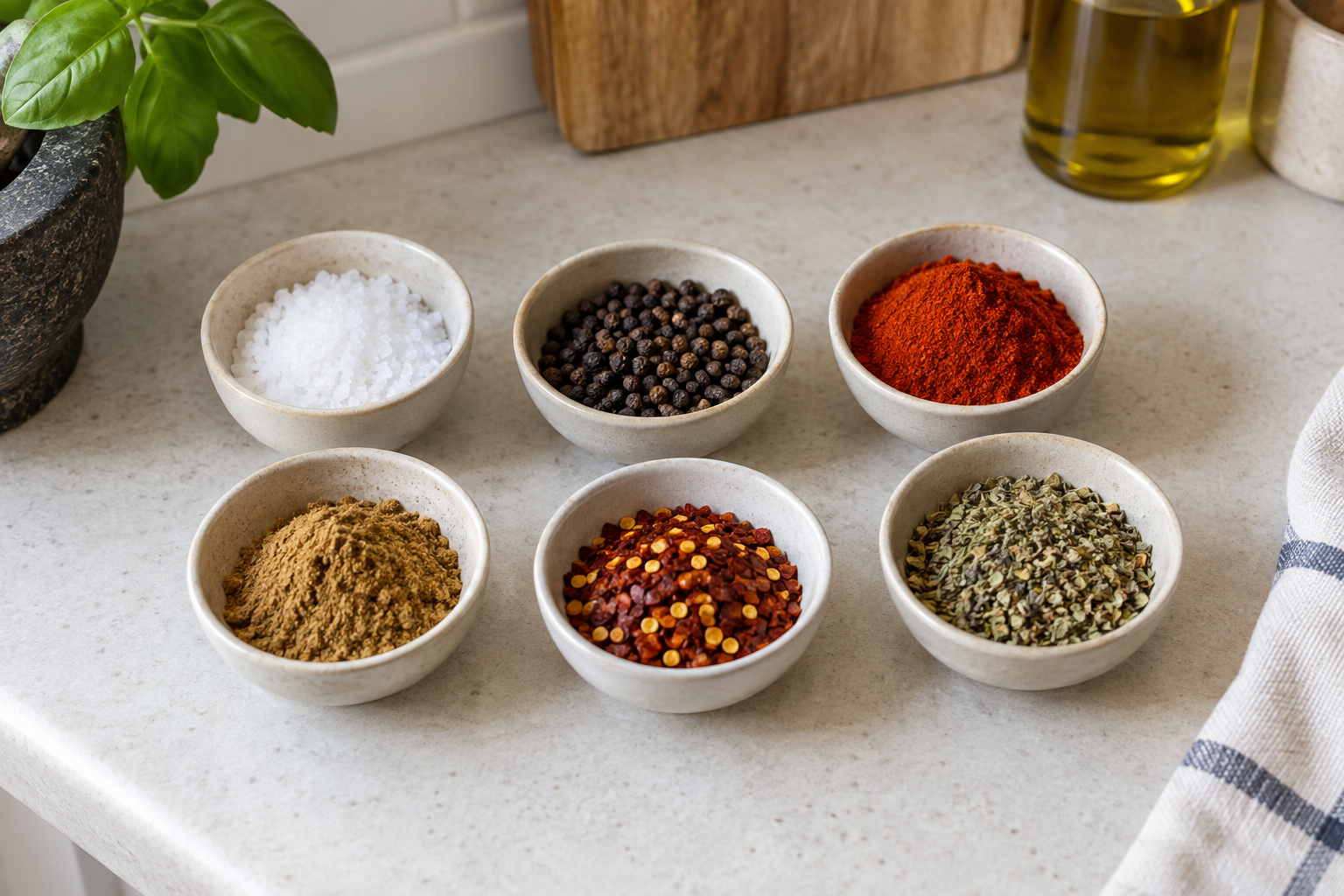
- Dried oregano adds a leafy, aromatic flavour to a cooked tomato sauce. The first practice below uses 1/4 teaspoon in 250 g passata. Mixed herbs have different ingredients; read the jar rather than assuming the same flavour.
- Paprika is a red pepper powder. Sweet, smoked and hot versions can produce different results; the red colour is not a heat rating. For example, the cited manufacturer's smoked sweet paprika supplies smoke as well as pepper flavour. Read the actual name and directions.
- Ground cumin has a warm, earthy aroma. Learn it later with the linked measured spice-cooking practice rather than adding a heaped raw spoonful to a finished plate. A cooking method and amount belong together.
- Chilli flakes and chilli powders add heat; blends and strengths vary. Begin with a mild product and its measured recipe, not a comparison spoonful of raw powder. Keep powders away from your face and wash hands after handling chilli.
- Fresh parsley, coriander or basil can be bought for a specific later meal. They need their own washing, preparation and storage routine. A fresh garnish and a dried herb simmered into sauce are not identical jobs.
Learn one new jar
- Measuring accurately without stressUse the marked quarter-teaspoon measure and level a dry ingredient.
- Make a simple tomato sauce from passataCook the full small sauce and choose its serving route.
- Storage and reheating basicsFollow the full shallow-portion cooling and labelling routine.
- For this first attempt choose labelled dried oregano, plain passata and the full linked sauce method. Check all ingredients suit everyone eating, the jar is in good condition and its storage directions have been followed. Do not use damp, mouldy or otherwise spoiled contents. Weak aroma concerns quality; a pleasant smell does not prove safety.
- Read the jar ingredients. A blend may already contain salt, garlic or chilli. Open it on the cold worktop, away from your face; gently notice aroma without putting your nose in the jar or inhaling powder.
- Prepare the sauce lesson's complete equipment and measured 250 g passata, 1 teaspoon oil and 30 ml water. Also set out a clean dry small dish, marked 1/4 teaspoon measure and clean table knife for levelling. Before heating, fill the quarter-teaspoon measure with oregano and brush excess level with the knife's straight edge. Tip into the dish away from the hob, not above a steaming pan. Close and put away the jar.
- Add the measured oregano to the cold sauce ingredients. Follow the complete gentle simmer, stirring, cooled tasting and controls-off serving method. Do not add a second quarter teaspoon until you have tasted the cooked result; the first task is learning the one measured addition, not maximising intensity.
- Record the jar name, amount and whether you enjoyed its aroma and flavour. Serve with ready-to-eat bread for the single-hot-task version, or follow the complete pasta finish. Reserve untouched sauce promptly if storing it, keeping the original cooking time. Try the same base without oregano on a later occasion for a clearer comparison.
Buy for use, then expand
- Open a can and use cooked beansUse a cooked can for the next manageable meal.
- Stock cubes, stock pots and strengthLearn what the concentrate contributes.
- Dry frying, toasting and blooming spicesLearn the different later technique for ground spices.
Buy a small jar until you know you use it. A large bag is cheaper per gram only if you use it while its quality is useful. Keep loose ingredients in suitable closed food containers with their correct name, original dates and instructions; an unlabelled red powder is not a useful shortcut.
After the two first meals, choose one next skill: a cooked-bean meal, measured stock dilution or the separate spice-warming method. Read its full ingredients and tools before buying. You can build a cupboard around repeatable meals without needing to learn every ingredient in one shopping trip.