
Flavour / Flavour basics
Herbs versus spices: what they are and when to add them
A beginner explanation of herbs, spices, dried seasonings, fresh finishes and why timing changes how flavour tastes.
How to use this guide as a complete beginner
Keep a clean spoon nearby for tasting and make changes in small amounts. Flavour work is easier when you taste deliberately instead of throwing ingredients in because something feels wrong.
Ask what the food needs before adding anything: clearer, brighter, richer, fresher, warmer, sweeter or less intense. This keeps you from adding salt when the real problem is acid, fat or freshness.
Test changes on a spoonful where possible. Add one thing, stir properly, taste again, then decide. This is how you learn cause and effect.
Go slowly enough to notice
Speed hides information. The first few attempts are for seeing the change, hearing the sound, naming the texture and learning what happens when you adjust.
Use the image as a checkpoint
The linked KINALO image is not decoration. Compare it with your pan, board, bowl or tool so you know what stage you are looking for.
Good enough counts
Beginner cooking improves through repeatable attempts. If the food is usable and you learned the cue, the guide has done its job.
First-attempt checklist
Read the whole guide once before starting, then choose the smallest useful version of the task. Put the tools and ingredients where you can reach them. Decide what you will watch for first, such as colour, sound, texture, thickness, smell or how easily food moves.
During the attempt, change only one thing at a time. If the heat feels wrong, fix the heat before adding more ingredients. If the texture feels wrong, name the texture before trying to correct the flavour. This keeps the lesson clear.
Afterwards, write down one sentence: what worked, what changed too quickly, or what you would do earlier next time. That note matters more than a perfect result because it turns one cooking attempt into the next useful attempt.
If you only remember one thing, remember the cue rather than the instruction. Recipes tell you what to do; cooking confidence comes from recognising what is happening. Once you can name the cue, you can slow down, adjust and recover with less guesswork next time.
The simple difference
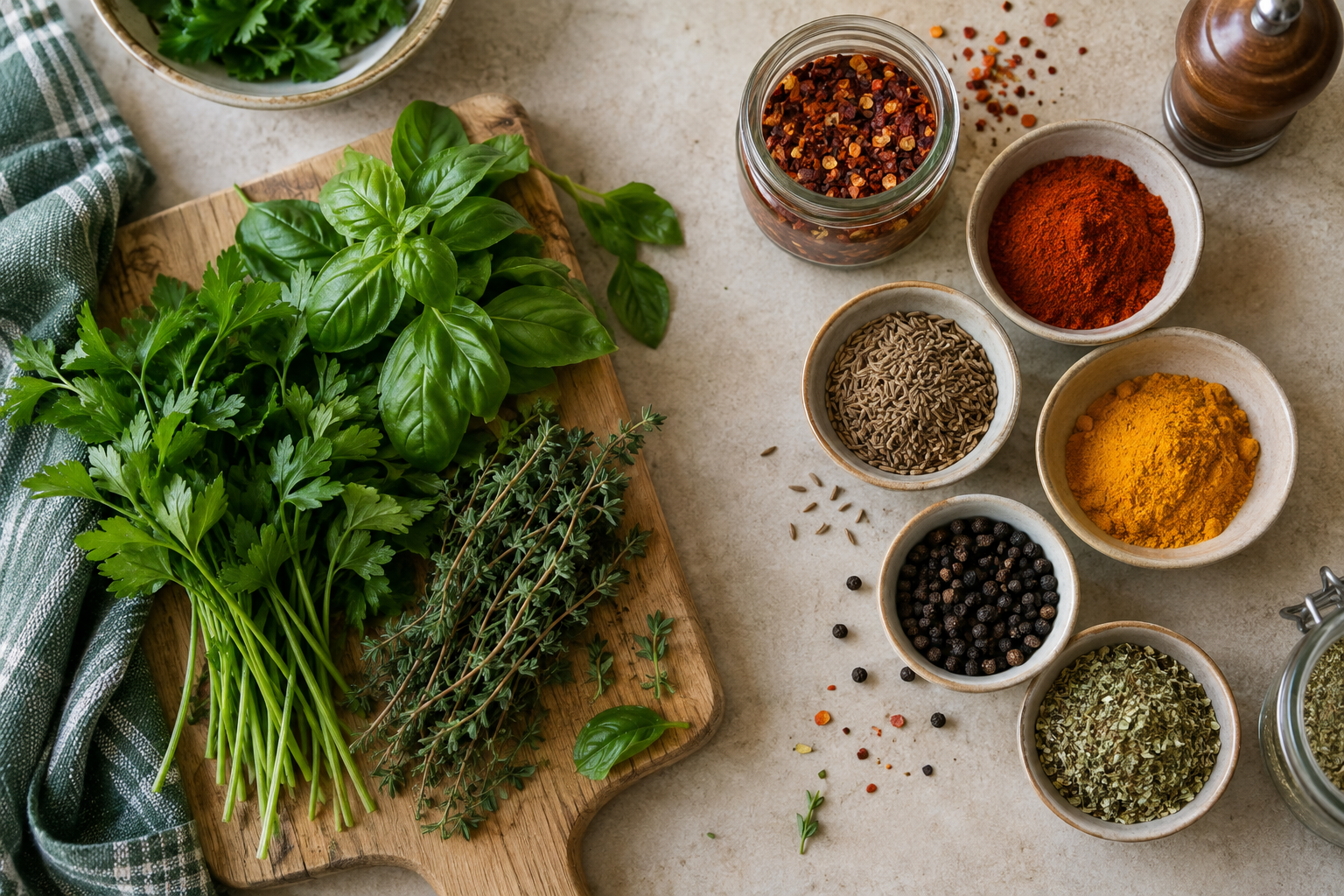
Herbs usually come from the leafy parts of plants. Think parsley, basil, coriander, mint, thyme and rosemary. Spices usually come from seeds, bark, roots, pods or dried fruit. Think cumin, paprika, cinnamon, turmeric, pepper and chilli.
You do not need to memorise botany. The useful beginner question is: does this flavour need time in the pan, or should it stay fresh at the end?
When to add spices
Many spices taste better when warmed in oil or added early enough to bloom. Blooming means the spice hits warm fat and releases flavour. This can make a curry, chilli or stew taste deeper than sprinkling powder on at the end.
Spices can burn if the pan is too hot or too dry. If they smell bitter or look very dark, stop and lower the heat.
When to add herbs
- Soft fresh herbs, such as parsley, basil, coriander and mint, are usually best near the end.
- Woody herbs, such as rosemary and thyme, can handle longer cooking.
- Dried herbs often need more time than fresh herbs because they need moisture and heat to wake up.
- Fresh herbs can make a heavy dish taste brighter without adding more salt.
Beginner cupboard advice
Start with a small set you actually use. A few reliable spices and one or two herbs are better than a crowded shelf of old jars. Smell them before using. If they smell dusty and weak, they will not add much.