
Everyday Kitchen
Save time and use up ingredients across meals
Plan shared ingredients, organise preparation and keep useful leftovers visible without creating extra kitchen work.
Before you begin
- Read food labels before you cookCheck dates, allergens and product-specific instructions.
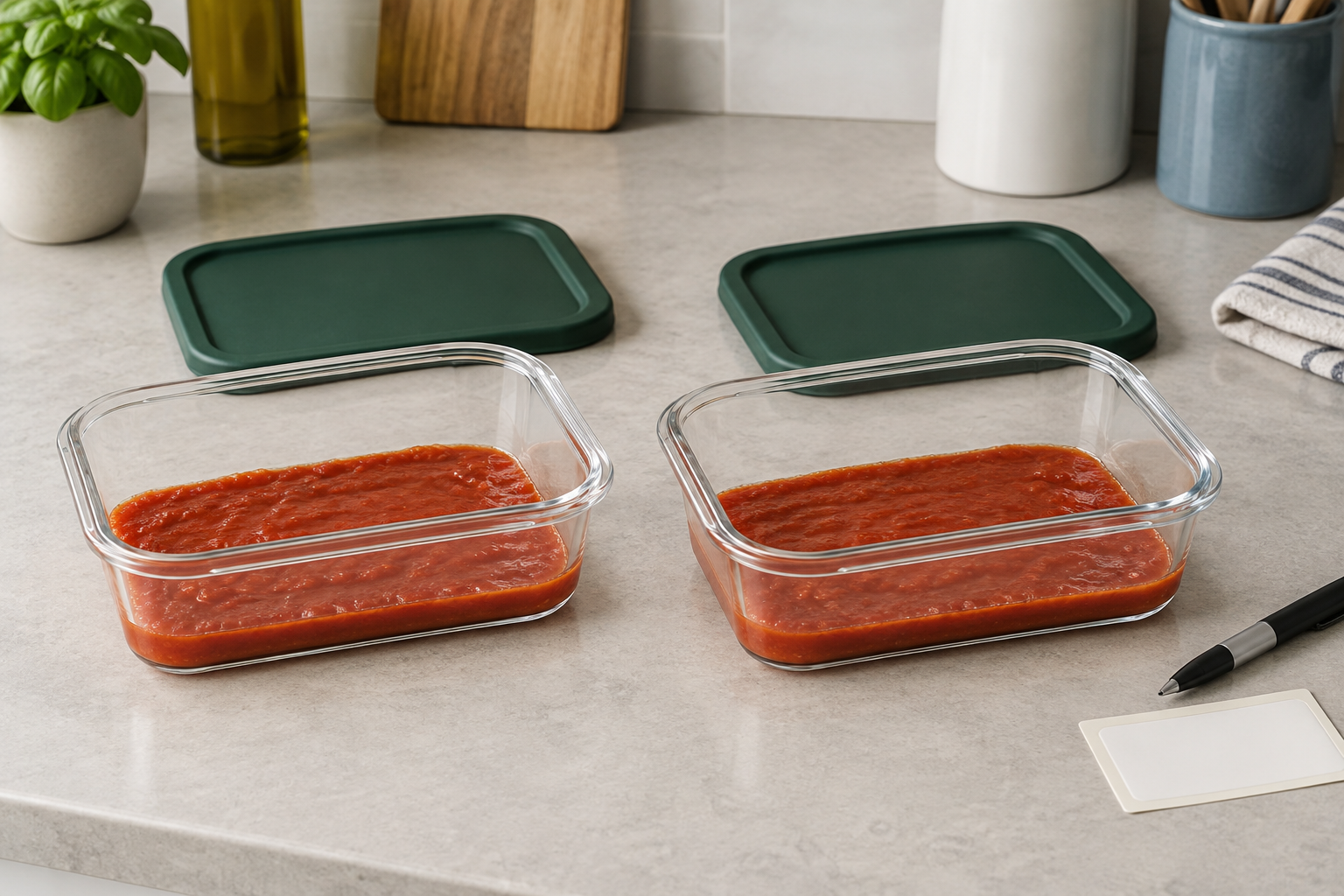
- Batch cooking: make extra without making a messPrepare and store the measured extra sauce portion.
Start with what needs using
- Read food labels before you cookDistinguish safety dates, quality dates and after-opening limits.
- Storage and reheating basicsFollow the supported cooling, labelling and once-only reheating routine.
Before shopping, look at what you already have and read dates and after-opening instructions. Write down when an opened ingredient or cooked portion was actually prepared. If the safe history is unknown, do not make up a date. Use-by is a safety limit, not a smell test; best-before concerns quality. Use the label lesson to make that distinction before deciding what to keep.
The first two-meal plan shares tomato sauce: pasta today and cooked canned beans tomorrow. No raw-meat portioning, unfinished meat or cut-vegetable storage is needed. Start with that small plan before adding several recipes. Use fresh ingredients for each new cooking task, but preserve the earlier sauce's storage and reheating history.
Make a short ingredient plan
- Storage containers: sizes, lids and useful portionsChoose the shallow vessel and correct lid first.
- Storage and reheating basicsKeep raw foods below prepared foods and thaw only the portion needed.
- Decide who is eating and which two meals you are planning. The example below is for one adjustable adult portion today and one tomorrow, not two people at both meals. Double both meal accompaniments if feeding two, only after checking pan and cooling capacity.
- For the two meals combined, list 500 g passata, 2 teaspoons oil, 4 tablespoons water, optional 1/2 teaspoon oregano, 80 g plain dried pasta and one intact 400 g can of cooked cannellini beans or chickpeas in water. The drained bean weight is often about 230 to 250 g; check the label and appetite rather than treating the whole can weight as solid food.
- Check allergens, dates, opening and preparation instructions before buying. Keep the pasta and unopened can as labelled; do not refrigerate a can simply because it is tomorrow's ingredient. If using bread instead, choose bread already suitable to eat without toasting.
- Reserve a suitable shallow sauce container, label and fridge space. Keep labelled ready-to-eat food visible on a clean shelf above sealed raw meat, poultry or fish. A use-first area is not a mixed box of raw food and cooked meals.
- Write a real use deadline and check it before the second meal. Freeze suitable food promptly if it cannot be used in time, using the storage method. Do not extend a date because the sauce looks or smells pleasant.
Put preparation in a useful order
- Read a recipe and get ready to cookRead equipment, quantities and the whole sequence before starting.
- Bring a simple meal together without rushingUse a sauce-first sequence rather than juggling unfamiliar pans.
Read the full sauce, pasta and bean methods before starting. Gather their complete equipment, including measures, supported draining tools, clean tasting utensils, dry gloves and trivets. Measure tonight's ingredients and clear the sink before heating. This preparation is sometimes called mise en place: getting the necessary things ready.
Do not turn spare waiting minutes into an unfamiliar cutting job. Stay beside an active hob; switch off if you must leave. Later you can add simple tasks that are easy to stop while still watching, but multitasking is optional. Preparing several things cold before heating is already a time-saving habit.
Portions are a starting point
The first pasta meal uses 80 g dry pasta and about half the finished sauce. The second uses the drained contents of the chosen can and the reserved sauce. These are adjustable learning quantities, not nutritional requirements for every person. Record what was enough for you and change the next attempt deliberately.
An optional ready-to-eat bread or washed ready-to-eat salad side can make either meal more substantial without another hot pan. Read its label and prepare before heating. Do not assume any frozen vegetable or unwashed leaf is ready to serve straight from its pack.
Try a two-meal experiment
- Batch cooking: make extra without making a messMake the doubled sauce and reserve a shallow portion.
- Pasta water and sauce clingFinish today's 80 g pasta with about half the batch sauce.
- Open a can and use cooked beansHandle sharp lids and drain cooked beans before heating.
- Storage and reheating basicsFollow the supported cooling, labelling and once-only reheating routine.
- Storage and reheating basicsFollow the saucepan inventory, stirring and hot-centre checks.
- Get ready using the ingredient list above and the batch lesson's full tools. Make the doubled sauce. Before combining with anything, reserve about half in the prepared shallow container, start its cooling reminder and follow the cooling routine. Label the cooking date and time, deadline and that it has not yet been reheated.
- For today, cook the 80 g dry pasta using the packet water quantity and the complete pasta lesson. Use about half the batch sauce with the complete sauce-first finishing method. Remember to save a little pasta water before draining. Spoon into your bowl, switch off and cool a bite before eating.
- Before starting tomorrow, confirm the reserved sauce was cooled and chilled safely and remains within its earliest limit. Do not use it if that history is uncertain. Have a saucepan of at least 1 litre with headroom, heat-safe spoon, 15 ml tablespoon, timer, clean testing saucer and spoons, serving bowl, dry gloves and trivet. Set up the opener, contained lid disposal and supported sieve or colander from the can lesson.
- Open the cooked-bean can safely, drain and rinse as its label and full lesson direct. Put the drained beans and the cold reserved sauce into the cold saucepan. Add 1 tablespoon cold drinking water if the sauce is very thick. A label requiring a particular cooking method takes priority; choose a cooked-bean product suitable for this gently heated sauce.
- Heat over medium-low, stirring across the base every minute or more often if it thickens. Once gently bubbling, lower enough to avoid spitting. Begin checking after about 3 to 5 minutes of bubbling, continuing if needed or the pack requires longer. Add another tablespoon water if the base dries. No single time proves the chilled sauce and beans are hot.
- Put a little sauce and a bean on the clean saucer with a clean spoon; split the bean with a second spoon and check steam from its centre as well as the sauce. Check several parts of the pan and stir thoroughly. Continue gentle heating and recheck if any part remains only warm. Let the test sample cool before tasting, using clean utensils for another check.
- When steaming hot throughout, switch off, put the pan level on its trivet with dry gloves if needed and spoon into the bowl. Eat after a cooled first bite. This is the saved sauce's one reheat. Do not refrigerate a remainder for another reheating, and do not treat the newly opened beans as resetting the old sauce clock.
- Note what you used and what portion suited you. Next time change the amount or add a separately prepared side. For a frozen reserved sauce, use the full fridge-defrost route first; this experiment does not teach cooking a frozen block directly in the pan.