
First Kitchen Skills
Read a recipe and get ready to cook
Turn a recipe into a sequence you can follow: quantities, preparation, unfamiliar words, equipment and the right moment to start cooking.
Read to the end before starting
- Read food labels before you cookRead ingredients, allergy warnings, storage and preparation directions.
A recipe is a set of instructions, not a test of what you already know. Read the ingredients and every step once with the cooker off. Look especially for waiting time: defrosting, marinating, chilling, proving dough and resting meat can sit outside the headline cooking time. If dinner is needed soon, choose a task that fits the time you actually have.
Find how many people the recipe serves. For a first attempt, use its stated quantity. Doubling ingredients does not automatically mean doubling cooking time, and a crowded pan may need two batches. Check that everyone eating can have the ingredients; allergies need ingredient-label checks, not a guess from the dish name.
Translate the ingredient list
- g and kg describe mass: use scales. ml and litres describe volume: use a measuring jug or the marked measures specified. A teaspoon is 5 ml and a tablespoon is 15 ml in our guides; use measuring spoons, not eating cutlery.
- "One onion, diced" includes a job to do before that onion goes in the pan. "160 g dried pasta" means weigh it before cooking; cooked pasta contains absorbed water and weighs more.
- "Divided" means the total ingredient is used at more than one stage. Check how much belongs in each stage before adding all of it.
- "Optional" means the task can work without it. "To taste" means add a small amount, mix and try a safe cooled sample before adding more. It does not mean pour without measuring.
- Use the named form: plain flour is not self-raising flour; tomato puree is not passata; dried beans are not ready-cooked beans. Substitutions can change the method as well as the flavour.
Make a short cooking plan
- Measuring accurately without stressMeasure the quantities without confusing weight and volume.
- Clean and set up your kitchen before cookingPrepare a clean work area and separate raw from ready-to-eat food.
- Put the recipe where it stays readable but away from water, raw ingredients and heat. A phone should not share the raw-meat preparation space.
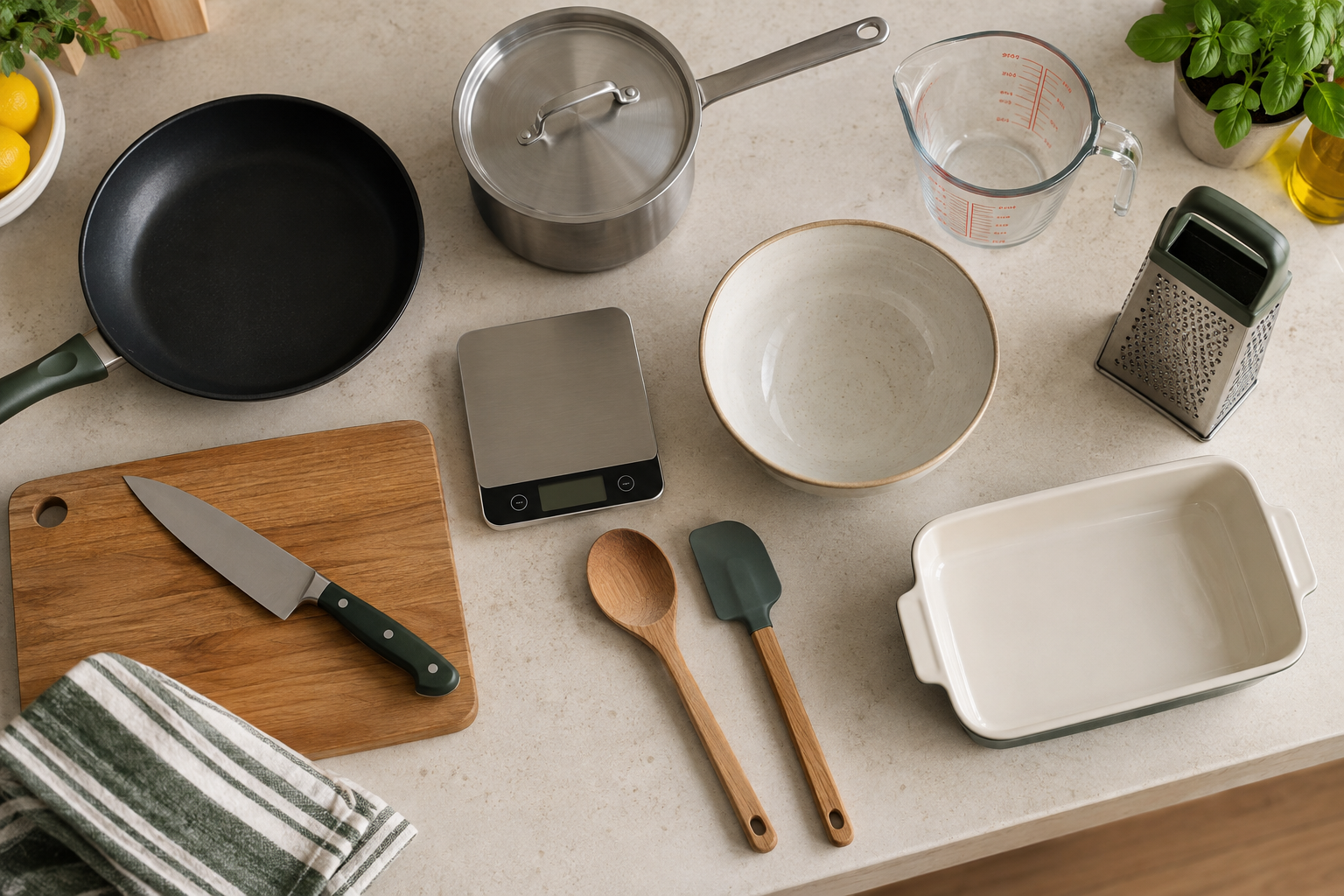
- Check the equipment list and the instructions together. A sieve mentioned only at the draining stage is still needed. Find a lid, dry oven gloves, serving plates and a heatproof place for the hot pan now.
- Find unfamiliar actions before beginning. Preheat means warm the empty oven to the stated setting before the food goes in. Simmer means gentle bubbling; reduce means evaporate some liquid. Use the linked technique when the movement itself is new.
- Write the stages in order: prepare, heat, cook, check, finish, serve. Mark anything that can wait and anything that needs your full attention.
- Weigh, wash and cut what is needed before the first fast cooking step. This is often called mise en place: simply getting the ingredients ready. Keep chilled ingredients refrigerated until their stage is near.
- Recheck the next two steps before turning on the heat. Set a timer when an actual timed stage begins, not when you first start reading.
Use time and the described result together
"Cook for 8 to 12 minutes until soft" gives both an estimate and a result. Start checking near the early end. If the food is still firm, it may need longer; if it is blackening, waiting for the timer is not the answer. Change the heat and use the troubleshooting guidance.
Food-safety checks are different from texture preferences. Do not shorten a safety temperature or holding time because the food looks browned. Packet instructions and the appliance manual matter when the food or equipment differs from the example.
Practise without switching anything on
- Make a simple tomato sauce from passataRead its ingredient list and equipment before the no-heat setup practice.
Choose the tomato sauce lesson below. Find the passata, measure the oil and water, choose the saucepan and spoon, and read the stopping point. Say the order aloud: measure, combine, warm, simmer, taste, serve. If something is missing, solve it before cooking. This preparation is a useful skill in its own right.
When you lose your place
- Make a simple tomato sauce from passataA short first task with one pan and no knife work.
Pause safely. Turn off a hob or grill before leaving it unattended, and put any knife flat in a clear place. Read back to the last action you definitely completed. Do not guess whether a safety-critical step happened. Timers are reminders, not proof that food is cooked. Next time, tick the written steps as you finish them.