Heat And Method / Core skill
Simmer versus boil
A complete beginner guide to small bubbles, rolling bubbles, and why gentle cooking often gives you more control.
How to use this guide as a complete beginner
Before you turn the hob or oven on, clear the area around the pan or tray, get the utensil you will use, and decide where hot food will go when it is done. Heat feels less frightening when you are not searching for a spoon while the pan is already changing.
Watch movement, listen for changes in sound, and smell for the shift from raw to cooked to caught. A steady sizzle, gentle bubbling or light browning is information. Smoke, harsh smells, aggressive spitting or sudden dark patches are reset cues.
Practise with a small amount of inexpensive food first. Use one pan, one heat change and one observation at a time. The point is to learn what the pan is telling you, not to produce a perfect meal on the first attempt.
Go slowly enough to notice
Speed hides information. The first few attempts are for seeing the change, hearing the sound, naming the texture and learning what happens when you adjust.
Use the image as a checkpoint
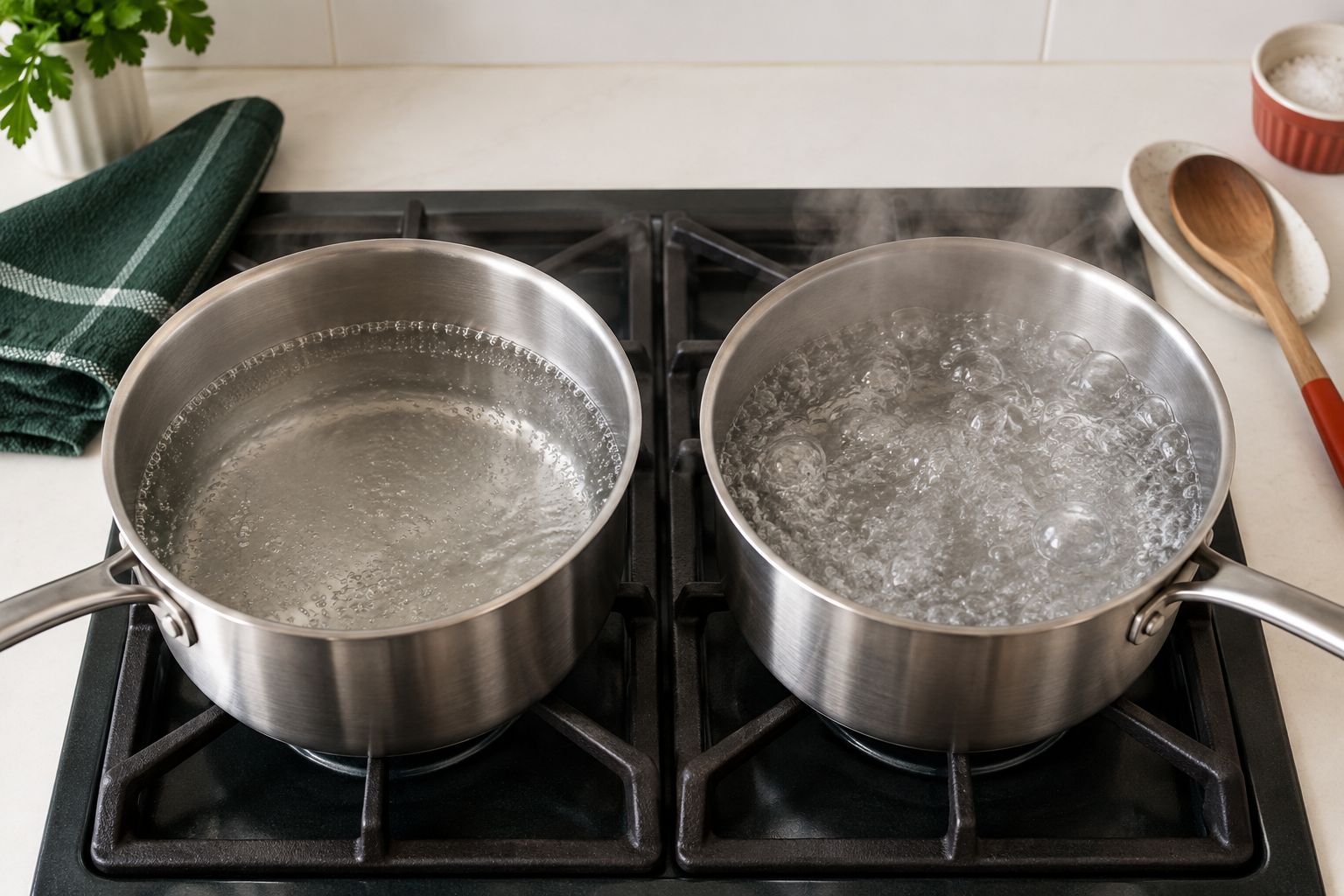
The linked KINALO image is not decoration. Compare it with your pan, board, bowl or tool so you know what stage you are looking for.
Good enough counts
Beginner cooking improves through repeatable attempts. If the food is usable and you learned the cue, the guide has done its job.
First-attempt checklist
Read the whole guide once before starting, then choose the smallest useful version of the task. Put the tools and ingredients where you can reach them. Decide what you will watch for first, such as colour, sound, texture, thickness, smell or how easily food moves.
During the attempt, change only one thing at a time. If the heat feels wrong, fix the heat before adding more ingredients. If the texture feels wrong, name the texture before trying to correct the flavour. This keeps the lesson clear.
Afterwards, write down one sentence: what worked, what changed too quickly, or what you would do earlier next time. That note matters more than a perfect result because it turns one cooking attempt into the next useful attempt.
If you only remember one thing, remember the cue rather than the instruction. Recipes tell you what to do; cooking confidence comes from recognising what is happening. Once you can name the cue, you can slow down, adjust and recover with less guesswork next time.
Bubbles are heat language
Recipes often say simmer or boil, but beginners are rarely shown the difference. The size and energy of bubbles tell you how hard the liquid is cooking.
What each one looks like
- Bare simmer: tiny occasional bubbles.
- Gentle simmer: small steady bubbles and light movement.
- Strong simmer: more movement, but not a violent boil.
- Rolling boil: large bubbles that keep coming even when stirred.
Why it matters
A boil is useful for pasta, some vegetables and bringing liquid up to temperature. A simmer is better for many sauces, soups and stews because it gives flavours time without throwing food around or reducing too fast.