
Myths And Confidence / Myth guide
Should you rinse pasta?
When rinsing pasta helps, when it hurts sauce cling, and why most hot pasta dishes should keep their starch.
How to use this guide as a complete beginner
When advice sounds absolute, slow down and ask what problem it is trying to solve. Kitchen myths often survive because they contain a tiny useful idea wrapped in the wrong explanation.
Compare the claim with what you can observe: texture, sticking, sauce cling, temperature, steam, smell or storage behaviour. Confidence grows when you know why advice works or does not.
Use official guidance for safety questions and practical testing for technique questions. KINALO Kitchen should help you understand the habit, not replace safety sources.
Go slowly enough to notice
Speed hides information. The first few attempts are for seeing the change, hearing the sound, naming the texture and learning what happens when you adjust.
Use the image as a checkpoint
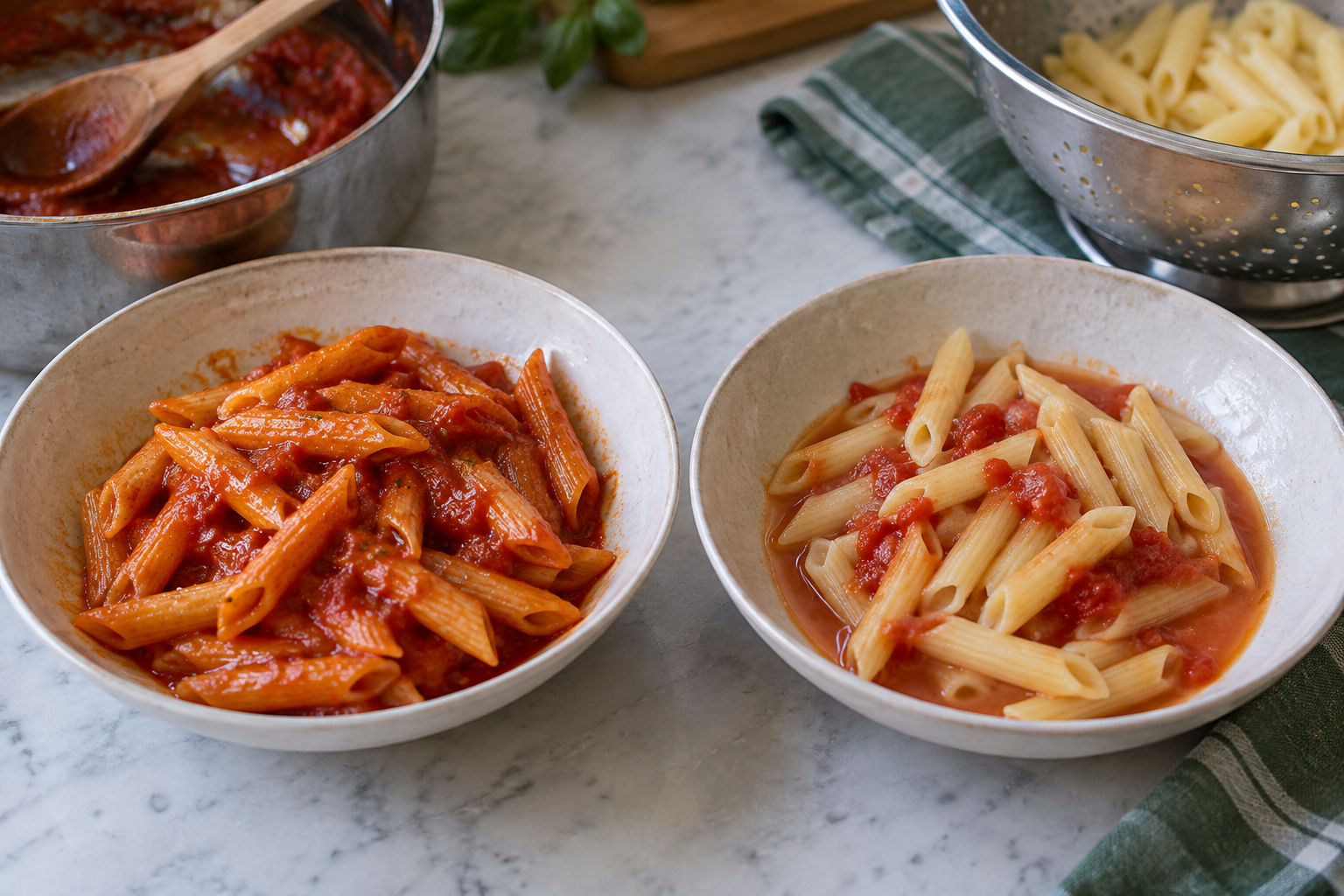
The linked KINALO image is not decoration. Compare it with your pan, board, bowl or tool so you know what stage you are looking for.
Good enough counts
Beginner cooking improves through repeatable attempts. If the food is usable and you learned the cue, the guide has done its job.
First-attempt checklist
Read the whole guide once before starting, then choose the smallest useful version of the task. Put the tools and ingredients where you can reach them. Decide what you will watch for first, such as colour, sound, texture, thickness, smell or how easily food moves.
During the attempt, change only one thing at a time. If the heat feels wrong, fix the heat before adding more ingredients. If the texture feels wrong, name the texture before trying to correct the flavour. This keeps the lesson clear.
Afterwards, write down one sentence: what worked, what changed too quickly, or what you would do earlier next time. That note matters more than a perfect result because it turns one cooking attempt into the next useful attempt.
If you only remember one thing, remember the cue rather than the instruction. Recipes tell you what to do; cooking confidence comes from recognising what is happening. Once you can name the cue, you can slow down, adjust and recover with less guesswork next time.
The simple answer
For most hot sauced pasta dishes, do not rinse. The starch on the pasta helps sauce cling. Rinsing washes that away and cools the pasta.
When rinsing can make sense
- Cold pasta salad.
- Some noodle dishes where you deliberately want to stop cooking and remove starch.
- Holding plain pasta briefly for a specific reason.
Better hot pasta habit
Drain, save some pasta water, and mix the pasta with sauce while it is still hot. This gives you a better chance of glossy sauce that clings.