First Kitchen Skills
Drain food and save cooking water safely
Set up before lifting a hot pan, save the liquid you need, and drain without holding a loose lid against boiling water.
Before you begin
- Clean and set up your kitchen before cookingMake a clear route to the sink and prepare dry oven gloves.
Choose a tool that holds the food
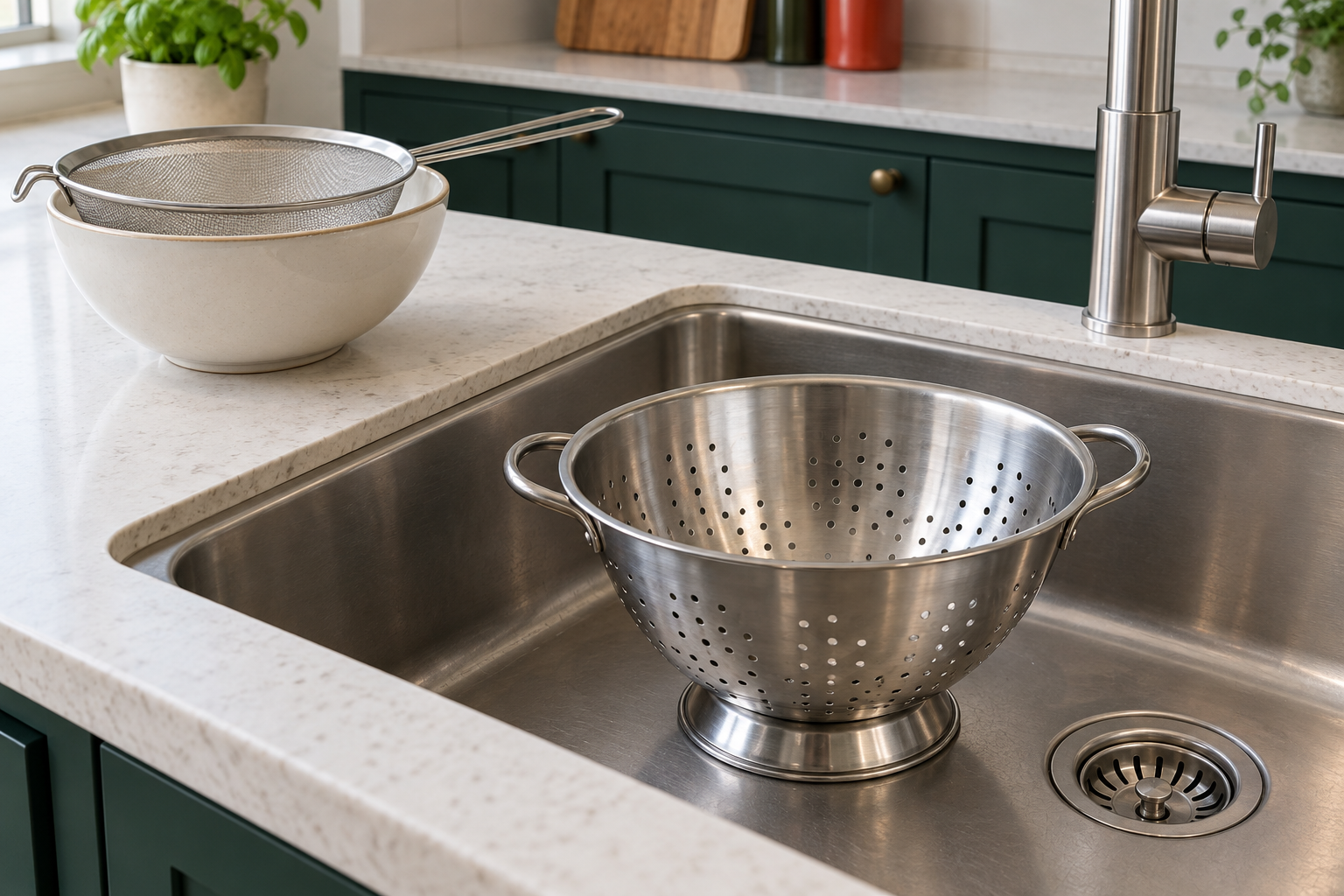
Draining separates cooked food from liquid. A colander has holes and normally stands on a base. A sieve has much finer mesh and often a long handle. Use a heat-safe colander for pasta or potato pieces, and a heat-safe fine sieve for small grains that would fall through large holes.
Before heating the food, put a heat-safe standing colander securely on its own base in a clean, empty sink with the plug removed. Check that the sink drains freely and the colander cannot rock or slide. Its food must stay above any collecting water. For this first pouring method, do not use a handheld sieve: both hands may be needed for the pan. A sieve needs a support designed to fit securely and a receiving vessel large enough for the liquid; if you cannot arrange that, use the scoop method below.
Prepare before the food is ready
- Clear the sink and the route from hob to sink. Remove washing-up, knives and anything you could trip or catch a handle on.
- Set out dry oven gloves, a heatproof trivet, and the bowl or pan that will receive the food.
- If saving cooking water, have a heatproof jug and a ladle ready. Do not use a thin drinking glass that could crack.
- Test the intended pan and water quantity while cold, before cooking. If you cannot lift, carry and tilt it steadily, use a smaller portion or the scoop method below. Do not try a hot lift simply because you managed a much lighter empty pan.
Save water before draining pasta
- Pasta water and sauce clingUse the full measured fresh-meal finish, not a stored-food warm-through.
- Turn off the ring. Put the pan securely on a safe heatproof surface if it is awkward to work over the hob.
- Set the heatproof jug beside it, not in your other hand. Use the ladle to lift cooking water into the jug until you have the quantity needed, for example 150 ml for a two-portion pasta sauce.
- Keep hands and face away from the rising steam. Put the ladle down safely and leave the jug where it cannot be knocked. Do not dip a small cup by hand into boiling water.
- Drain the pasta only after the water is saved. If you forgot, use 15 ml room-temperature drinking water in the freshly combined pasta and already cooked sauce, then follow the complete brief finish until the whole meal is hot. There is no reason to reach into the sink for discarded water or begin an unexplained kettle task.
Pour through a standing colander
- Switch off the heat and remove any lid with its opening tilted away from your face. Put the lid on a heatproof surface.
- Grip the pan securely with dry gloves as needed, using both handles if it has two. Keep the pan close enough to control without pressing it against your body.
- Move to the prepared sink. Hold the pan low above the colander and tilt slowly, directing the liquid away from you. Let some water flow first, then tip far enough for the food to slide into the colander.
- If water backs up or steam hides the colander, stop tipping, return the pan upright and put it securely on the prepared trivet. Step back and let the steam clear. Do not keep holding a heavy pan while waiting or shake it to hurry the food out. Use the scoop method for remaining food if the sink is not draining freely.
- Put the empty pan on the trivet. Let the food drain briefly, then transfer it to the receiving bowl or sauce using the colander handles if they are safe to touch, or dry gloves if hot.
- Do not hold a saucepan lid ajar with your fingers as a substitute strainer. A slipped lid can release the whole pan of boiling water.
When lifting the full pan is not suitable
For larger pieces such as potatoes, use a slotted spoon to lift them into the receiving bowl while the pan stays securely on the heatproof surface. Let each spoonful drip above the pan. For pasta, a pasta spider or slotted scoop suited to its size can do the same. Leave the water to cool before emptying a lighter pan. Long tongs suit long pasta but will not retain small shapes. For a heavy pan, leave it stationary on its switched-off ring while scooping rather than making an unsafe lift to a separate trivet. Once water and pan are fully cool, leave the pan supported and use the ladle to remove cold water into the jug standing beside it. Carry and empty only a small jug quantity you can control, then repeat until the pan contains a comfortable cold weight. Only then carry and empty the remaining cold water; ask for help if grip or balance is still uncertain.
This is a change of tool, not a lesser cooking method. Choose it before cooking so the food is not overcooking while you search for equipment.
Practise with cold water
First rehearse with a little cold water to learn the movement. Then, before heating anything, test the actual pan with the cold water quantity you intend to cook in. For the linked one-portion pasta lesson, that is about 1 litre in a pan holding at least 2 litres. Add a few pieces of uncooked pasta only if you want to check the holes retain that shape; discard those wet practice pieces afterwards.
Stand the colander securely in the clear sink, prepare a trivet, lift the pan close to your body without touching it against yourself, and slowly tip it low over the colander away from you. Stop if your grip or balance is uncertain. Return the pan to the trivet rather than trying to complete a difficult pour. Use a scoop or ask for help for the real meal if the full cold rehearsal is not comfortable. Empty, wash and dry the tools afterwards. Hot steam adds a further hazard even when the cold weight is manageable.