
Pasta And Rice
Pasta water and sauce cling
Save a little cooking water safely, then add it gradually while mixing pasta with tomato sauce until the coating suits you.
Before you begin
- Pasta doneness: why tasting mattersCook pasta to the nearly-ready point.
- Make a simple tomato sauce from passataMake a complete sauce rather than beginning with an unexplained prepared ingredient.
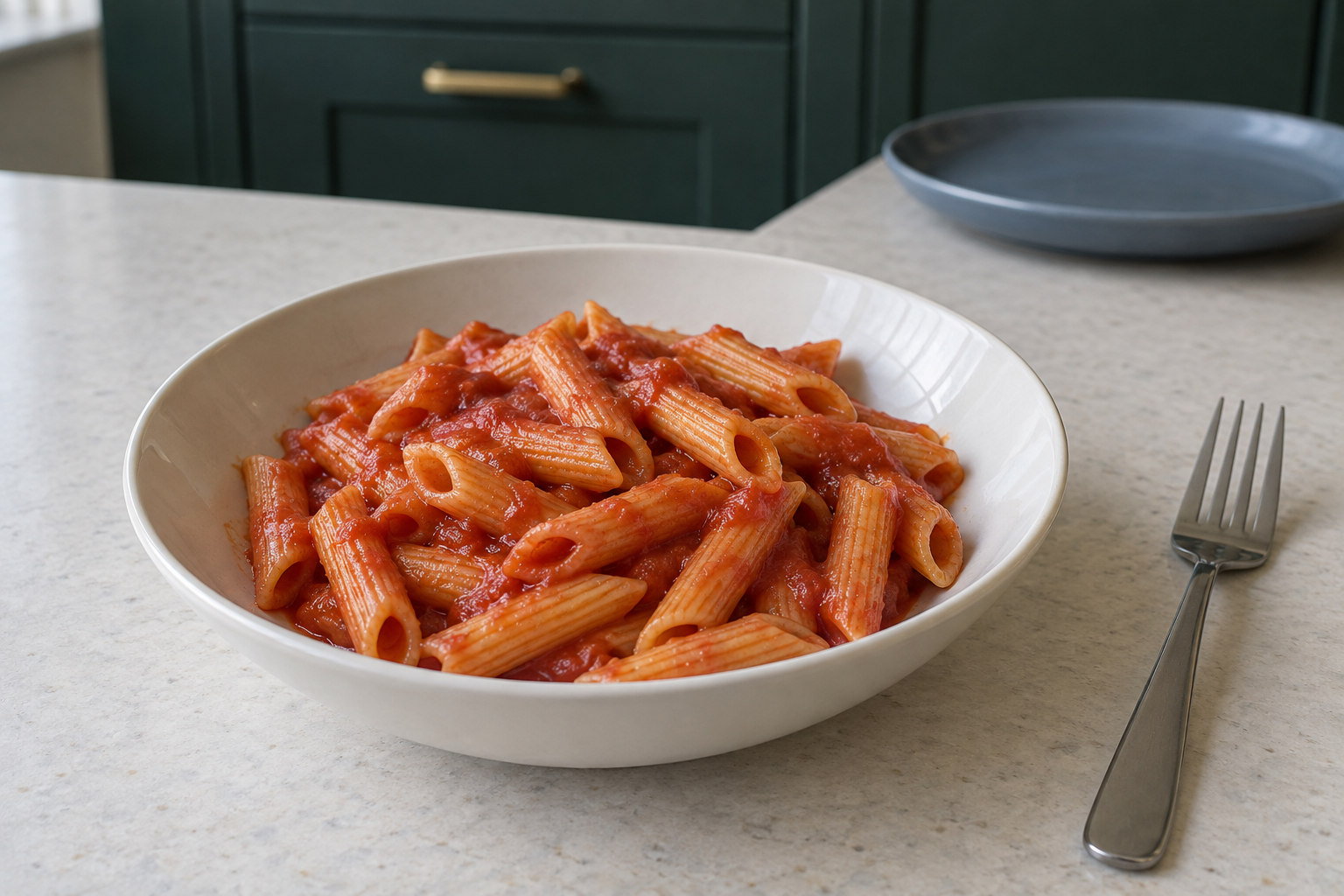
A little water can improve a sauce coating
Pasta releases starch into its cooking water. A modest amount of that water can loosen a thick sauce and help fat and liquid stay mixed while you stir. It does not automatically turn every watery sauce thick. The useful result comes from the amount added, the sauce and the mixing.
Save water before draining because that is the moment it is available. Then add it a tablespoon at a time. Pouring the whole saved mug into a small sauce is a common way to create a new problem.
For a two-portion practice
- 160 g plain short dried pasta; the full sauce batch starts with 250 g plain passata, 5 ml cooking oil and 30 ml drinking water by its linked complete lesson. Leave optional seasoning out for this first practice. Check the pasta packet's water, cooking and allergen instructions.
- Use a pasta pan holding at least 4 litres for a starting 2 litres of water if the packet permits, with several centimetres of headroom; change pan and water quantity for a product requiring more. Have the separate saucepan holding at least 1 litre for sauce, both lids, heat-safe standing colander, heat-resistant spoon, timer, tasting saucer and clean tasting utensils, dry oven gloves, two full stable trivets, heatproof measuring jug, ladle and marked 5 ml and 15 ml measures. The emptied pasta pan will also be the mixing pan; no third hot pan is needed. Rehearse the intended full cold-water weight before choosing the pour route. If that lift is unsuitable, the scoop route needs a sauce saucepan holding at least 2 litres, a heat-safe pasta spider or slotted scoop that retains these shapes, and two available matching rings with safe space between the pans. Only one ring is active at a time, but the water-filled pan stays stationary on its switched-off ring while the sauce warms on the other. With only one available ring, choose a smaller portion and pan you can manage in the cold rehearsal, or get help with draining; do not attempt a hot lift you cannot control.
- Make the sauce first, switch it off and cover it for the short same-session pasta-cooking interval. Cook the pasta using its lesson. After draining, the pasta waits briefly off the heat while you warm the sauce. Do not walk away from either cooking task or use this pause to leave food out for hours.
- For one portion use 80 g dried pasta and about half the sauce; cool the unused sauce promptly. Saving 150 ml water is a reserve, not a direction to use it all. Salt in the water is optional; use less when the sauce is already salty.
Finish the pasta in the sauce
- Drain food and save cooking water safelySet up the sink, ladle out water and drain without holding a loose lid.
- Stir, whisk, fold and turn: four different movementsMove the spoon gently through the pasta rather than tossing a heavy hot pan.
- Storage and reheating basicsKeep any leftovers within the cooling and reheating limits.
- Start checking the plain dried pasta shortly before its packet time, as explained in its lesson. Lift a piece onto a clean saucer, allow it to cool and bite. It should be nearly at the texture you want, without a hard or chalky centre.
- Switch off the pasta ring. Set the heatproof jug securely beside the pan and use a ladle to reserve about 150 ml cooking water. Keep your hand and face out of the steam; do not dip the jug by hand into the hot pan.
- For the rehearsed pour route, drain through the supported colander, put the emptied pasta pan on its trivet and return pasta to it. Warm the sauce in its separate saucepan until steaming throughout, stirring continuously, then switch off and pour carefully into the supported pasta pan with dry protected grips. For the planned scoop route, leave the heavy water-filled pasta pan stationary on its switched-off ring, warm sauce in the roomy 2 litre saucepan on the other available ring until steaming throughout, then switch that ring off. With both rings off and pans stable, use the spider to lift pasta, let each scoop drip over the water pan and lower it close to the sauce. Keep hands and face clear of steam; do not lift the heavy water pan. The roomy sauce saucepan is this route's finishing pan.
- Use the chosen finishing pan on a matching ring at low to medium-low heat. Stir gently with the spoon, drawing the pasta from the edges through the sauce. No pan tossing is needed. If it looks tight or clumpy, add one tablespoon (15 ml) of saved water and mix for about 15 to 30 seconds before deciding whether another spoonful is needed.
- Aim for sauce covering the pasta with little loose liquid underneath. Check the pasta texture again with a clean cooled sample. Usually this finish needs only a minute or two; stop sooner if it is already at your preferred texture. If slightly too loose, stir briefly on low heat, but do not keep cooking until the pasta falls apart just to evaporate every drop.
- Switch off, put the pan securely on the trivet and spoon into bowls. For this first practice no cheese, herbs or extra oil is required. Let the food cool to a comfortable eating temperature. Allow the reserved water to cool safely before pouring it away. Cool any saved meal portions promptly using the storage lesson. For the scoop route, leave the water-filled pan stationary until fully cool; empty only a remaining weight you can manage safely. Once water and pan are fully cool, leave the pan supported and use the ladle to remove cold water into the jug standing beside it. Carry and empty only a small jug quantity you can control, then repeat until the pan contains a comfortable cold weight. Only then carry and empty the remaining cold water; ask for help if grip or balance is still uncertain.
Choose the right correction
Dry and sticky pasta needs a little liquid and movement. Pasta swimming in sauce needs less added water and perhaps brief gentle evaporation. A sauce that contains large oil pools may need a different emulsion repair rather than more cooking. Taste the finished food before adding salt because the water and sauce both contribute it.
What if you forgot to save the water?
- Storage and reheating basicsFollow the original cooking clock, shallow cooling and earliest ingredient deadline.
If the reserve was forgotten, measure 15 ml room-temperature drinking water into the freshly combined pasta and already cooked sauce. Continue the supported low-heat finish, stirring for 15 to 30 seconds before reassessing and finishing until the whole fresh meal is hot. This does not require a separate kettle or boiling-water task.
If reserved water is unpleasantly salty, use that plain-water alternative instead. Do not add stock or salt to imitate starch. Water loosens an existing coating; it does not create missing sauce.
This correction is for the continuous fresh meal. Refrigerated leftovers need the complete storage lesson and one reheating until steaming hot throughout, not a brief texture adjustment.
Recognise the limit
Finishing adds more cooking time. If the pasta is already very soft, mix gently off the heat and serve instead of simmering it for several more minutes. For a delicate egg or dairy sauce, follow its lower-heat method. This technique should bring pasta and sauce together without undoing the texture you just achieved.