
Myths And Confidence
Does oil stop pasta sticking?
Why oil in pasta water is not the main fix for sticky pasta, and what actually helps: enough water, stirring and sauce timing.
Before you begin
- Pasta doneness: why tasting mattersFollow the measured boiling, stirring and tasting method.
- Pasta portions, sauce amount and finishingPrepare the sauce first and assemble the measured meal.
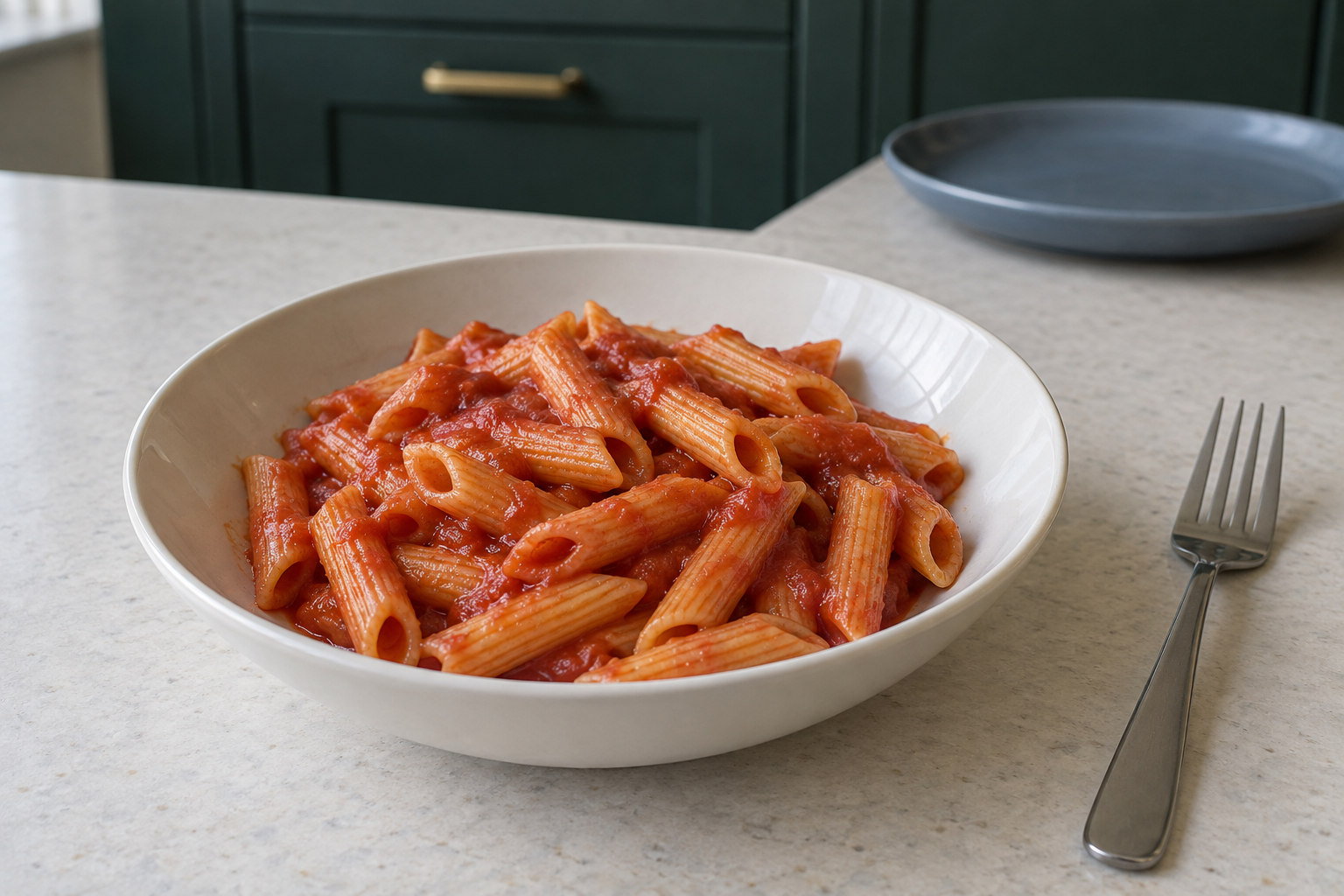
Oil in the water does not solve the main sticking problem
For this plain short dried pasta and hot tomato sauce, oil in the cooking water is unnecessary. Early stirring, suitable pan space and a controlled boil do the useful work. Floating oil is not a dependable anti-stick fix, and oil coating can hinder the sauce clinging later.
Oil measured into the tomato sauce is a different ingredient in a different place. The lesson is not that all pasta dishes must be fat-free.
What to prepare instead
- Pasta portions, sauce amount and finishingUse the complete measured meal, not an unexplained ready-made sauce.
- Drain food and save cooking water safelyRehearse the actual cold weight and set up a supported colander before heat.
- 160 g plain short dried pasta, 250 g plain passata, 5 ml cooking oil and 30 ml drinking water for the sauce. Leave optional salt and oregano out for this first meal. Check the actual pasta and passata labels and everyone's allergens.
- Use a hob-compatible pasta pan holding at least 4 litres for a starting 2 litres of cooking water, with several centimetres of headroom; change pan and water quantity if the packet requires more. Have a separate saucepan holding at least 1 litre for the sauce, both lids, coating-safe spoon, ladle, heatproof jug marked for 150 ml, marked 5 ml and 15 ml measures, scales, timer, supported colander, two full stable trivets, dry gloves, clean tasting fork and saucer, serving bowls and shallow storage containers. Rehearse the intended full cold-water weight before choosing the pour route. If that lift is unsuitable, the scoop route needs a sauce saucepan holding at least 2 litres, a heat-safe pasta spider or slotted scoop that retains these shapes, and two available matching rings with safe space between the pans. Only one ring is active at a time, but the water-filled pan stays stationary on its switched-off ring while the sauce warms on the other. With only one available ring, choose a smaller portion and pan you can manage in the cold rehearsal, or get help with draining; do not attempt a hot lift you cannot control.
- Read the full linked portion-and-finish lesson before starting. Make the sauce first and follow the same one-ring order; do not drain pasta and then start making sauce from scratch.
Cook a portion without oil
- Pasta doneness: why tasting mattersUse early stirring, the packet clock and the cooled centre check.
- Pasta portions, sauce amount and finishingKeep the exact sauce-first and emptied-pasta-pan sequence.
- Drain food and save cooking water safelySave 150 ml with a ladle; no hand-dipped cup.
- Before heat, prepare all measured ingredients, clear the hob-to-sink route and stand the colander securely in the clean empty freely draining sink. Use the cold lift rehearsal first. Put both trivets, the jug and the clean tasting tools within safe reach, not on an active ring.
- Make the sauce first in its separate saucepan: add 250 g passata, 5 ml oil and 30 ml water to the cool pan, stir, then bring gently to a simmer. Once gentle bubbling begins, use low heat for about 10 to 15 minutes, stirring across the base about every minute until hot through and a spoon leaves a brief trail. Do not leave it to prepare something else. Switch off, land it level on one trivet with dry protected grips and cover during the following brief pasta stage. This is not indefinite warm storage.
- In the larger pan, bring the packet-compatible measured cooking water to a boil as the full pasta lesson describes. Add 160 g pasta carefully, stir immediately and again during the first couple of minutes, then keep a controlled boil without foaming over. Start the packet clock when the boil returns. Begin the clean, cooled-piece taste check about two minutes before the packet time. Short dried pasta should have no hard chalky centre; do not use this early-tasting method for raw filled pasta.
- When cooked, switch the ring off. Set the heatproof jug on the worktop and ladle about 150 ml water into it, keeping hands and face away from steam. It is a reserve, not a compulsory addition. For the rehearsed pour route, drain through the supported colander and return pasta to its emptied large pan on the second trivet. For the planned scoop route, leave the heavy water-filled pan stationary on its switched-off ring; do not try to empty it now. No rinse or oil in the boiling water is needed.
- Warm the sauce saucepan gently until steaming hot through, stirring and staying beside it. In the scoop route use the other available ring while the pasta-water ring remains off. Switch off the sauce ring. For poured-and-drained pasta, land the sauce pan on its trivet and carefully pour or spoon sauce into pasta in the supported emptied large pan, using dry protection for its grips. For the scoop route, keep the roomy 2 litre sauce saucepan stable on its switched-off ring and use the spider to lift pasta from the stationary water pan; let each scoop drip over that pan, then lower it close to the sauce. Keep hands and face away from steam. The roomy sauce saucepan becomes the finishing pan; leave the heavy water pan stationary to cool fully.
- Use low heat on the chosen finishing pan (emptied pasta pan for pouring, roomy sauce saucepan for scooping). Stir gently across the base, drawing sauce through the pieces rather than tossing the pan. If tight or dry, add 15 ml reserved water, stir for 15 to 30 seconds and reassess before another 15 ml. Finish briefly, often about 1 to 2 minutes, only while texture remains pleasant and the whole freshly combined meal is hot. Switch off, land the pan securely, cool a separate taste sample, and serve promptly using clean utensils. Do not move or empty the scoop route's water pan until it is fully cool and its remaining weight can be managed safely. Once water and pan are fully cool, leave the pan supported and use the ladle to remove cold water into the jug standing beside it. Carry and empty only a small jug quantity you can control, then repeat until the pan contains a comfortable cold weight. Only then carry and empty the remaining cold water; ask for help if grip or balance is still uncertain.
When drained pasta clumps
- Pasta water and sauce clingMake one measured addition and reassess.
- Storage and reheating basicsFollow the original cooking clock, shallow cooling and earliest ingredient deadline.
For pasta just cooked in this continuous meal session, use the supported emptied pasta pan, or the roomy sauce saucepan for the planned scoop route. If lightly clumped, add 15 ml reserved cooking water and use the spoon to separate gently while drawing through the already cooked hot sauce. Use low heat briefly and stop as soon as the coating and temperature are suitable. Do not pull a solid lump apart by force or add a large glug of oil.
If the reserve is missing, use 15 ml room-temperature drinking water and continue the full brief finish until the whole fresh meal is hot. If a few pieces remain stuck, accept them rather than overcooking the meal.
This is not a method for pasta with an unknown history or a quick warm-through for yesterday's food. Stored pasta needs the complete storage and one-reheat procedure.
Are there exceptions?
- Should you rinse pasta?Choose the complete hot meal or separate cold salad route.
- How to use hob heat without guessingIdentify the ring, heat control and safe stopping position before cooking.
Some specific cold salads use a measured dressing or oil after cooking. Other products have packet-specific methods. Neither is a reason to pour oil into every pan of boiling water.
For foam that threatens the rim, lower the heat and keep the pan attended. Do not add oil as a foam cure, fit an overflowing lid or carry a boiling pan to fix it. Start with suitable headroom and use the full boiling lesson.
A simple comparison
- Storage and reheating basicsFollow the original cooking clock, shallow cooling and earliest ingredient deadline.
Complete this no-oil-in-water meal first. Record dry pasta weight, water quantity, early stirring and how the coating feels. You do not have to cook a second simultaneous pot or deliberately add oil to prove the point.
Serve promptly and start shallow cooling for any untouched saved portion. Use the full 0 to 5 C, 48-hour-or-earlier and one-reheat procedure. Leave pans and remaining cooking water fully cool before safe emptying and washing.