
Flavour
Marinating: flavour, timing and safe handling
Understand what a marinade can change, mix a small batch and keep raw-food handling separate from serving.
Before you begin
- Clean and set up your kitchen before cookingPrepare separate raw and cooked areas and the full hand/surface routine.
- Use an oven: settings, preheating, shelves and the grillRehearse the supported dish lift and actual oven controls.
- Kitchen thermometer basicsRehearse the probe and understand the complete centre-temperature hold.
- Thermometer cleaning and carePrepare proper probe cleaning before checking chicken.
What marinating does
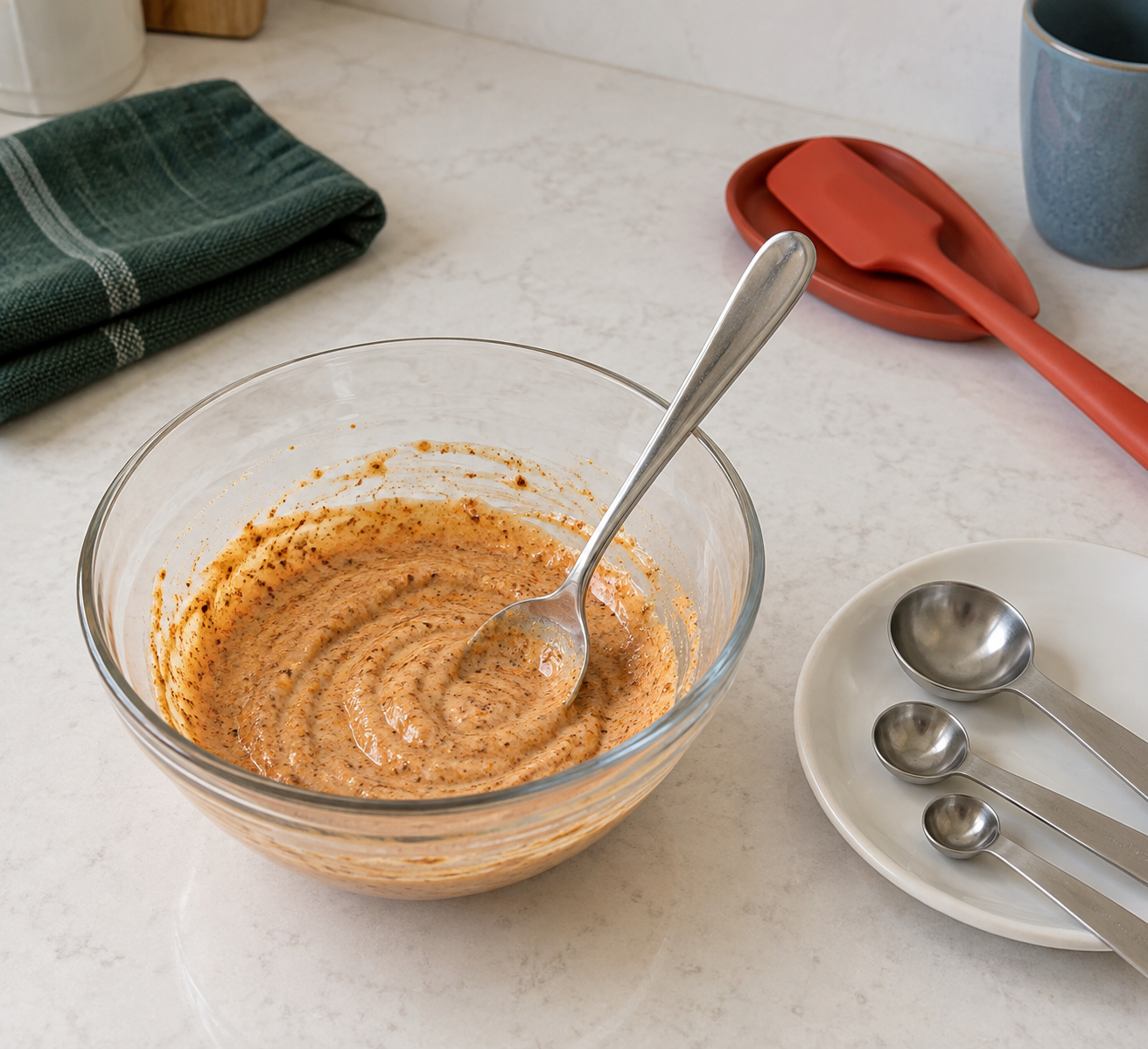
A marinade is a seasoned mixture put around food before cooking. Oil, acidic ingredients such as yoghurt or lemon, and herbs or spices do different jobs. Here you learn to mix a coating, cover the food evenly and keep a clean mixture separate from one that has touched raw chicken. You do not need to inject, pierce or massage meat with your fingers.
Acid can change meat texture; longer soaking is not automatically better and can make the result unpleasantly soft or tough. It does not replace thorough cooking or repair poor storage. This first exercise uses a short 30-minute fridge period, not a claim of deep tenderising. Choose one practice below; the chicken and vegetable alternatives are separate attempts.
Prepare a small practice batch
- Measuring accurately without stressUse the exact 15 ml, 5 ml and fractional measures.
- Read food labels before you cookCheck the chicken starting condition and milk/spice labels.
- Thermometer cleaning and carePrepare the probe and its clean resting place.
- Use 300 g plain boneless, skinless chicken thighs: chilled and within the use-by and after-opening limits, or fully fridge-defrosted with its original thawing deadline still valid. Do not substitute bone-in, frozen, stuffed or already seasoned thighs. Choose similar-sized pieces which unfold flat. Follow stricter applicable pack directions instead if they conflict with this example.
- Use 1 level marked 15 ml tablespoon plain yoghurt, 1 marked 5 ml teaspoon cooking oil, 1/2 level teaspoon mild paprika and 1/4 level teaspoon ground cumin. Leave salt out for the first attempt; it is optional after tasting the finished food. Check the actual yoghurt and spice labels for milk, other allergens and dates. Use marked fractional spoons, not an estimated half of an eating spoon.
- Set out scales, a clean glass or food-grade stainless-steel bowl holding at least 1 litre, a fitting cover, mixing spoon, marked measures, raw-food tongs and a separate washable rest for them. Have clean cooked-food tongs, serving plate, eating fork and knife ready in another area. Nothing that touches raw chicken returns to a spice jar, yoghurt pot or serving utensil.
- Choose a sturdy rimmed metal oven-safe dish which holds the unfolded pieces with gaps and leaves room to grip both sides. Check its permitted temperature. Have two dry oven gloves, broad trivet, timer showing minutes and seconds, working food probe with a suitable sensing area, and its approved cleaning/disinfecting kit. A hand-held probe must not be left in the oven.
- Before opening chicken, read the required oven and thermometer lessons, practise carrying the cold empty dish with both gloves to the trivet, and identify normal fan/conventional heat, start, preheat signal and off. Use a lighter suitable dish or assistance if that lift is uncertain. Keep the route clear. Set out shallow leftover containers, lids and labels if saving food. Plain cooked chicken finishes this task; bread is an optional no-cooking accompaniment.
Mix, chill and cook
- Should you wash raw chicken or meat?Open and transfer without rinsing or raw-juice splashes.
- Kitchen thermometer basicsComplete the centre placement and full threshold hold.
- Use an oven: settings, preheating, shelves and the grillUse both gloves, a supported dish and the actual off controls.
- Wash hands and prepare the two clean areas. With chicken still chilled, spoon the measured yoghurt into the bowl, add measured oil, paprika and cumin, then stir around the base and sides until no dry powder remains. Put the ingredient packs and clean measuring tools away before the raw-food job. Do not taste or add a serving portion from this bowl later.
- Put the unopened chicken pack inside a separate clean receiving tray in the raw area. Read its opening design; peel at its tab if provided rather than cutting towards your hand. If a tool is required, support the pack on the worktop and use suitable scissors to cut away from your hand, then set them aside for cleaning. Do not force a slippery pack or use a knife as a lever. Put the marinade bowl, with its mixed coating already inside, on scales set to grams. Check the bowl and final food load fit the scales' capacity, then press tare/zero and transfer 300 g chicken directly into that bowl with raw-food tongs. Lift the bowl off the scales before turning the thighs. Cover any unused raw portion, wash hands before lifting its covered pack or touching the fridge handle, and refrigerate immediately with its original pack limits. Keep contaminated tools on their separate rest. Never rinse raw chicken.
- Turn each thigh through the coating with the raw-food tongs, lifting and turning rather than splashing. Keep tongs on their raw-food rest, not across the clean tools. Cover the bowl. Wash and dry hands BEFORE lifting the covered bowl or touching the fridge handle; clean a contaminated outer bowl or handle by the setup routine if needed. Refrigerate on the lowest shelf, away from ready-to-eat food, for about 30 minutes and set a reminder. The marinade does not restart a use-by, opening or thawing clock.
- Near the end of that period, with the oven cold set its shelf near the middle as the manual shows. Close the door, select normal 200 C conventional OR 180 C fan, start heating as required and wait for the actual preheat signal. These are alternative settings. Do not use grill, defrost or a fan symbol guessed from appearance. Keep the covered chicken chilled while waiting.
- Take the bowl out only when ready to load. With the raw tongs unfold each thigh in the supported dish so it is flat rather than rolled into a thick bundle. Let surplus coating drip back into the raw-contact bowl and arrange with gaps. If the dish is crowded, choose a larger suitable dish before loading; this is not a heap-cooking method. Discard remaining raw-contact coating and contain packaging. Put raw tools aside for proper cleaning, then wash and dry hands before touching gloves, controls or clean food.
- With both dry gloves, open the door with face and forearms back from heat. Carry the dish level, set it fully on the shelf, release only when supported and close the door by its handle. Do not balance it on the open door. Start a 25-minute checking reminder from loading. This is a KINALO yoghurt-coating variation on an oven-thigh technique, not a physically tested time; the linked source uses halved thighs with different flavourings. Its time does not certify these pieces.
- At the reminder, use both gloves to land the dish level on its broad trivet and close the oven door. Keep the oven on if further cooking may be needed. With a cleaned probe in degrees C and clean checking tongs if needed, approach the thickest part of EACH thigh from the side so the full sensing area is in the meat centre, not touching the dish. Keep hands clear of the hot dish and do not hold meat with fingers.
- Wait for a settled reading, look for the coldest thick areas and check 75 C maintained for 30 seconds, or 70 C for 2 minutes, using the seconds timer. A brief flash at the target is not the whole check. The thermometer lesson gives the full holding and cleaning sequence. If a reading is too low or drops below the chosen target during its hold, return the dish safely for another 3 to 5 minutes, clean/disinfect the probe as directed and repeat. Clean any checking tongs which touched undercooked meat before they touch cooked meat.
- If the non-smoking coating darkens before the middle is ready, reduce the oven setting by about 20 C and continue those centre checks; the new setting is not a safety result. If there is smoke inside, use the oven lesson: safe off control, keep the door closed, and do not open to investigate. For fire, leave, warn others and call 999. Do not pour water into a hot oven.
- Once every piece meets the full centre check, turn off the heating function and temperature control as your manual directs. Land the dish on its trivet with both gloves and transfer meat with the separate clean serving tongs to the standing clean plate. Leave it about 5 minutes for comfortable cutting, without treating resting as a substitute for the probe hold. Cut a bite with the eating knife and fork and let it cool before eating. Optional bread needs its own allergen check, not another cooking task.
Watch the surface as it cooks
Pale yoghurt streaks or browned spice patches tell you about the coating, not the centre temperature. Sugar and garlic in another marinade can darken at a different rate. Do not add them and assume the first method is unchanged. Record prepared weight, whether thighs were flat, oven mode, first check and actual finish; change one flavour component in a later attempt.
For a separate cold accompaniment next time, set aside a spoonful of plain yoghurt in its own clean covered bowl BEFORE opening chicken. Keep it chilled and within its label limit, then use a separate clean serving spoon. Do not assume every uncooked spice blend or shop marinade is ready to eat; follow its label. This first exercise uses all the spiced coating for cooking and discards the remainder after raw contact. Do not pour used marinade onto the plate or use it on vegetables.
Try the same idea with vegetables
- Washing vegetables and keeping prep cleanWash, trim and dry courgette before the separate practice.
- Knife confidence: the safe claw gripMake the flat face and safe half-moons.
- Wok and batch cooking basicsUse supported turning, centre checks and the controlled water correction.
- How to use hob heat without guessingFind the ring controls before the vegetable-only attempt.
For a separate meat-free attempt, use 150 g washed, trimmed fresh courgette. First read the linked washing and knife lessons and the pan lesson for turning and water correction. Bridge-halve lengthways, place the flat faces down and claw-slice across about 5 mm thick. Weigh after preparation. In a clean bowl mix one marked 5 ml teaspoon oil with 1/8 level teaspoon mild paprika; use a marked 1/8 spoon, or omit paprika if you cannot measure it. Turn the dry slices through this oil just before cooking. There is no extra teaspoon for the pan.
Have a stable hob-compatible 24 to 28 cm frying pan, heat-safe turner, dry handle protection, trivet, checking fork/plate, separate clean tasting fork and standing serving bowl ready. Add the coated courgette to the cold pan, spread shallowly, then use medium heat, adjusting to a manageable sizzle. Turn regularly. First inspect at about 2 minutes, then every minute; lift a thick piece to the checking plate and fork-test its centre. A cooled separate bite should not be raw and crunchy. Lower heat if the spice darkens.
For a still-firm centre in a non-smoking food-filled pan, follow the pan lesson's calm-sizzle correction: switch down, add 15 ml drinking water low over the food with hands back from steam, then stir and check again after 1 to 2 minutes. Never pour into bare or smoking oil. When thick centres are tender, switch off, support the pan on its trivet with dry handle protection if needed and lift food into the standing bowl. Cool a bite before eating. No chicken coating, carrot batch or soy sauce is needed for this separate courgette task.
Finish, store and reset
- Storage and reheating basicsUse the complete shallow cooling and retained-date routine.
- Clean and set up your kitchen before cookingClean raw-contact surfaces and visible tools at a safe pause.
Start cooling untouched cooked leftovers now, in clean shallow portions; keep raw tools away. Refrigerate within 1 to 2 hours, label with the original cooking date/time and use within 48 hours or an earlier ingredient limit. Freeze promptly if appropriate. Reheat a portion only once until steaming throughout. A new sauce does not restart an older food's clock.
Clean and disinfect the probe and its rest as the care lesson directs. With cooking safely stopped, wash raw-contact bowl, tongs, rest, opening tools and receiving tray thoroughly, then clean/disinfect contaminated surfaces according to the product label, including its contact time and required rinse. Wash hands again before storing clean tools. Let the hot dish or pan cool safely before washing as its maker directs. Check oven or ring controls are off and leave the preparation area dry. If raw juices touched the scales or their buttons, use their maker-permitted surface cleaning, keeping liquid out of the electronics; do not immerse them.
Sources and further reading
- Food Standards Agency: thorough cooking and reheating
- Food Standards Agency: chilling, defrosting and storage
- Iowa State University Extension: covered fridge marinating, non-reactive containers and clean sauce separation
- Good Food: original oven-thigh technique; halved pieces and different flavourings, not this exact coating