
Mistake Recovery
How to fix food that tastes too salty
Test dilution on a small cooked sample, choose an unsalted addition, and stop before a rescue wastes more food.
Before you begin
- Seasoning food without guessingUse separate clean mixing and tasting utensils.
- Make a simple tomato sauce from passataMake the fresh plain base completely before tasting or diluting another dish.
- Measuring accurately without stressMeasure 30 ml samples and 15 ml additions without guessing.
Stop concentrating the salt
- Read food labels before you cookCheck salt already supplied by ingredients, and any proposed addition.
First check that the food is at a fully cooked, safe-to-taste stage. Use its original method, not a burnt surface or a pleasant smell as evidence. Transfer a little with the clean cooking spoon, let it cool in a cup and taste with a separate spoon. Sharpness, bitterness and saltiness are different problems.
If saltiness is the problem, stop adding stock cubes, cheese, soy sauce and salty seasonings. Switch off a sauce that is reducing while you decide, and leave it supported on its trivet using dry gloves for a hot handle. Evaporation removes water while the salt remains. Sugar and lemon do not remove that salt.
Dilution means spreading the existing salt through more food or liquid. It lowers the concentration, not the amount of salt already in the original dish. A smaller serving of the salty component with plain food is another option. Neither approach makes an unsuitable dish appropriate for someone with a specific salt restriction.
Choose the appropriate route
- Make a simple tomato sauce from passataMake the fresh plain base completely before tasting or diluting another dish.
- Open a can and use cooked beansPrepare and heat plain canned beans for a later stew rescue.
- Boil and steam vegetables without guessingCook an unsalted vegetable addition fully.
- Storage and reheating basicsUse the original cooking time and earliest ingredient deadline.
- For the first practice, use one fresh plain sauce batch: 250 g plain passata, 1 teaspoon oil and 30 ml water, cooked by the full linked method. Leave its optional salt and oregano out. Do not deliberately make a whole meal inedibly salty.
- Before heating, add three small clean bowls, a marked 15 ml tablespoon, fine salt in a small dry dish, three mixing spoons, separate clean tasting spoons and a used-utensil plate to the sauce lesson's equipment. Have ready-to-eat bread and a clean plate if testing a complete mouthful.
- For an actual tomato sauce, make a separate unsalted batch by that complete method. Uncooked passata is not an immediate tasting addition. If making the extra batch delays the affected food, use its cooling routine rather than leaving it waiting warm; check its history before reheating.
- For a soup, test 30 ml fully cooked soup with 1 teaspoon, 5 ml, drinking water in a separate bowl first. More water may help saltiness but weaken flavour and body. An unsalted ready-to-use stock may suit, but check that it really is unsalted and meets everyone's requirements.
- For a stew, choose compatible plain cooked beans or cooked vegetables, prepared by their complete lessons. Dried beans and raw potato are not quick additions. For a topping or filling, try a smaller spoonful with plain ready-to-eat bread before cooking an extra side.
- If a salt spill sits separately on cold ingredients and has not mixed in, lift off that visible patch with a clean spoon before stirring. This is not a reason to taste raw meat or reach into a hot pan.
Test dilution before changing the pan
- Make a simple tomato sauce from passataMake the fresh plain base completely before tasting or diluting another dish.
- Storage and reheating basicsUse the original cooking time and earliest ingredient deadline.
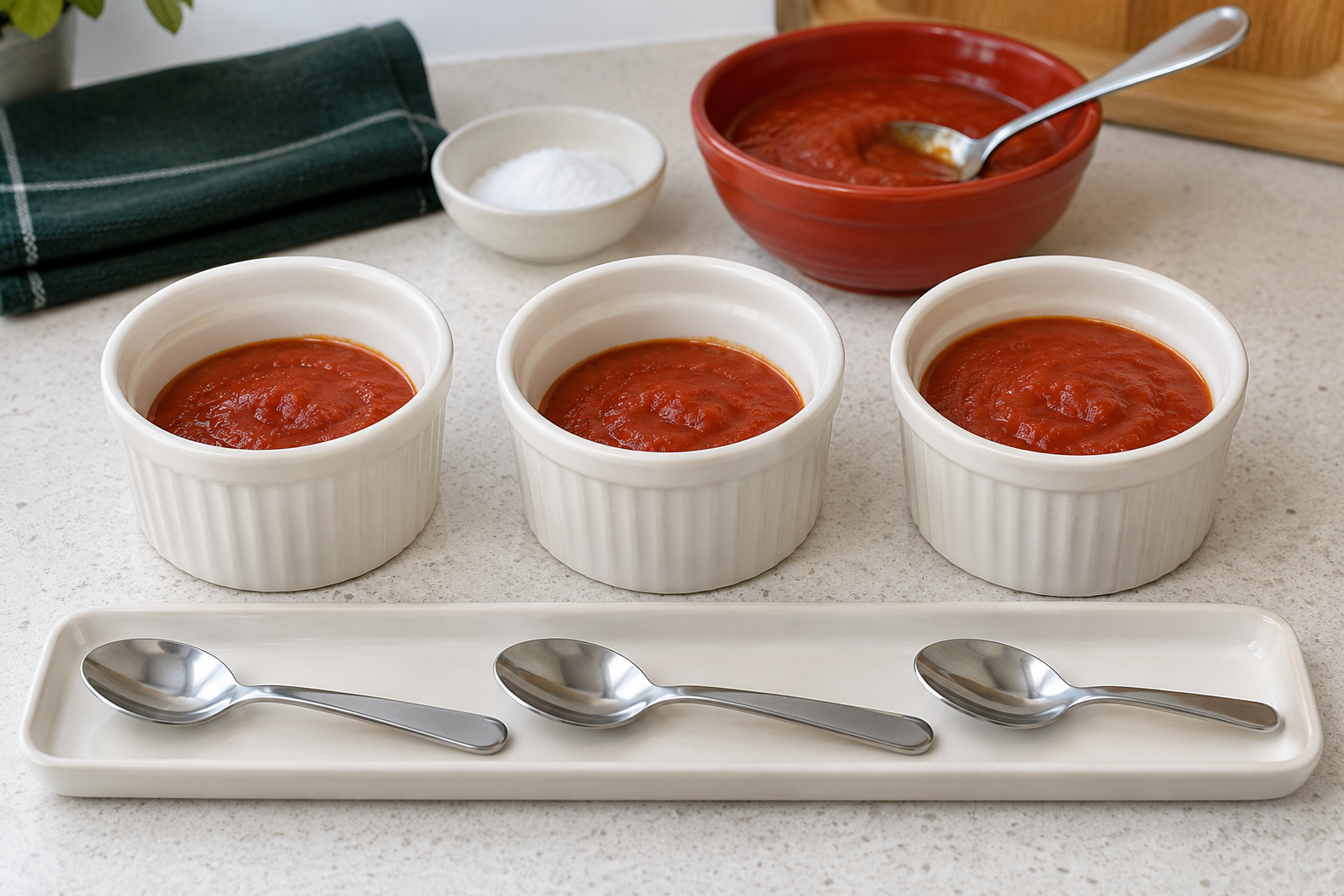
- Cook the practice sauce fully. Switch off and land the pan level on its prepared trivet with dry gloves if needed. Transfer 2 level tablespoons, 30 ml, into each of the three bowls. Label their positions plain, seasoned and diluted. Keep the transferring measure out of mouths and tasted samples.
- Leave plain unchanged. Add only a few grains of fine salt to seasoned and the same small number to diluted, using clean dry fingers. Stir each with its own mixing spoon. You are comparing a small seasoning change, not forcing an unpleasant amount.
- Use the clean tablespoon to take 1 tablespoon, 15 ml, untouched cooked plain sauce from the pan and add it to diluted. Mix with that bowl's spoon. This sample now contains more food; it is not a salt-removal trick.
- Let all samples reach comfortable tasting warmth, then taste using separate clean spoons. Compare seasoned with diluted, and then plain. You may prefer the diluted version, the seasoned one or neither. Keep every mouth-used spoon out of shared food and never return tasted sauce to the pan.
- For a real already-salty sauce, use the same 30 ml affected-sauce plus 15 ml freshly cooked plain-base test, with separate utensils for the two pans. Only if it helps, begin with 2 tablespoons, 30 ml, plain base in the small affected pan. Stir through fully, warm the combined food as its method requires, then cool a new clean sample and reassess before more. Larger pans still need gradual additions; do not assume the starting 250 g makes 250 ml finished sauce.
- If the dish was refrigerated, this repair must be part of its one reheating: heat until steaming hot throughout, serve the portion promptly and retain the earliest deadline. Do not repeatedly warm, taste and rechill it. If you cannot manage the extra food or time, stop.
- Eat your tasted samples promptly or discard them. Serve the untouched practice sauce with bread, or start its cooling routine now. The comparison does not restart its cooling clock.
Why the potato trick is limited
- Mashed potatoes: even cooking without a gluey textureFor a later plain potato side, follow the full mash method and omit its optional seasoning.
Potato absorbs salty liquid, not salt selectively. Eating extra unsalted potato increases the food; removing one is not a dependable rescue.
Keep texture in the decision
- Open a can and use cooked beansOpen, rinse where appropriate and warm the cooked beans.
- How to fix a watery sauceChoose body or thickener without concentrating the salt again.
If water makes the salt level more acceptable but the sauce too thin, do not reduce it back to the old volume: that returns towards the old salt concentration. A suitable fully cooked unsalted base or mashed cooked beans can add food as well as body. Test the texture in a small bowl before changing the meal.
For the bean version, prepare and warm plain canned beans by their full method. Put 2 tablespoons in a supported bowl, allow comfortable handling warmth, then press with a fork against the bowl until mashed. In a separate bowl, mix 1 tablespoon of mash with 2 tablespoons affected cooked stew. Taste a cooled clean sample. If useful, start with 1 tablespoon mash in the stew, stir and heat through before a fresh test. Do not try this if the bean flavour or texture does not suit.
Milk and cream are not neutral replacements for every sauce: they change flavour, texture and allergen content. A starch thickener can change texture without removing salt. Get the salt level and intended dish right before choosing a further thickening method.
When to stop
- Stock cubes, stock pots and strengthCheck stock strength before it contributes excess salt.
- Storage and reheating basicsUse the original cooking time and earliest ingredient deadline.
Test a smaller serving before enlarging the batch further: put a bite-size piece of ready-to-eat bread on a clean plate, use a clean serving utensil to add about 1/2 teaspoon affected cooked sauce, cool and eat. A small amount with plain food may be pleasant even when a bowlful is not. Do not dip partly eaten bread into shared food.
If dilution would create more food than you can use, or the small test remains unpleasant, stop and discard the affected portion. Salt correction does not repair unsafe storage, remove an allergen or make unfinished cooking safe. Save only untouched food with a known suitable history, following its original deadline.
Record what introduced the salt, how much plain base helped and whether the meal grew too large. Next time check stock, salted butter, cheese and condiments before adding salt; make the final adjustment after reduction.