
Myths And Confidence
Does cooking remove all the nutrients from vegetables?
Understand why cooking changes nutrients differently, then practise checking a small steamed vegetable batch without chasing one perfect method.
Before you begin
- Boil and steam vegetables without guessingLearn the full basket, pan, water-level, lid and serving method first.
- Measuring accurately without stressWeigh prepared food and use marked 5 ml and 15 ml spoons.
The blanket claim is wrong
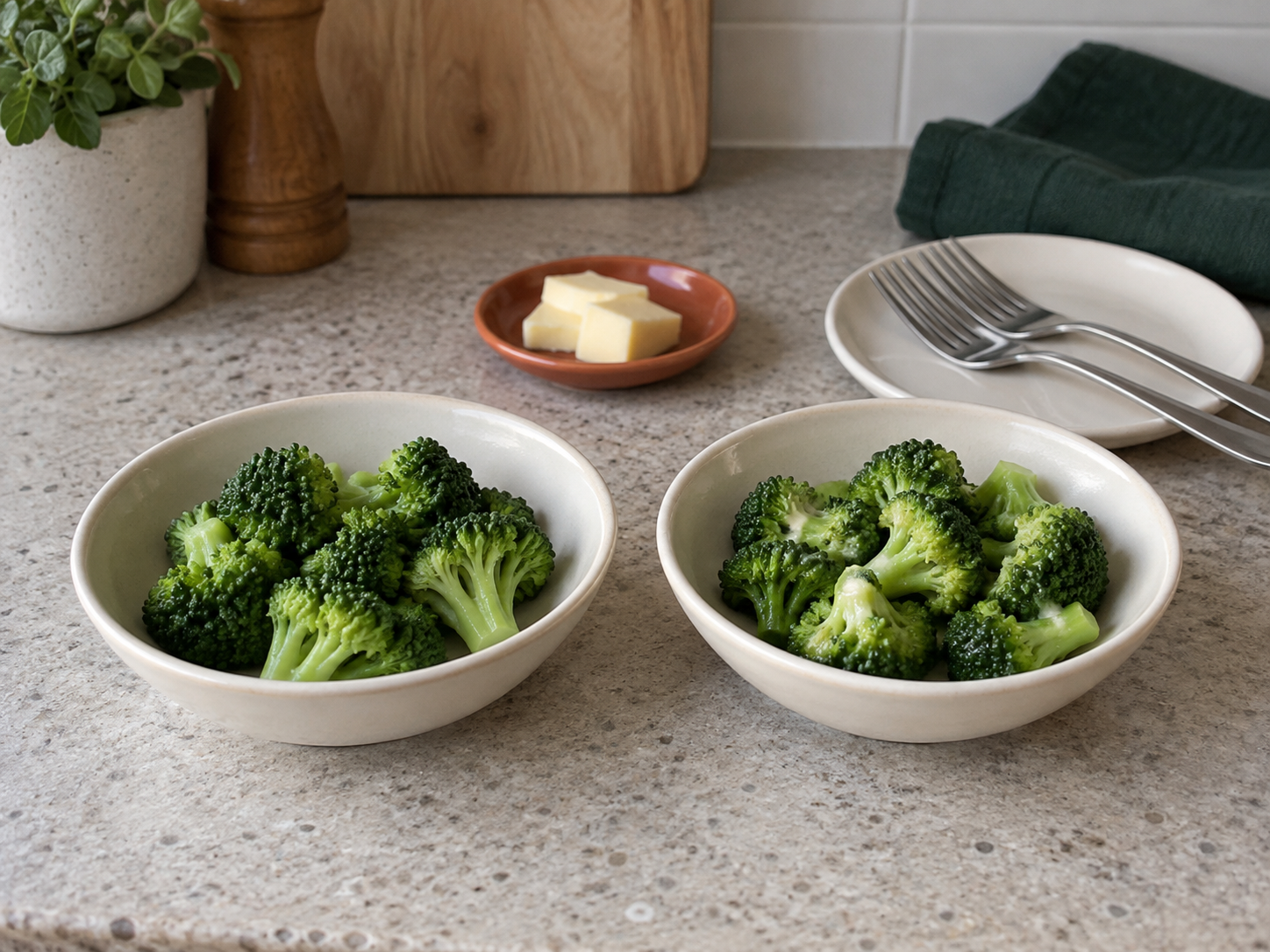
Cooking does not remove every nutrient. The effect depends on the vegetable, nutrient, temperature, water and time. Some vitamins can be lost with heat or move into cooking water; other compounds remain, and cooking can change how readily some are released from the food. Neither raw nor cooked is automatically best for everything.
Laboratory measurements of selected vitamins cannot give a single percentage for your dinner. A small seven-person broccoli study also found that a higher amount released during analysis did not necessarily mean a higher amount measured in blood after one meal. Those results do not establish one best method for every vegetable or person.
For everyday cooking, a useful practical approach is to choose a texture and method you enjoy and avoid continuing well past the point you want. That is a cooking choice, not a way to measure vitamins at home or prescribe a personal diet.
Choose a method that suits the meal
- Boil and steam vegetables without guessingComplete the separate water and basket methods.
- Use a microwave and check for even heatingLearn safe vessels, covering, turning and standing before changing appliance.
- Cook red lentils and make a simple soupMake a complete first soup, including its liquid and ingredient preparation.
- Roasted vegetables: spacing, oil and donenessUse the carrot-specific size and roasting method.
- Steam carrots or broccoli with a purpose-made basket: food stays above the water. Complete the linked basket fit, water level and far-edge lid opening, not an improvised bowl tower.
- Boil a small batch and drain once its centre is as tender as wanted. A full pan left bubbling while you prepare another task can continue softening the food.
- Microwave only with the complete equipment, covering, turning and standing method appropriate to that food and appliance. Less water does not mean skipping required packet cooking.
- Use soup when you want vegetables and their cooking liquid together. Keeping the liquid is not a guarantee that heat-sensitive nutrients were unchanged.
- Roast when you want a different flavour and surface. Choose the actual ingredient method: carrot, squash, pepper, courgette and tomato do not share one temperature or timer.
Practise a small steamed batch
- Boil and steam vegetables without guessingMatch preparation, cold loading, water checks and supported serving.
- Butter, oil and finishing fatLearn a separate measured finish for cooked broccoli.
- Read the full linked steaming method before heating. Choose 200 g fresh broccoli and prepare 3 to 4 cm florets by that lesson; an optional peeled stalk is cut into about 5 mm slices. Have its saucepan, purpose-made fitted basket and lid, maker's instructions, measuring jug, heat-safe spoon or tongs, checking fork, testing plate, separate clean tasting fork, serving bowl, timer, dry gloves and heatproof landing places ready. Keep mouth-used tasting tools out of shared food and use a clean one for a new sample.
- With pan and basket cold, follow the maker's fit and water-level directions. The food stays above water, and the lid must fit. Rehearse any designed handle or lifting tool, but the simplest finish can leave the basket supported in the pan. Do not assume every basket has two handles or can be lifted by bare fingers.
- Load the prepared broccoli in the cold fitted basket, put on the lid and heat on a matching ring until water boils and steady steam is produced. Lower the setting to maintain steam rather than violent boiling. Keep face and hands clear of vents; start timing when steaming is established.
- Begin checking around 5 minutes. With dry gloves as needed, lift the lid's far edge first so steam escapes away from you and land the lid on its heatproof place. Spoon a thick floret onto the testing plate, test the stem centre with a fork and cool a sample before tasting. Replace the lid and continue a minute or two if too firm; no fixed time proves every piece ready.
- Stay beside the pan and watch the base water as the maker permits. If it needs a top-up, switch off, let steam clear and use the model's safe filling method. Do not pour through an unknown basket or wait for a burning smell. Stop if a safe top-up is not possible; never let the base boil dry.
- Once tender, switch off and open the lid away from your face. Leave the basket supported and spoon or tong broccoli low into the standing bowl, letting drips stay in the pan. If choosing to lift the basket, use only its designed lifting feature by its manual and land it on a suitable heatproof plate or trivet. Leave base water to cool before emptying.
- Serve plain and let your first bite cool. For a later butter or oil trial, use the complete measured finish linked below, not another hot-oil task. A deep bright-green colour is not a nutrient assay or proof of correct food storage.
What the colour can tell you
- How to rescue overcooked vegetablesChoose a safe-history new use without promising firmness or nutrients can be restored.
Green vegetables can change colour with cooking and acidity, while roasting can brown an outside before a centre softens. Colour helps describe appearance; it cannot tell you how many vitamins remain. Use the actual fork-centre and cooled tasting check for your chosen fresh vegetable.
A softer piece is not automatically nutritionally worthless. If safely handled and still pleasant to eat, choose the texture you want or follow the complete recovery method. Spoiled produce or unknown leftover storage is a different problem; neither extra cooking nor an attractive colour settles safety.
A practical next attempt
- Boil and steam vegetables without guessingUse its own thin carrot cut and steam check.
- Roasted vegetables: spacing, oil and donenessUse its larger carrot pieces, tray and centre checks.
- Storage and reheating basicsCool a small portion promptly, label its original cooking time and reheat only once.
On separate attempts, compare the complete thin-carrot steaming method with the complete larger-piece carrot roasting method. Each uses its own preparation and early checking reminder. Record texture and flavour rather than pretending it is a controlled vitamin experiment.
Cool any untouched cooked portion promptly and refrigerate within one to two hours; follow the full shallow-container routine. Cover and label its original cooking time, use within 48 hours or a shorter instruction, or freeze promptly if suitable. Reheat only once, to steaming hot throughout. For advice about a medically restricted diet, use your clinician's individual directions rather than adapting a general cooking article.
Choose a complete vegetable method
- Cook cauliflower spinach cabbage and kalePrepare florets or your chosen leaf type and cook one separate batch.
- Boil roast and mash prepared butternut squashStart with fresh peeled cubes and choose boil or roast.
- Roast peppers courgettes and tomatoesChoose the pepper, courgette or tomato preparation and its own temperature.
To move beyond the first broccoli batch, choose one of the complete ingredient routes below before starting. Cauliflower florets, delicate spinach and rib-free cabbage or kale have their own preparation and boiling checks. Peeled prepared squash has separate boiling, mash and roasting routes. Peppers, courgettes and medium tomatoes use distinct tray methods.
Read that route and its preparation links while everything is cold. Do not transfer the five-minute broccoli check or carrot roasting temperature to another vegetable just because the photograph looks similar. Frozen and ready-prepared packs keep their own full labelled cooking requirements.