
Flavour / Flavour basics
Butter, oil and finishing fat
A beginner guide to what butter and oil do, why fat carries flavour, and when a small finish matters more than adding more salt.
How to use this guide as a complete beginner
Keep a clean spoon nearby for tasting and make changes in small amounts. Flavour work is easier when you taste deliberately instead of throwing ingredients in because something feels wrong.
Ask what the food needs before adding anything: clearer, brighter, richer, fresher, warmer, sweeter or less intense. This keeps you from adding salt when the real problem is acid, fat or freshness.
Test changes on a spoonful where possible. Add one thing, stir properly, taste again, then decide. This is how you learn cause and effect.
Go slowly enough to notice
Speed hides information. The first few attempts are for seeing the change, hearing the sound, naming the texture and learning what happens when you adjust.
Use the image as a checkpoint
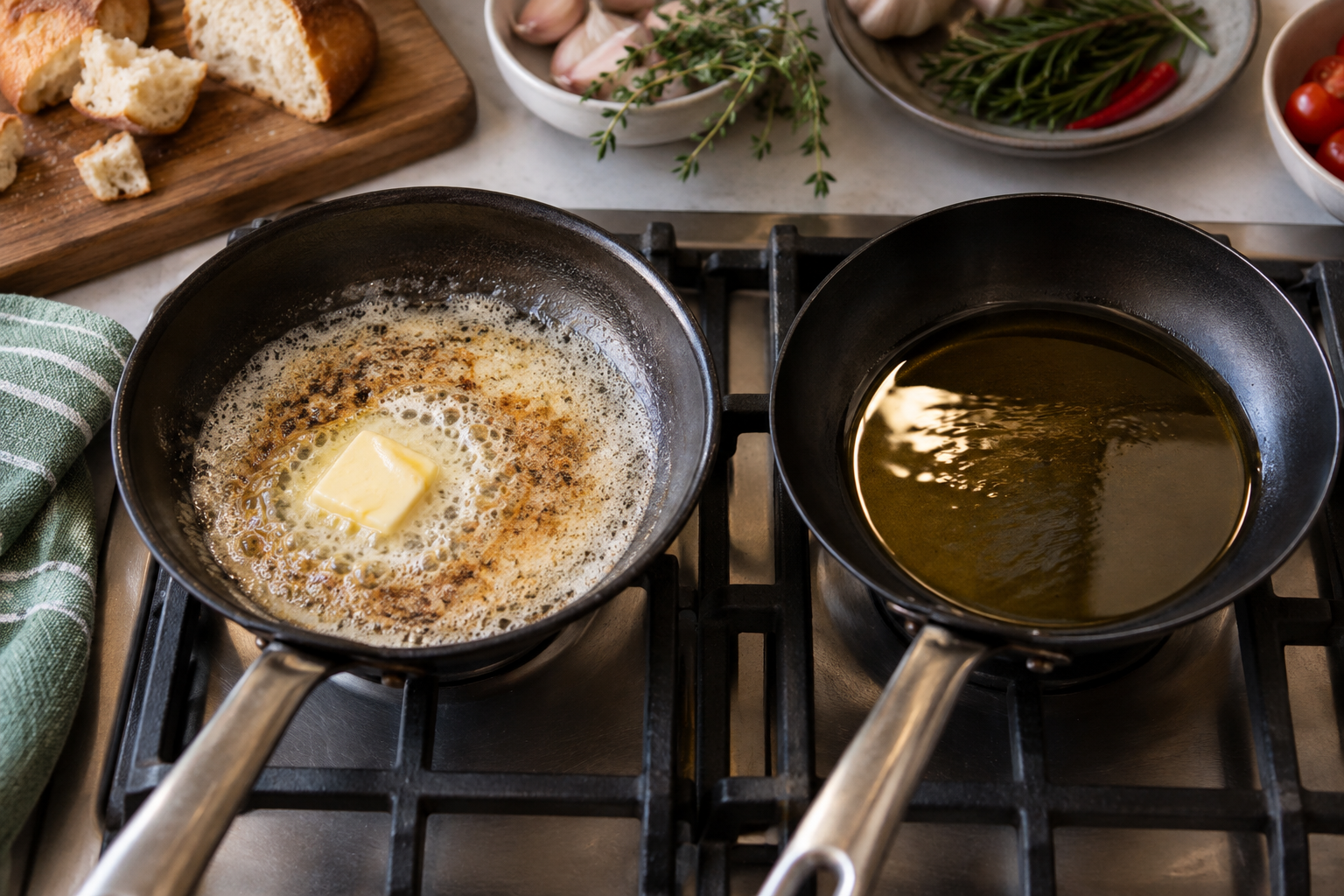
The linked KINALO image is not decoration. Compare it with your pan, board, bowl or tool so you know what stage you are looking for.
Good enough counts
Beginner cooking improves through repeatable attempts. If the food is usable and you learned the cue, the guide has done its job.
First-attempt checklist
Read the whole guide once before starting, then choose the smallest useful version of the task. Put the tools and ingredients where you can reach them. Decide what you will watch for first, such as colour, sound, texture, thickness, smell or how easily food moves.
During the attempt, change only one thing at a time. If the heat feels wrong, fix the heat before adding more ingredients. If the texture feels wrong, name the texture before trying to correct the flavour. This keeps the lesson clear.
Afterwards, write down one sentence: what worked, what changed too quickly, or what you would do earlier next time. That note matters more than a perfect result because it turns one cooking attempt into the next useful attempt.
If you only remember one thing, remember the cue rather than the instruction. Recipes tell you what to do; cooking confidence comes from recognising what is happening. Once you can name the cue, you can slow down, adjust and recover with less guesswork next time.
Fat changes flavour and texture
Fat is not just greasiness. It carries flavour, helps heat move into food, rounds sharp tastes and can make a finished dish feel more satisfying. Butter and oil both do this, but they behave differently.
Butter versus oil
- Butter adds dairy flavour and browns because it contains milk solids.
- Oil is often more neutral and can handle different heat depending on the type.
- Butter can burn if the heat is too high.
- Oil can make food greasy if too much is used.
- A small knob of butter or drizzle of oil at the end can soften a sauce or finish vegetables.
If food is over-oiled
Add bulk, drain excess if possible, serve with something fresh or acidic, and avoid adding more rich ingredients. You cannot season away oiliness; you need balance and dilution.