
Everyday Kitchen
Batch cooking: make extra without making a mess
Plan a manageable batch, cool it promptly and turn one cooking session into meals you can actually use.
Before you begin
- Make a simple tomato sauce from passataMake the plain tomato sauce from measured ingredients.
- Storage containers: sizes, lids and useful portionsChoose suitable shallow containers before making extra food.
- Storage and reheating basicsPlan the cooling and one-reheat route before cooking extra.
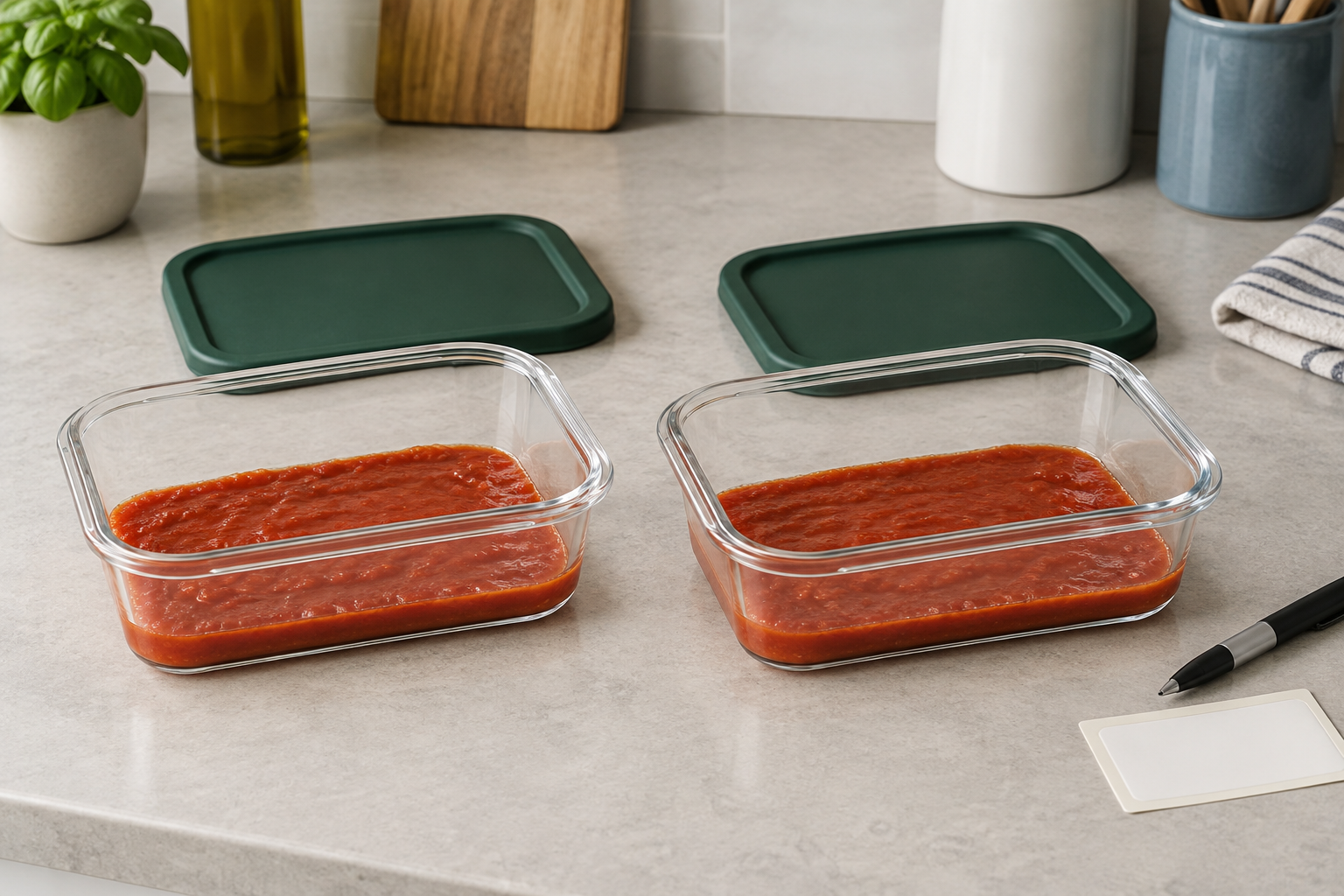
Start with one extra meal
Batch cooking means cooking extra deliberately and storing it for a known next use. Begin with one extra portion, not a week of unfamiliar dishes. This example makes a double batch of plain tomato sauce: use about half now and save about half for another meal. Sauce portions are adjustable; this is not a complete meal by itself.
Decide what accompanies the sauce before you start. Ready-to-eat bread is the simplest first serving, with no second hot task. Pasta or cooked canned beans are later options with complete linked methods. Check fridge space, shallow containers and the time you have for cooling before increasing any recipe.
What to get ready
- 500 g plain passata, 2 measured teaspoons olive or rapeseed oil and 4 tablespoons cold water (60 ml). Optional: 1/2 teaspoon dried oregano. Check dates, allergens and opening instructions; refrigerate unused passata as labelled. Salt is a final cooled tasting decision, not an automatic double pinch.
- Saucepan about 1.5 to 2 litres with generous headroom, lid, heat-safe stirring spoon, scales, teaspoon and 15 ml tablespoon, timer, clean tasting saucer and spoons, ladle, dry oven gloves and trivet. Have a plate and fork for the serving now. Check your pan and container care instructions.
- At least one broad shallow heat-compatible container for the reserved half, matching lid, label and pen; have a second if needed to avoid a deep fill. Prepare a clean cooling area protected from raw food, and fridge space. More portions require more cooling space, not just a larger saucepan.
- Optional for a burnt-base rescue: second clean saucepan and second trivet ready before heating. If not available, switch off and begin again rather than inventing a hot pouring arrangement.
Cook and divide the batch
- Make a simple tomato sauce from passataRecognise the first sauce's gentle simmer and cooled flavour checks.
- Storage and reheating basicsFollow the supported cooling, labelling and once-only reheating routine.
- Storage and reheating basicsFollow the saucepan inventory, stirring and hot-centre checks.
- Pasta water and sauce clingUse the complete optional pasta finish, not raw pasta in finished sauce.
- Open a can and use cooked beansChoose and prepare cooked canned beans if serving those instead.
- Wash hands, clean the area, measure the doubled ingredients and mix them in the cold pan. Do not preheat oil separately. Put the pan on a matching ring with handle away from the edge.
- Bring to gentle bubbling over medium-low heat, then reduce enough to avoid vigorous spitting. Stir across the base and edges every minute or two. Begin checking after about 10 to 15 minutes of gentle bubbling, allowing longer if needed; a double batch does not automatically take double time. For splashes, use the lid partly over the pan with a steam gap, lifting its far edge away from your face with dry gloves as needed.
- When sauce coats the spoon but still pours, switch off and park on the trivet. Cool a clean sample before tasting. If too thick, stir in 1 tablespoon cold water. If too thin, return to low simmering for 2 to 3 minutes, stirring, then check again. Do not turn the heat high to finish quickly.
- Start the cooling reminder when cooking finishes. Ladle about half into the prepared shallow storage vessel immediately, splitting it further if the layer is deep. Keep the portion for now separate from the portion for later. Do not let the spare pan sit on the hob while you eat and clear up.
- For the first serving, spoon some fresh sauce onto or beside ready-to-eat bread on your plate and eat with a fork after a cooled first taste. If doing pasta instead, use the linked complete finishing method and save the spare sauce before mixing. Nothing in this sauce method cooks raw pasta or dried beans.
- Cool and refrigerate the saved portion using the linked routine. Label food, cooking date and time, portion count and use deadline; ordinary chilled leftovers have a 48-hour limit unless an ingredient requires sooner. If freezing, cool and freeze promptly in a suitable vessel with its expansion space and add the freezing date.
- For a frozen portion, thaw covered in the fridge and use within 24 hours fully thawed, or sooner if required. Reheat just what you will eat using the complete saucepan routine: clean tools, medium-low heat, 1 tablespoon water if needed, frequent base stirring and steaming-hot checks throughout. Switch off, trivet and serve. This is the saved sauce's one reheat, not a new storage clock.
Keep the portion useful
- Brown mince and make a simple meat sauceLearn the separate thorough-cooking method for a measured meat sauce.
- Rice leftovers safelyRice needs shorter limits if later changing the batch.
Keep sauce separate from pasta where practical so you can choose the next meal and reheat only its portion. Follow food and container instructions for freezing. Leave the specified expansion room rather than filling liquid to the rim. Mark any earlier reheat on the label; freezing does not create permission for another one.
A different recipe may need a different pan or staged cooking. Doubling ingredients does not double a frying pan's browning area. Do not partly cook raw meat, cool it and finish it much later. Learn the complete small mince-sauce method before considering a larger meat batch; this vegetable sauce is not its substitute.
When the plan is too large
- Storage and reheating basicsFollow the supported cooling, labelling and once-only reheating routine.
If there is not enough suitable cooling or fridge space, stop increasing the batch before cooking. Make the original small sauce rather than assuming a deep bucket will cool safely. If plans change after cooking, divide promptly into suitable shallow portions and follow the cooling routine, including its cold-water-bath option if needed. Do not keep food with an uncertain or unsafe cooling history.
Use the one spare portion before planning a bigger batch. Record the actual amount you liked, whether it fitted the tub and whether you had time to cool it properly. A useful batch is food you can handle and want to eat, not the maximum a pan can contain.
If sauce catches, switch off and do not scrape the burnt base into it. With the optional clean pan ready on its own trivet, ladle only unburnt upper sauce across while both pans remain supported. Cool a clean sample before tasting and discard a bitter or smoky batch. If the pan is smoking or dangerously hot, leave it in place to cool instead of attempting a transfer.