
Pasta And Rice / Source-checked guide
Rice leftovers safely
A beginner guide to cooling, storing and reheating rice with a cautious source-checked approach.
How to use this guide as a complete beginner
Choose the pan, water, salt, timer, draining tool and serving bowl before the food is close to done. Pasta and rice become stressful when the draining or resting step is improvised at the last second.
Taste and look rather than trusting the clock alone. Pasta should be bitten. Rice should be checked for water, steam and grain texture. Texture is the lesson.
Make a small batch when practising. Notice what happens at underdone, just done and overdone stages. Once you can name the texture, recipes become much easier to follow.
Go slowly enough to notice
Speed hides information. The first few attempts are for seeing the change, hearing the sound, naming the texture and learning what happens when you adjust.
Use the image as a checkpoint
The linked KINALO image is not decoration. Compare it with your pan, board, bowl or tool so you know what stage you are looking for.
Good enough counts
Beginner cooking improves through repeatable attempts. If the food is usable and you learned the cue, the guide has done its job.
First-attempt checklist
Read the whole guide once before starting, then choose the smallest useful version of the task. Put the tools and ingredients where you can reach them. Decide what you will watch for first, such as colour, sound, texture, thickness, smell or how easily food moves.
During the attempt, change only one thing at a time. If the heat feels wrong, fix the heat before adding more ingredients. If the texture feels wrong, name the texture before trying to correct the flavour. This keeps the lesson clear.
Afterwards, write down one sentence: what worked, what changed too quickly, or what you would do earlier next time. That note matters more than a perfect result because it turns one cooking attempt into the next useful attempt.
If you only remember one thing, remember the cue rather than the instruction. Recipes tell you what to do; cooking confidence comes from recognising what is happening. Once you can name the cue, you can slow down, adjust and recover with less guesswork next time.
Rice needs a plan after cooking
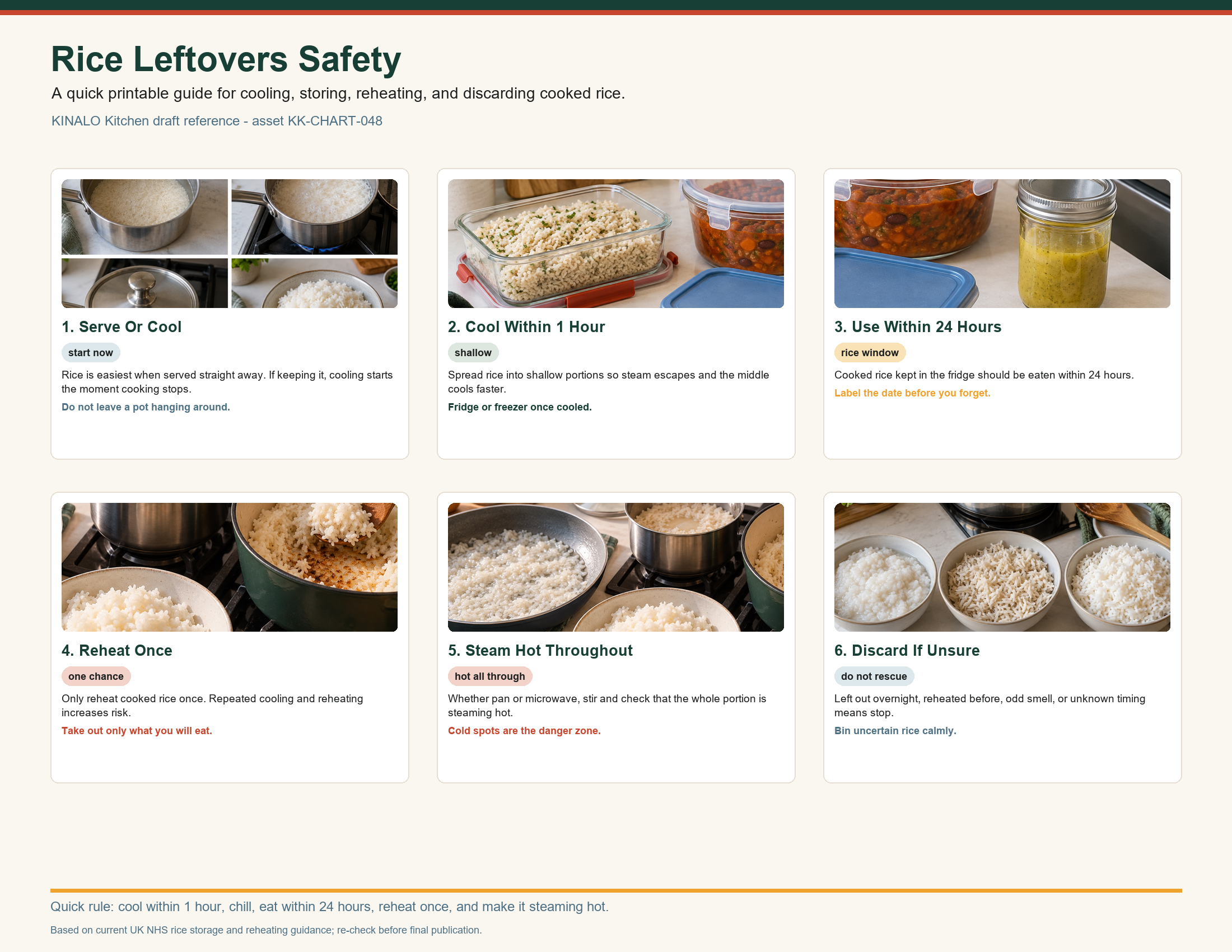
Rice is easy to treat casually because it looks plain and harmless. The important beginner habit is to decide quickly whether rice is being eaten now, chilled for later, or discarded.
The risk with rice leftovers is not solved by leaving it on the counter and reheating whenever. Cooling and storage matter.
Safer beginner habit
- Serve what you need.
- Cool leftovers quickly rather than leaving them out for hours.
- Chill in a clean container.
- Reheat thoroughly when using.
- Do not keep reheating the same rice again and again.
Make it easy to remember
Use a labelled container and put rice where you can see it. If you are unsure how long it has been out or how it was stored, do not gamble on it.
Source-checked notes
This guide includes food-safety or confidence guidance checked against the sources below. Use official guidance first where safety matters.