
Pantry And Ingredients
Useful condiments for beginner cooking
Learn what condiments change, check their labels and compare a measured addition in two small cooked-food samples.
Before you begin
- Read food labels before you cookCheck the actual ingredients, suitability, dates and after-opening directions.
- Measuring accurately without stressUse scales for grams and marked spoons for 5 ml and 15 ml measures.
- Make a simple tomato sauce from passataRead its complete small sauce and prepare the extra clean sample bowls before heating.
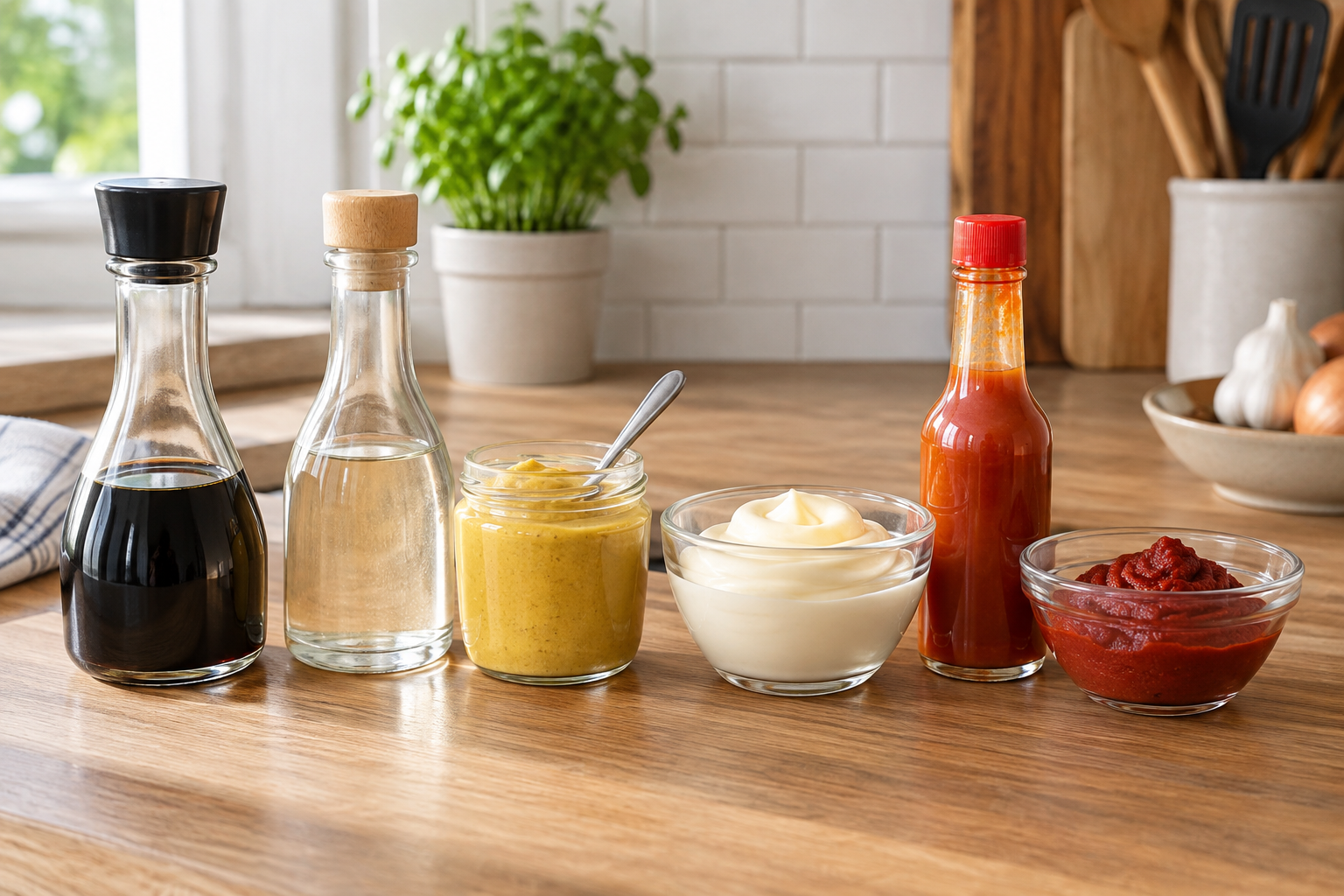
A small amount can change several flavours at once
A condiment is an addition used to season or accompany food, such as mustard, soy sauce, vinegar, mayonnaise or chilli sauce. One bottle can change saltiness, sharpness, sweetness and heat together. It is useful to know what you are adding, rather than treating everything as a generic flavour boost.
You do not need a cupboard full of new purchases. Start with one suitable mild condiment you already know you enjoy. Below you will compare two small samples of plain cooked sauce, then serve the remaining sauce with bread. The comparison teaches what changed; it is not a recipe for mixing every pictured bottle.
Think about the main job
- Read food labels before you cookCheck the actual ingredients, suitability, dates and after-opening directions.
- Food vinegar or bottled lemon juice adds acidity, the sharp or tangy part of flavour. Use only a product sold for eating; cleaning vinegar is not an ingredient.
- Soy sauce commonly adds salt and savoury flavour together. Check for soya and wheat or other cereals containing gluten; a different variety is not automatically suitable for an allergy.
- Prepared mustard adds sharpness and can help a dressing stay mixed. Mustard is itself an allergen. Mild prepared mustard, strong English mustard, mustard powder and a chilli mustard are not interchangeable spoon for spoon.
- Mayonnaise and yoghurt can make a creamy accompaniment. Actual products may contain egg, milk, mustard or other ingredients; appearance and a vegan description do not settle suitability.
- Hot sauces and chilli crisp vary greatly in heat, salt, sugar, oil and allergens. Strong chilli concentrates are not part of this first comparison.
- Fish sauce and Worcestershire-style sauces can add concentrated savoury seasoning; check for fish and every other actual ingredient. This list describes possible jobs, not a shopping list or an allergy-safe substitution table.
Test a condiment on the food
- Make a simple tomato sauce from passataMake its whole plain sauce first; omit optional seasoning for this comparison.
- Measuring accurately without stressUse scales for grams and marked spoons for 5 ml and 15 ml measures.
- Storage and reheating basicsKeep the original cooking clock and follow the full cooling, freezing and single-reheat routine.
- Before heating anything, check that plain tomato sauce, ready-to-eat bread and a MILD PREPARED MUSTARD suit everyone tasting. If mustard is unsuitable or its heat is unknown, do not taste a little to test safety. Make and serve the plain sauce instead; the label decision still completes useful practice.
- Use the full linked no-chopping sauce method: 250 g plain passata, 1 level teaspoon oil, 5 ml, and 2 level tablespoons water, 30 ml. Leave its optional oregano and salt out for this comparison. Set out its saucepan, spoon, scales, measures, sample saucer, gloves and trivet before cooking. Follow all its heating and texture steps; do not taste raw uncertain ingredients.
- Also prepare TWO small clean bowls holding at least 100 ml each, a marked 15 ml tablespoon, a marked 1/4 teaspoon measure, 1.25 ml, a separate clean spoon for taking mustard from the jar, two clean mixing spoons, separate tasting spoons and a used-utensil plate. Set out a clean serving bowl, clean sample cup for later whole-batch tasting, and bread. If you do not have the 1/4 measure, use the separate dressing lesson's measured method rather than guessing a fraction of an eating spoon.
- When the sauce is fully finished, switch the ring OFF and land the pan on its trivet using dry handle protection as needed. With the clean tablespoon, put 2 level tablespoons sauce, 30 ml, into each sample bowl. Leave one unchanged. Let samples cool to comfortable tasting warmth; do not blow across the shared pan or touch the sauce to judge heat.
- With the separate jar spoon, put a little mustard in the 1/4 teaspoon measure and level its top using that clean spoon. Add that ONE level measure to the second 30 ml sample. It is a small starting test, not a guarantee that every mustard will taste mild. Mix the two bowls with their separate spoons; no mouth-used utensil goes back into either shared bowl, the mustard jar or the sauce pan.
- Taste a cooled spoonful of the plain sample, then use a fresh spoon for the mustard sample. Notice whether it became sharper, saltier or more strongly flavoured. You may prefer the plain one. If the mustard sample is unpleasantly strong, stop adding; leave it out of the main food rather than treating it as a target to reproduce.
- Keep this a brief comparison in the same cooking session. Spoon the untouched remaining sauce into the clean serving bowl and eat promptly with bread, or begin its proper cooling routine immediately if you are saving it. The remaining sauce can stay plain; no new cooking task is needed. Keep sampled food separate from food you store and let hot equipment cool safely before washing.
Use a condiment as a starting ingredient
- Make an oil and vinegar dressingFollow the full measured dressing and clean leaf-tasting method.
- Make a simple tomato sauce from passataUse the same complete unseasoned sauce for the later small whole-batch addition.
For a later dressing, use the complete oil-and-vinegar lesson: 45 ml oil, 15 ml suitable food vinegar and its optional 1/2 level teaspoon prepared mustard. The mixing, tasting on a leaf and storage steps belong together. This is a different quantity and food from the 30 ml sauce sample, not permission to scale that sample blindly.
For a first larger sauce-seasoning attempt, repeat the complete plain 250 g passata sauce on another day. Finish its cooking, switch off and support the pan, then stir in just 1/4 level teaspoon of the same suitable mild prepared mustard using clean utensils. Transfer a little to a clean sample cup, cool and taste separately. Serve promptly with bread, or start cooling. That is a cautious starting amount for THIS fresh sauce, not a universal dose for mayonnaise, chilli sauce or a reduced stock.
Some sugary condiments catch or scorch on hot surfaces. Use the stage specified by a complete method rather than pouring an unknown sweet sauce into hot oil. A bottle is not a shortcut around browning, tenderness or safe cooking.
Check labels beyond flavour
- Read food labels before you cookCheck the actual ingredients, suitability, dates and after-opening directions.
- Clean and set up your kitchen before cookingKeep clean measuring tools separate from raw-food contact and mouth-used tasting tools.
Read ingredients, allergy warnings, dates and storage after opening on the actual pack. A bottle stored on a shop shelf can need refrigeration once opened. Follow any shorter opening limit and record when you opened it. Do not infer a safe life from how long another brand lasts.
Open a jar on a stable clean worktop as its lid directs; do not pry at glass with a knife. For a pourable bottle, open away from the hob and measure into a standing spoon or small dish, not by tipping an uncontrolled stream over the food. Clean the rim with a clean food-appropriate cloth if needed, replace the cap and return it promptly to its labelled storage place.
Keep spoons that have touched your mouth, raw meat or an unsuitable allergen out of a shared jar. Take a small separate portion first, then use that portion. If food has become contaminated or its history is uncertain, masking flavour with sauce or heating it longer is not a safe repair.
A useful first set
- Make a simple tomato sauce from passataRepeat the complete same small sauce rather than using an unexplained leftover base.
Choose the next ingredient by a job you actually need: a little tang, a savoury salt contribution or a creamy accompaniment. You can continue with the one mild mustard from this practice rather than buying every category. Check any new product before the next meal.
For a later vinegar or soy comparison, repeat the same full plain sauce task and two separate 30 ml cooled samples. With a clean teaspoon, take a small amount of the suitable food condiment and tip only two or three drops into the second sample, then mix and compare with separate tasting spoons. Drops vary in size; this is an observation, not a precise recipe ratio. Do not scale it to a whole pan or use a strong chilli concentrate in place of the named product.
Change ONE condiment between attempts. Do not add soy, vinegar, mustard and sugar to the same sample and then try to discover which one helped. Record the actual product and measured amount or small drop test you used.
When to stop adding
- How to fix food that tastes too saltyTest deliberate dilution of fully cooked food, not another salty condiment.
- Burnt flavour rescue: when to save it and when to stopDistinguish a small flavour test from unsafe food or a scorched batch.
- Storage and reheating basicsKeep the original cooking clock and follow the full cooling, freezing and single-reheat routine.
A condiment can adjust flavour but cannot remove an allergen, prove food is cooked or undo unsafe storage. If the sample is already too salty, adding soy sauce is unlikely to help; if a sauce is burnt, sweetness may hide some bitterness without removing the burnt material.
Stop after an unpleasant sample. Keep the main food unchanged, serve it plain if otherwise properly prepared, or use the relevant rescue lesson's small test before changing a larger quantity. There is no obligation to keep adding bottles until the bowl matches an idea of a finished flavour.
Untouched sauce follows its full storage lesson and original cooking time; a later condiment addition does not start a new clock. The useful result is knowing which small addition you liked and which you would leave out next time.