
Pasta And Rice
Rice texture basics for beginners
A beginner guide to fluffy, wet, mushy and undercooked rice, with practical rescue options.
Before you begin
- How to use hob heat without guessingFind the ring control and adjust the heat as the food changes.
- Rice absorption and water ratioIdentify the rice variety and the method that produced the problem.
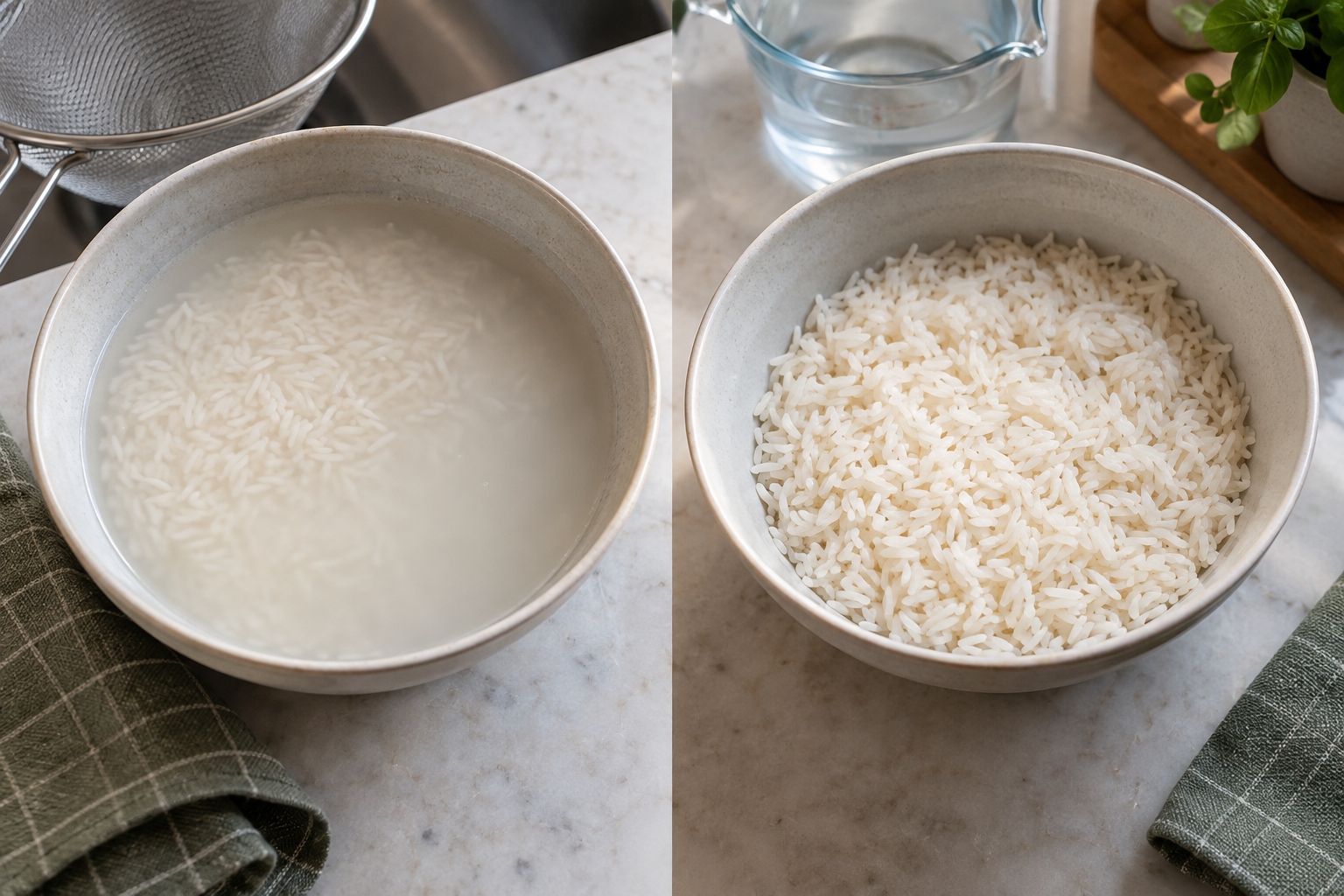
Name the texture before trying a rescue
For ordinary long-grain rice, the target may be separate tender grains. Sushi, risotto and pudding rice are meant to behave differently, so stickiness alone is not a universal fault. Check the variety and method before deciding the result is wrong.
Rice absorbs water while it cooks. If too little reaches the centre, the grain stays hard or chalky. Too much water, excessive cooking or vigorous stirring can leave a soft broken mass. Start with a small sample so you can distinguish the centre from a wet surface.
Check the pan safely
- Rice absorption and water ratioPrepare the lid-rest, measures and supported draining route.
- These checks start from the linked complete rice method and its tool setup, during the same cooking session. Switch the ring off while assessing. Protect a hot lid knob with a dry glove; open the far edge away from your face and put it on the heatproof lid-rest.
- Look for free liquid, dry grains, broken grains and a stuck base. Do not scrape the bottom before deciding whether it is burnt. A few middle grains lifted with the spoon onto the clean plate and cooled before tasting distinguish a hard centre from merely wet surroundings.
- Have the marked tablespoon measure, room-temperature drinking water, compatible spoon/fork or paddle, clean bowl, timer, dry gloves and trivet ready. No kettle or fresh boiling-water lift is required.
- For a wet batch, use the absorption lesson's cold-rehearsed supported heat-safe fine sieve and receiving bowl. A handheld sieve held while tipping a hot pan is not the plan.
Hard rice with a dry pan
- For the linked 120 g dry-basmati batch, with the ring off, add 1 measured tablespoon (15 ml) room-temperature drinking water slowly over the rice. Keep hands back from the steam. This is a small correction, not a new full pan of water.
- Cover and return to low heat. Once gentle steaming resumes, allow about 2 minutes. Do not use fierce heat or leave the pan unattended.
- Switch off for the check, open the lid onto its heatproof rest and taste a cooled middle grain with a clean spoon. If still hard and dry, add a second measured tablespoon and repeat short checks. If water is still present, let the covered gentle cooking continue without automatically adding more.
- Stop when grains are tender without a chalky centre. Switch off, land the pan on its trivet and rest covered for 3 to 5 minutes, then gently separate and serve with the absorption lesson's tools. Large additions or endless cooking can make the outside mushy; stop if it catches or cannot be managed.
Tender rice with excess water
- Rice absorption and water ratioFollow the full supported draining procedure.
- Drain food and save cooking water safelySet up a supported heat-safe fine sieve and receiving vessel while cold.
- For a few drops only, uncover on very low heat for 1 to 2 minutes while watching and stirring minimally. Stop and switch off if the base catches; do not keep drying already-soft grains towards burning.
- For a puddle, switch off and use the absorption lesson's supported fine-sieve/receiving-bowl route, preferably ladling small amounts while the pan stays on its trivet. A properly rehearsed low pan pour is the alternative, never a heavy unplanned lift.
- Spoon drained grains into the empty pan or clean bowl supported off heat. Separate gently with fork or coating-safe paddle and serve. Keep the ring off and leave pans and collecting water to cool safely before cleanup.
Mushy or burnt rice
Mushy grains cannot become separate firm grains again. Stop heat and serve the fresh rice soft if suitable, or choose another side; a soup is a separate recipe, not something you must invent. If the base smells burnt, switch off, support a clean bowl and spoon only the usable top into it, without scraping. Taste a cooled sample; harsh bitterness may mean discarding and starting again. Neither sauce nor spices repair unsafe storage history.
Keep safety separate from texture
- Rice leftovers safelyCheck storage before trying to rescue leftover rice.
These fixes apply during cooking, not to rice left at room temperature for hours. Cool leftover rice quickly, ideally within one hour, refrigerate and use within 24 hours; reheat only once until steaming hot. When storage history is uncertain, texture repair does not make it safe.
Prevent the next problem
Use the packet's method for that rice, the stated water amount and a lid that fits. Keep the heat low after the initial boil and include the covered rest. Record the pan and amount used. If the packet requires draining rather than absorption, follow that method instead of mixing the two.