
Pasta And Rice
Rice leftovers safely
A beginner guide to cooling, storing and reheating rice with a cautious source-checked approach.
Before you begin
- Storage and reheating basicsPrepare portions, cooling space and fridge storage before making extra rice.
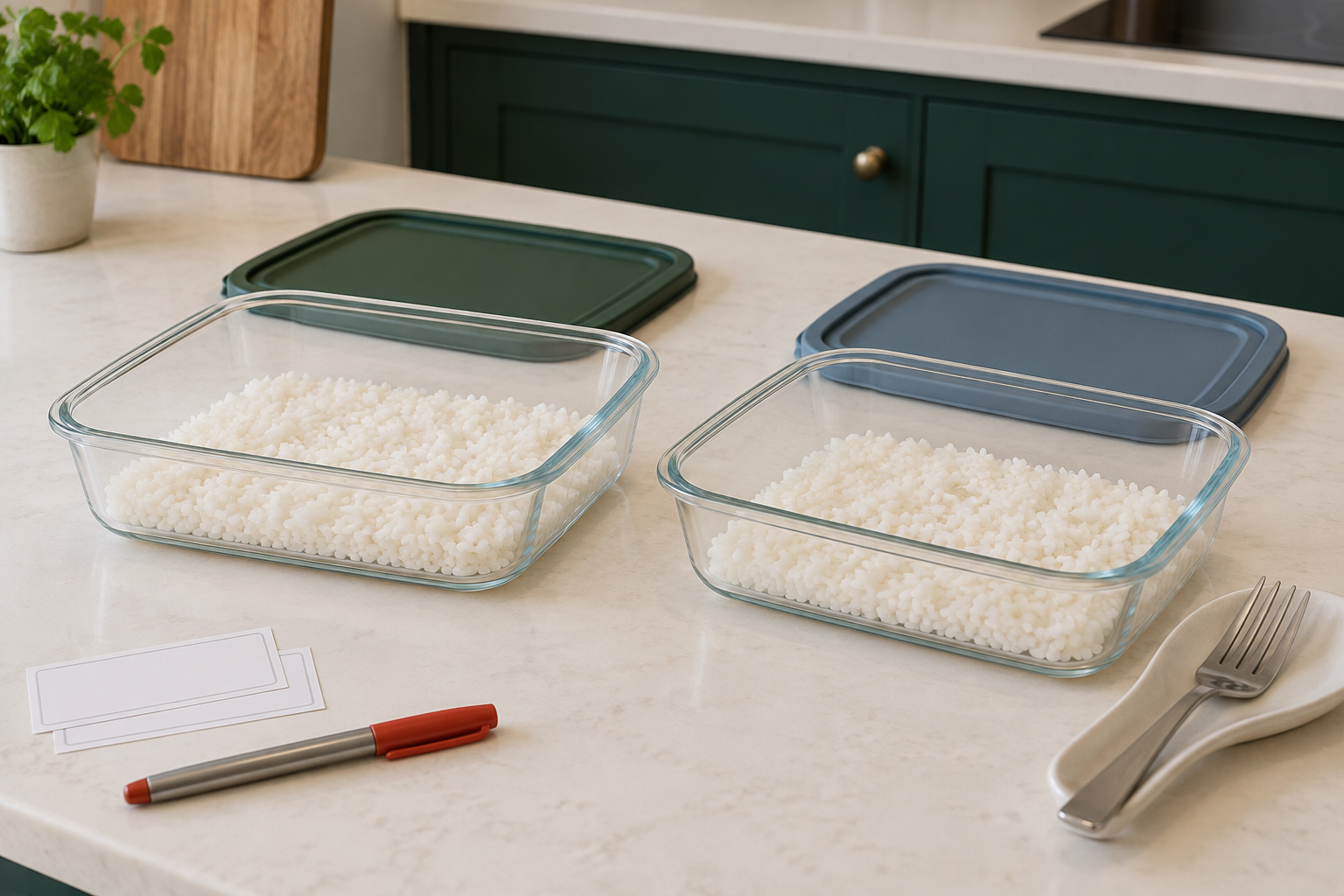
Storage matters as much as reheating
Uncooked rice can carry spores of Bacillus cereus. Some spores can survive cooking, and cooked rice left warm for too long can allow bacteria to grow and toxins to develop. Reheating is not a reliable rescue for rice that was badly stored. A normal smell or appearance does not prove it is safe.
Plan whether rice will be eaten now, chilled or frozen before you cook a large amount. A small batch with a clear next use is easier to manage than a deep pan left on the hob after dinner.
The UK home-cooking reference
- Cool cooked rice quickly, ideally within one hour.
- Refrigerate cooled rice and eat it within 24 hours.
- Reheat no more than once, until steaming hot all the way through, and eat immediately.
- If you do not know how it was cooled or how long it stood out, discard it rather than trying a texture or smell test.
| Stage | Home-cooking check |
|---|---|
| Cool | Divide into small shallow portions promptly; aim to chill within 1 hour of cooking. |
| Chill | Fridge at 0 to 5 C. Label cooking date/time and eat within 24 hours. |
| Freeze | Cool quickly and freeze promptly in portions; aim for within 1 hour of cooking. |
| Defrost | Thaw in the fridge, then reheat until steaming hot throughout and eat immediately. |
| Reheat | Once only. Stir through the centre; unsafe storage cannot be repaired by heating. |
Cool and store a portion
- Serve what you need promptly. Put the extra rice into clean shallow containers in small portions; do not leave it in the deep cooking pan to cool.
- If cooling is slow, stand a suitable heatproof container in a clean bowl of cold water, with the water below its rim. Keep bath water out of the rice. Stir the rice gently with a clean fork to release heat, and replace warming bath water with cold water. Do not leave a deep covered mound waiting on the hob.
- Once cooled, cover and refrigerate promptly, aiming to finish cooling and refrigeration within one hour of cooking, not one hour after dinner ends. Label the cooking date and time and plan to eat within 24 hours. This conservative cooking-time label avoids guessing how long it waited before chilling.
- Keep the fridge at 0 to 5 degrees C and the rice separate from raw-food drips. If freezing, cool quickly and freeze promptly in labelled freezer-safe portions, aiming for within one hour of cooking. Keep the cooking and freezing date/time and any previous reheating history on the label.
- Defrost a frozen portion in the fridge before reheating according to the FSA guidance, unless a suitable product gives a specific safe cook-from-frozen method.
Reheat one portion
- Use a microwave and check for even heatingChoose the container, cover and stirring method for your microwave.
- Kitchen thermometer basicsUse a clean probe if checking the thorough-heating temperature.
- How to use hob heat without guessingFind and adjust the control for the saucepan option.
- Simmer versus boilRemove a hot lid with steam escaping away from you.
- Take out only the portion you plan to eat. For the saucepan option have a fitting lid, heat-safe spoon, tablespoon, serving bowl, dry gloves and trivet. For a microwave use a microwave-safe bowl and vented cover, with space to stir, following the linked lesson. Do not tightly seal either container.
- For roughly 150 g chilled cooked rice, begin with 1 tablespoon water if it needs moisture. This is a texture aid, not a safety treatment. Use a pan or microwave-safe dish with room to stir, not a tightly packed tall mound.
- For the hob, start at medium-low, cover briefly to retain steam and stir regularly, breaking up clumps with the spoon. Lower the heat and add a little more water if the base dries before the centre is hot. For a microwave, use its rice-reheating guidance, stir during heating and allow the stated standing time. In either case, stop and check the centre rather than trusting hot edges.
- Check it is steaming hot throughout, including the centre. If using a probe, follow the linked full temperature-and-hold check rather than accepting a brief peak. Switch off the heat, set a hot pan on the trivet and serve promptly. Let each spoonful cool to a comfortable eating temperature. Do not put reheated rice back into storage for another round.
Cold rice and takeaway rice
Properly cooled and refrigerated rice can be eaten cold within the same 24-hour limit. Takeaway rice needs extra caution because it may already have been cooked and reheated before you received it. Ask the supplier about its handling; do not assume it has the same history as rice you just cooked yourself. Ideally eat it shortly after purchase.
Separate texture repair from safety
A little water can improve dry reheated rice, and careful stirring may separate clumps. Neither action removes toxins caused by poor storage. If the rice spent the evening forgotten on the counter, start with a fresh portion. The useful habit is a time label and prompt cooling, not a more powerful microwave setting.