
Pasta And Rice
Pasta doneness: why tasting matters
Cook a small portion of dried pasta, take a cooled sample safely and learn the difference between pleasantly firm and hard in the middle.
Before you begin
- How to use hob heat without guessingFind the ring control and adjust the heat as the food changes.
- Measuring accurately without stressMeasure the amounts before the pan is hot.
- Drain food and save cooking water safelyPractise the pan weight cold and arrange draining before starting the hob.
- Read food labels before you cookChoose a suitable pasta and read its cooking and allergen instructions.
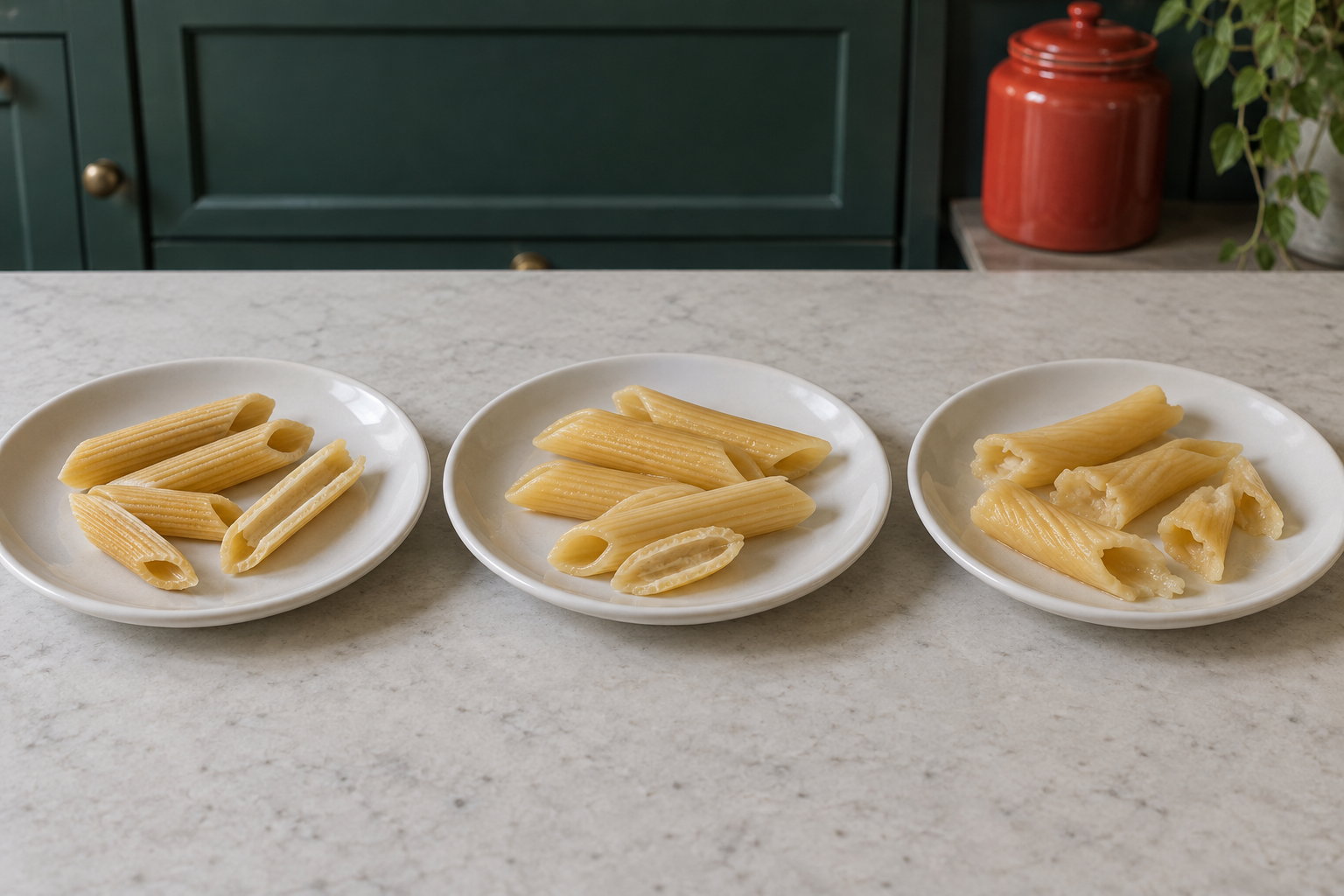
Taste near the end instead of guessing
The packet time is a starting guide. Pasta shape, thickness, brand and the next cooking step all affect when you should stop. Al dente means firm to the bite, but still pleasant to chew; it does not mean a hard chalky centre. A softer result may suit your preference or needs.
Throwing pasta at a wall tests whether a surface is sticky, not whether the centre is cooked. A direct bite gives the information you need without making a mess.
For one or two portions
- Make a simple tomato sauce from passataMake the sauce first if you want a complete first meal.
- 75 to 100 g dried pasta per adult as an adjustable starting portion.
- For the first practice use 80 g plain short dried wheat pasta such as penne, a saucepan holding at least 2 litres, and about 1 litre water unless the packet specifies otherwise. Have scales, a measuring jug, a heat-resistant spoon, timer, clean tasting saucer and fork, heat-safe standing colander, dry oven gloves, trivet and serving bowl. Keep several centimetres clear below the rim for bubbling. Wheat pasta contains gluten; check the actual packet and use its own method for a suitable alternative.
- For two portions, use 160 g pasta, the packet's water amount and a larger pan with the same generous headroom; do not put twice the water in the small practice pan. Test the cold weight before heating. Use the scoop method if you cannot control the full pan. A plain first serving is fine; for a meal with sauce, make the sauce before beginning the pasta and read the linked finishing sequence.
- Clear the sink and draining area before lifting the hot pan.
Cook and test
- Drain food and save cooking water safelySet up before heating and use a ladle if reserving water.
- Pasta water and sauce clingFollow the sauce-first sequence for the complete tomato pasta meal.
- Storage and reheating basicsCool and refrigerate any portion you are keeping.
- Put the water in the saucepan, place on a matching ring and use medium-high heat until bubbles break continuously across the surface. For the 1 litre practice, start with up to 1/4 teaspoon fine salt if wanted, or omit it when the sauce is already salty. This is a cautious starting amount, not a safety requirement.
- Add the pasta and stir gently, especially in the first minute, so pieces separate. For long pasta, let submerged ends soften before easing the rest into the water. Do not force stiff strands sharply.
- Follow the packet for when its cooking time starts, usually once the water returns to the boil after adding pasta. Set a timer for one to two minutes before the lower suggested time for this plain dried-pasta practice. Keep the pan uncovered, adjusting to steady bubbling that moves the pasta without boiling over. If foam rises, lower or switch off the ring briefly and let it settle; do not reach over the pan or add oil as a fix.
- Lift one piece with the spoon onto the clean saucer. Let it cool until comfortable to bite; steam-hot pasta can burn your mouth. Use the fork to take a small bite through the thickest part. Check for a hard or floury centre. Use a clean utensil for the next sample rather than returning a mouth-used fork to the pan.
- If too firm, cook another thirty to sixty seconds and test again. For a plain serving, stop when it is comfortable to chew. For the linked tomato-sauce finish, stop when almost at that texture but no longer hard or chalky; it will cook a little more in the sauce. Do not apply this early-tasting advice to a raw filled pasta.
- Switch off the pasta ring. Reserve water if needed, drain using the prepared method and transfer to the serving bowl for the plain practice, or follow the linked sauce finish promptly. Set the empty hot pan on the trivet; the switched-off ring can remain hot. Let your serving cool to a comfortable eating temperature. If saving some, follow the linked cooling and storage steps rather than leaving a heap in the colander.
Recognise the stages
Undercooked pasta resists the bite and may have a hard chalky centre. Ready pasta bends and chews comfortably, with whatever firmness you prefer. Overcooked pasta becomes swollen, floppy or breaks easily. Colour is less useful than the bite, especially with wholewheat or coloured pasta.
Fresh, filled and alternative pastas
Fresh pasta can cook much faster than dried pasta. Filled pasta may contain raw ingredients: complete the packet's required cooking and filling-heating checks before tasting it, and do not treat floating alone as proof that its filling is safe. Gluten-free pasta can move from firm to fragile quickly. Follow that product's specific instructions and handle it gently rather than applying the plain dried-penne timing and early tasting above.
If it goes too far
You cannot make soft pasta firm again. Drain promptly, mix gently and choose a sauce that does not need extended pan cooking. Baking it for a long time is not a texture reversal. Serve a softer meal if it is otherwise suitable, then start checking earlier next time. Record the time you actually preferred for that packet.