
Mistake Recovery
How to rescue a lumpy sauce
Identify powder lumps, whisk with the pan supported, and strain small spoonfuls without lifting a full hot pan.
Before you begin
- Make a white sauce, then a cheese sauceUse the complete measured roux and milk sequence, including flour cooking.
- Stir, whisk, fold and turn: four different movementsChoose a pan-safe whisk and use small controlled movements.
- Drain food and save cooking water safelyCheck sieve support, heat suitability and receiver space before heating.
Identify what the lumps are
Flour and starch lumps can have a wetted outside around dry powder. Soft sauce skin, intact vegetables, cooked egg curds and tightened cheese are different things. Think about what was added and when the texture changed; do not taste a raw flour lump to identify it.
Switch off before examining or whisking a splashing pan. Land it level on a prepared trivet using dry gloves for a hot handle. A pan-compatible whisk and enough room for small movements help you avoid splashes. Hard or burnt bits should not be forced back into the sauce.
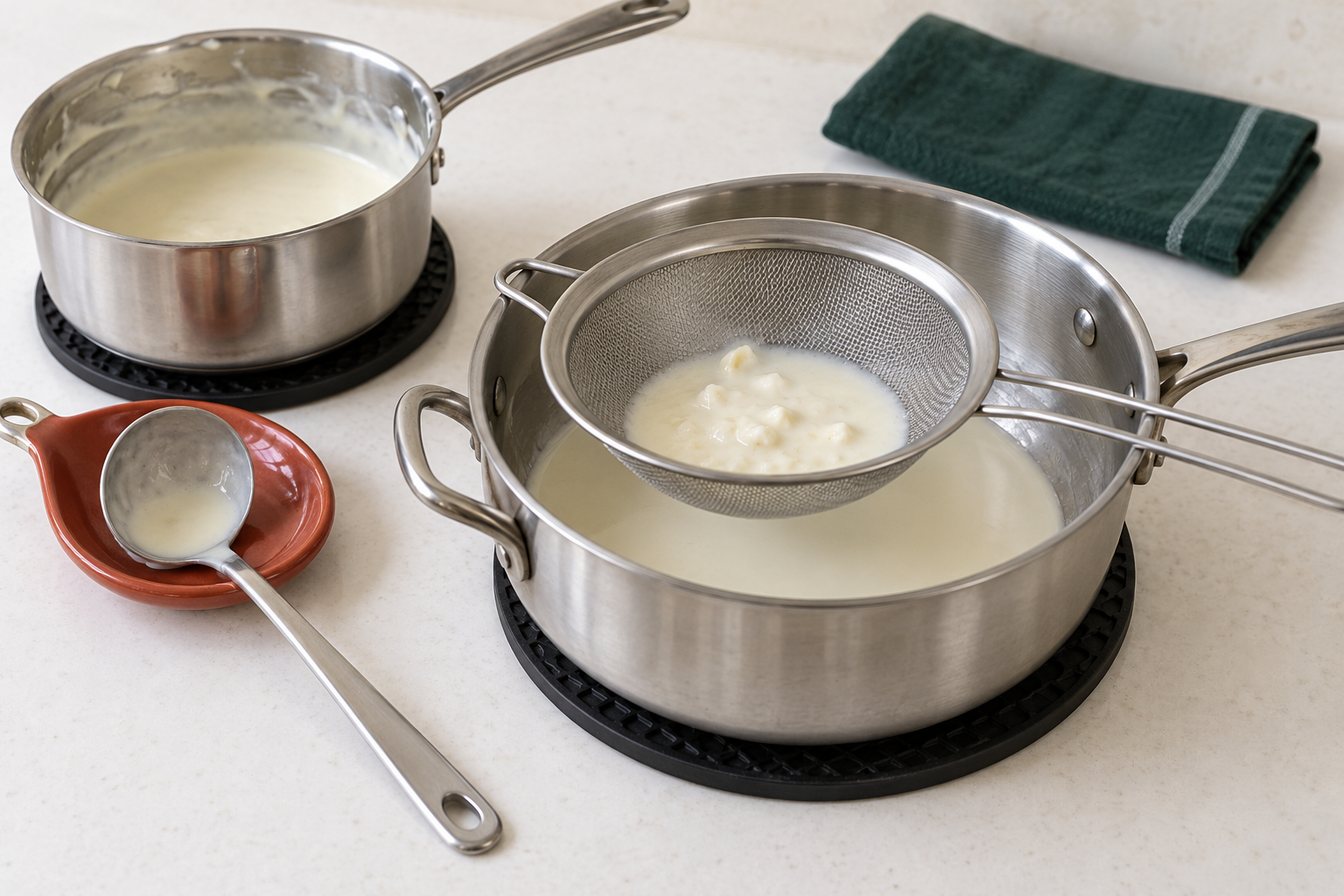
For the first practice, make a fresh white sauce by its complete lesson: 25 g butter, 25 g plain flour, 250 ml milk and a separate 60 ml milk reserve. Set out its full equipment, plus a clean heat-safe fine sieve, a clean receiving saucepan of at least 1 litre, a second trivet, a long-handled small ladle, a spoon, heatproof utensil plate and clean sampling cup. Before heating, check that both sieve supports span the receiver securely, its basket sits above the whole batch's eventual level and nothing rocks or tips. If not, use the supported whisk route, not an improvised tower.
You do not need to create lumps deliberately. If your sauce is already smooth, the supported small-spoon straining sequence can be rehearsed with it, or simply serve it. Never leave flour undercooked to manufacture a problem.
Try the least disruptive fix
- Make a white sauce, then a cheese sauceCheck the milk and full gentle flour-cooking sequence.
- Stir, whisk, fold and turn: four different movementsKeep the whisk low and movements controlled.
- Storage and reheating basicsUse the original cooking time and earliest ingredient deadline.
- Complete the white-sauce method before a practice taste. If actual lumps appeared during milk addition, switch off and use its supported whisk fix, then continue adding the remainder of the original measured 250 ml milk in stages by that method before straining. Keep that original milk separate from the extra 60 ml reserve. Once the original milk is combined, switch off and support the pan before the steps below. Keep unfinished sauce untasted; its full cooking stage still follows the correction.
- With the pan level on the trivet and its hot handle protected if steadying it, whisk in small circles across the base for about 30 seconds. Keep the whisk low so it does not fling sauce. If too tight to move smoothly, add 1 tablespoon, 15 ml, from the separate milk reserve and combine before another check.
- A small soft lump can be pressed gently against the pan side with the back of a coating-safe spoon. Do not scrape a damaged surface or force hard dry clumps through. If now smooth enough, return to gentle heat only as needed to finish cooking and warm the addition.
- If soft lumps remain and a smooth result matters, put the cold-checked sieve over the clean receiving pan on its own trivet. Leave the original pan supported separately. Use the ladle to transfer a small spoonful low into the sieve, keeping hands and face clear of steam. Do not lift the original pan to pour.
- Gently move the back of the spoon over soft sauce in the sieve, without pushing so hard that its supports shift. Let smooth sauce pass; retain hard clumps. Repeat small spoonfuls until the usable sauce has passed. Stop if it clogs, rocks, steams towards your hands or the sauce level approaches the basket. Allow it to cool before safely clearing retained clumps; do not force them through.
- When straining is finished and bubbling has stopped, lift the sieve by its handle with dry heat protection if hot and land it on a prepared heatproof utensil plate. Put the receiving saucepan on the matching ring, using dry gloves for any hot handle. Stir on low or medium-low heat. If the white sauce had not completed its flour-cooking stage, give it the full gentle 5 to 10 minute simmer now, stirring continuously and following the flour label. Straining is not cooking.
- If already fully cooked, warm the transferred sauce and any extra milk evenly through instead of automatically repeating a whole cooking period. Switch off, support on the trivet, transfer a clean small sample, cool and taste. Serve with ready-to-eat bread or start cooling untouched sauce now. Do not return tasted food to the pan.
Use a blender only for the right sauce
- Blend food without splashes or unsafe shortcutsRead the whole cold-first appliance workflow before that separate task.
Blending may suit a later smooth vegetable soup, but it changes intact pieces as well as lumps. It is not necessary for the white-sauce rescue above and cannot turn overcooked egg back into an uncooked liquid.
Before choosing that later route, follow the separate cold-first appliance method and your exact machine's temperature, vessel, fill and assembly instructions. Do not put hot sauce in an ordinary sealed blender or assume opening a cap makes every machine suitable. The complete lesson covers the actual cooling and return-to-heat steps; do not stop after only making the mixture look smooth.
If you do not have appropriate equipment or instructions, use the supported whisk or sieve method for this white sauce. Do not improvise an immersion-blender procedure beside an active ring.
Prevent cornflour lumps
- Thicken a sauce with a cornflour slurryUse its complete mix, simmer, correction and serving method.
- For a separate first cornflour practice, use the complete 250 ml ready-to-use vegetable-stock method. Measure 1 level teaspoon cornflour and 2 teaspoons, 10 ml, cold water into a small cup, using its specified tools and ingredient-label checks.
- Press dry bits against the cup side and stir until smooth. Bring the stock to controlled gentle bubbles by its method. Stir the cold slurry again just before adding because it settles.
- Add the small prepared dose while stirring throughout. Let gentle bubbling return and stir for 2 to 3 minutes, or the full period the maker requires, before a cooled clean texture check. Do not shorten the wait to one minute merely because it looks thicker.
- Only then decide whether to mix another small cold dose. Do not pour dry starch into hot liquid or keep topping up before the previous addition has worked. Discard unused small raw slurry instead of storing a rescue bottle.
Flour-based sauce needs its own method
- Make a white sauce, then a cheese sauceFollow the whole pale roux and staged-milk process.
- How to fix a watery sauceDecide whether further thickening is actually needed.
A roux is flour mixed and cooked into fat before liquid is added. Use the measured white-sauce lesson: first cook the pale paste, then combine its milk in small stages until each is smooth, then finish the sauce's gentle cooking period. A cold cornflour slurry is a different method, not a universal instruction for plain flour.
Sieving may remove some thickener as well as lumps, so check the actual coating before adding anything else. If the sauce is now a little thinner but useful, stop. If another thickener is needed for a different compatible dish, use its complete method rather than sprinkling raw powder into today's pan. Follow product instructions for gravy granules and other mixes.
Judge the rescued sauce honestly
- Curdled dairy sauces: why they split and what to doFor a later dairy dish, distinguish curdled protein from powder lumps.
- Split sauces: what happened and how to rescue themFor a later oily sauce, identify its separate mixing problem.
- Storage and reheating basicsUse the original cooking time and earliest ingredient deadline.
A few soft cooked bits may be acceptable in a rustic sauce. Hard powder centres, black residue or unfinished flour cooking are not the same as harmless vegetable texture. Stop when the result suits the meal rather than repeatedly processing it for a perfect photograph.
Curdled dairy and split oily sauces need a different diagnosis. Read their specific lessons for those later tasks; do not assume more whisking undoes every protein or heat change. If the taste or texture remains unpleasant, a smaller replacement sauce can be more useful than adding several new ingredients.
For stored food, check its history before any repair and keep the warming within its one reheating. Changes to smoothness do not reset dates or establish safety.