
Essentials
Fridge zones and the use-first box
Make a small use-first area without inventing dates, mixing raw and ready-to-eat food or leaving chilled food on the worktop.
Before you begin
- Read food labels before you cookRead the actual pack, its ingredients, date and storage instructions.
- Decide whether food is still safe to useCheck known dates, storage and contamination before choosing food.
The fridge slows growth; it does not reset time
- Decide whether food is still safe to useCheck known dates, storage and contamination before choosing food.
The first task is to set up a small, clearly marked place for ready-to-eat food that should be used soon. You do not need to cook anything or fill the box to finish. A clean empty space is a successful result if nothing currently qualifies.
First check the fridge with a fridge thermometer, using its placement and settling instructions and the fridge manual. Normal storage should be 0 to 5 C. Check at least weekly and after a concern. The control dial is not necessarily a temperature reading; use the manual to adjust it and allow it to stabilise. If food has already been too warm or the earlier temperature is unknown, use the separate food-history decision rather than assuming a new cold reading clears it.
Have the manual, thermometer instructions, a small washable low-sided food caddy or a clear shelf area, clean labels, pen and the original food packaging available. Keep the food itself chilled while reading. Avoid an insulated closed box inside the fridge: this is an organiser, not another cooler.
Give foods suitable places
- Read food labels before you cookRead the actual pack, its ingredients, date and storage instructions.
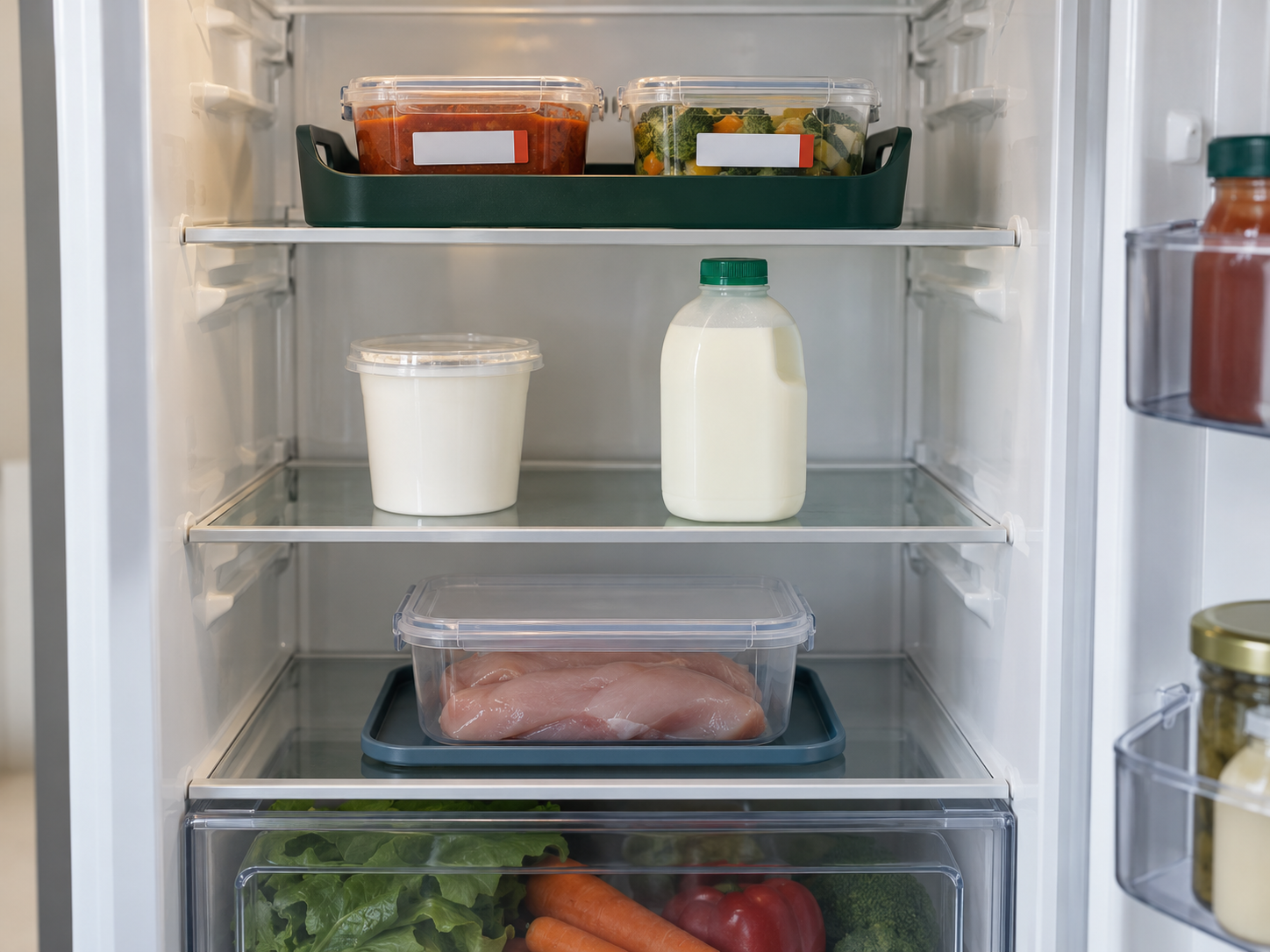
- Keep raw meat, poultry and fish sealed and separate on the bottom shelf, below food that is ready to eat. Check for leaks without opening raw packs just to reorganise them. Do not put a raw pack in the use-first caddy.
- Keep covered cooked food, dairy and ready-to-eat items above raw food. Follow the fridge manual where a compartment has a specific purpose. Do not remove original labels merely to make the shelves look tidy.
- Use the produce drawer as directed, keeping unwashed produce separate from ready-to-eat food. Eggs need steady cool storage by their pack, away from temperature swings; keep their identity and date with them.
- The door is exposed to warmer air whenever opened. Do not move everything into it for convenience; use the manual and each food label to choose a suitable location.
Set up a use-first box
- Decide whether food is still safe to useCheck known dates, storage and contamination before choosing food.
- Storage and reheating basicsFollow the complete cooling, labelling and original-clock routine.
- Rice leftovers safelyRice does not follow the usual longer leftover window.
- Wash hands. Away from food preparation, wash the empty caddy with washing-up liquid and warm water, rinse and dry fully, or use a permitted dishwasher cycle. Check it is intact and small enough to leave airflow and shelf space. A marked shelf area works equally well.
- Put the empty caddy on a suitable shelf ABOVE raw meat, with its opening facing you and no vent blocked. Close the fridge while you prepare a visible use-first label. No special branded container is necessary.
- Choose just ONE existing chilled ready-to-eat item whose identity, date, opening or cooking time and storage history you can establish. Read its pack or existing label. If any safety information is missing, leave it out and use the linked decision guide. Do not guess a date for an anonymous container.
- Keep that item closed. Retain the original date and opening instructions. Add a readable reminder of its actual earliest deadline, not a new period starting today. For cooked leftovers, keep the original cooking date and time and use the full storage lesson; rice has its own shorter routine. Do not transfer hot food into this box to begin cooling it.
- Place the eligible closed item at the front of the caddy, still above raw food, and shut the door promptly. For more items later, work one at a time and put the earliest deadline at the front. Do not leave all the fridge contents on the worktop while sorting.
- Before planning dinner, look here first and read the reminder. Use only food still suitable for its intended preparation. Remove the used container, clean the caddy after a spill and keep the label legible. If nothing is suitable, leave it empty rather than filling it with doubtful food.
Leave room for cold air
- Storage and reheating basicsFollow the complete cooling, labelling and original-clock routine.
- Storage containers: sizes, lids and useful portionsChoose a suitable shallow food container before a later cooking task.
Leave visible space between containers and avoid blocking the fridge vents. A large caddy should not stretch across the shelf like a solid wall. If the door cannot close normally or the shelf is crowded, use a smaller organiser or a marked shelf area.
This routine reorganises food already properly chilled. Fresh cooked food first needs its own shallow cooling method, not a deep hot saucepan added to the fridge. Read the linked lesson before you have a hot batch to store.
If you cannot maintain suitable storage, stop buying or preparing more perishable food until you have a working arrangement. More containers do not fix a failing appliance.
Clean spills when they happen
- Clean and set up your kitchen before cookingFollow the full hand, surface, cleaner and raw-contact routine.
- Decide whether food is still safe to useCheck known dates, storage and contamination before choosing food.
Deal with a small spill promptly, using the appliance manual for shelf removal and permitted cleaners. Keep unaffected food chilled. For raw-food leakage, keep the affected area away from ready-to-eat food, clean and disinfect as the product directs, then wash hands. Do not spray cleaning chemicals over open food.
If raw juices have reached uncovered ready-to-eat food, do not put it in the use-first box or try to wash the contamination away. Discard affected food. A sealed pack needs its outside handled and cleaned appropriately before opening; get advice if you cannot establish what was contaminated.
A major clean that needs food removed requires another working chilled-storage arrangement in advance. Do not empty the fridge for a long cleaning session and improvise the food storage afterwards.
A simple daily check
- Decide whether food is still safe to useUse the outage-specific decision, not a smell test.
Before a meal, inspect the reminders without leaving the door open. Check the temperature on the regular schedule and investigate an unexpected warm reading or appliance fault. The organiser is there to make a decision easier, not to guarantee that everything at the front is safe.
For a power cut, note when it began and keep doors closed. The separate guide gives the FSA time and temperature conditions and explains unknown history. Do not apply the normal fridge setting as a reason to ignore an outage.
If the fridge is faulty, follow its manual or arrange qualified help; this is not a repair lesson. Choose food with a verifiable suitable history. Do not bring an outdoor barbecue or camping stove indoors to replace a failed cooking appliance.
Sources and further reading
- Food Standards Agency: chilling, freezing and defrosting
- GOV.UK: use-by and best-before dates
- Food Standards Agency: home food fact checker
- Food Standards Agency: preventing cross-contamination
- Food Standards Agency: food safety in a power cut
- Food Standards Agency: cleaning equipment and using suitable cleaners