
Essentials / Setup guide
When to replace kitchen equipment
A beginner guide to spotting warped trays, scratched pans, loose handles and worn tools without replacing everything too soon.
How to use this guide as a complete beginner
A tool is useful when it makes a repeated job safer, clearer or easier. Before buying or using equipment, ask what job it does and where it will live when you are finished.
Notice whether the tool feels stable, cleanable and comfortable. If it wobbles, slips, hides in a cupboard or takes too much effort to clean, it may not help a beginner cook more often.
Use one tool for several real meals before deciding you need a more specialised version. Familiarity beats clutter.
Go slowly enough to notice
Speed hides information. The first few attempts are for seeing the change, hearing the sound, naming the texture and learning what happens when you adjust.
Use the image as a checkpoint
The linked KINALO image is not decoration. Compare it with your pan, board, bowl or tool so you know what stage you are looking for.
Good enough counts
Beginner cooking improves through repeatable attempts. If the food is usable and you learned the cue, the guide has done its job.
First-attempt checklist
Read the whole guide once before starting, then choose the smallest useful version of the task. Put the tools and ingredients where you can reach them. Decide what you will watch for first, such as colour, sound, texture, thickness, smell or how easily food moves.
During the attempt, change only one thing at a time. If the heat feels wrong, fix the heat before adding more ingredients. If the texture feels wrong, name the texture before trying to correct the flavour. This keeps the lesson clear.
Afterwards, write down one sentence: what worked, what changed too quickly, or what you would do earlier next time. That note matters more than a perfect result because it turns one cooking attempt into the next useful attempt.
If you only remember one thing, remember the cue rather than the instruction. Recipes tell you what to do; cooking confidence comes from recognising what is happening. Once you can name the cue, you can slow down, adjust and recover with less guesswork next time.
Replacement is about safety and usefulness
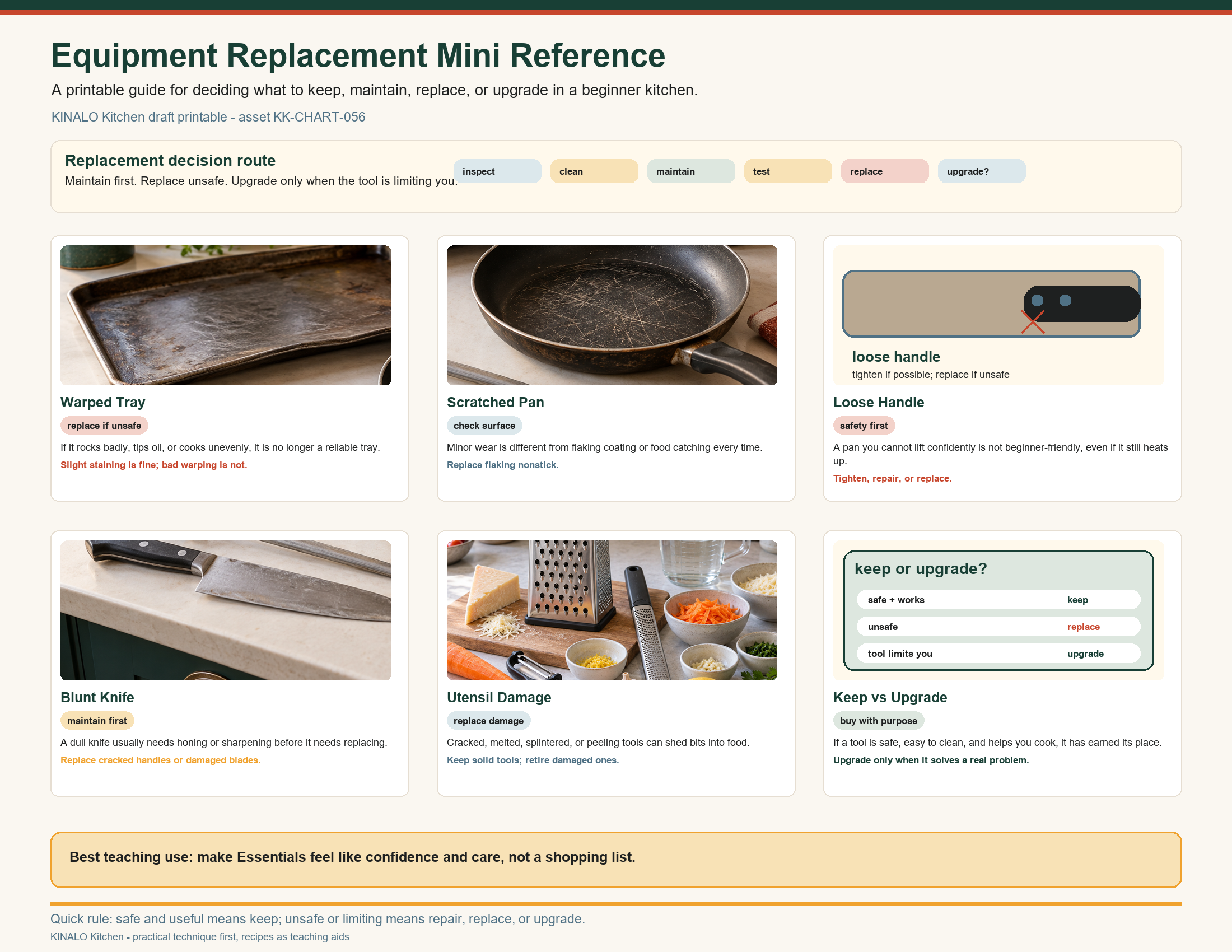
You do not need a perfect kitchen. Scratches, stains and dents happen. The question is whether the tool is still safe, cleanable and doing its job.
Essentials should help you avoid both extremes: keeping unsafe tools forever or buying replacements because a social media kitchen looks nicer.
Replace or stop using
- Loose handles that move while lifting hot food.
- Cracked boards or tools that trap food and cannot be cleaned properly.
- Badly warped trays that spill oil or cook very unevenly.
- Peeling non-stick surfaces.
- Thermometers or scales that no longer read reliably.
Maintain before replacing
Some tools only need care. A blunt knife may need honing or sharpening. A stained tray may still work. A wooden spoon can be fine if it is clean, smooth and not splitting.
How Essentials should handle affiliate links
The article should explain the decision first: what the tool does, what failure looks like, and what a beginner actually needs. Product links can come after that, as a convenience rather than the whole point.