Essentials
Oven dishes and bakeware are not all interchangeable
Match the dish material, size and depth to the food, and understand why a different tin can change both timing and texture.
Before you begin
- Use an oven: settings, preheating, shelves and the grillChoose the correct oven function, preheat and handle hot dishes.
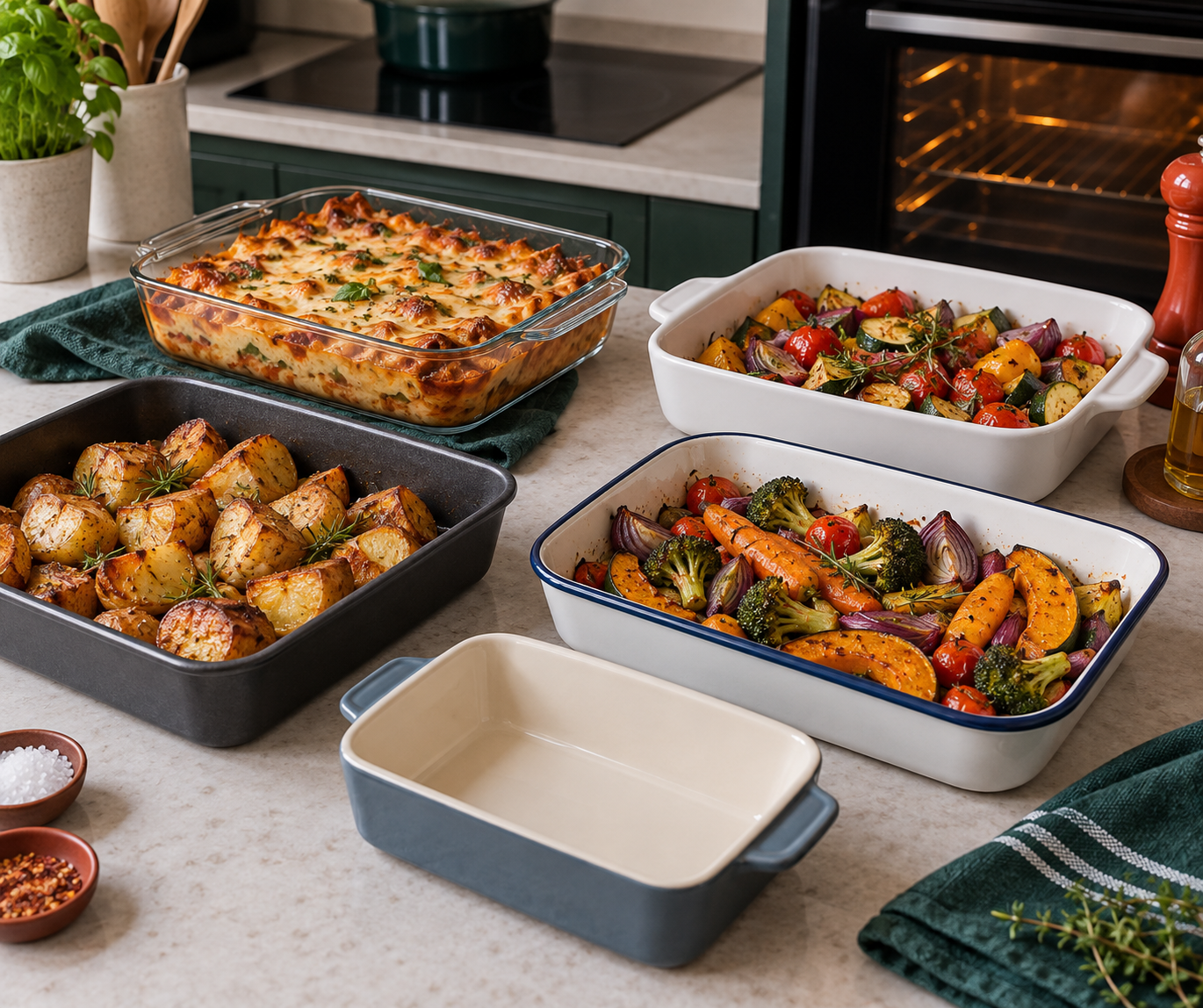
The dish is part of the method
A wide shallow tray exposes more food to hot air. A deep casserole holds moisture around the food. A cake batter poured into a wider tin becomes shallower and may cook faster; the same batter in a narrower tin can overflow or stay raw in the centre. Matching the recipe's tin size is especially useful while learning.
Metal, glass, ceramic and silicone transfer and retain heat differently. Their behaviour also depends on thickness, colour and construction. There is no universal instruction to change every recipe by the same temperature just because the material changed. Use a tested method or the bakeware maker's guidance.
Common useful choices
- A sturdy rimmed metal tray for roasting vegetables. The rim catches oil, while the low sides let moisture escape.
- A suitably deep oven dish for a sauce-based bake. Leave headroom for bubbling.
- A cake tin of the size and shape stated in the recipe. Measure the internal diameter or length, not the outer handles.
- A wire rack for cooling where the recipe requires air underneath. Place it securely on a heatproof surface.
Check before filling
- Measuring accurately without stressMeasure the small greasing quantity.
- Find an oven-safe marking or reliable product instructions. Ordinary drinking glasses and serving bowls are not automatically oven-safe.
- Check the maximum temperature and whether the grill or hob is permitted. Oven-safe does not imply either. Lids and handles may have different limits.
- Inspect for chips, cracks, rust, loose fittings or badly damaged coatings. Replace unsafe items rather than hiding damage under baking paper.
- With the vessel cold, use a ruler or tape measure to check internal length/diameter and depth against the recipe, not its outer handles. If they differ greatly, find a method designed for your dish before proceeding.
- For a recipe that calls for a greased 20 cm metal cake tin, set out the cold tin, 1 measured teaspoon (5 ml) oil or about 5 g suitable butter, and kitchen paper. Wipe a thin film over the base and sides, including corners, without leaving a pool; the recipe's own preparation takes priority. For a paper base, also have baking paper, a pencil and scissors: trace the outside of the cold tin, cut just inside the line, fit it and trim until flat. Use oven baking paper, not waxed paper, with its temperature rating checked. No loose overhang near an element or paper under a grill. This prepares a tin; it does not supply a cake recipe. Have a marked teaspoon measure for the oil or scales for the butter, plus a small plate to set the measured fat on.
- Plan a dry heatproof landing place. Use dry oven gloves with a secure grip and two hands for a heavy dish.
Avoid temperature shock
Some glass and ceramic dishes can crack when temperature changes abruptly. Do not place a hot dish on a cold wet worktop or add cold liquid to it unless the manufacturer explicitly permits this. Do not move a frozen dish straight into a hot oven without confirming that use. A metal tray may warp too, so cooling before washing is a useful habit.
For example, the linked Pyrex guidance prohibits its glassware on a hob, under a grill and in an air fryer, and says not to add liquid to already-hot glass. Products and regions differ, so check the instructions for the actual dish, not only a familiar brand name. A cold storage lid may also be unsuitable for the oven even when the glass base is approved.
The first roast practice uses a metal tray, not a glass substitution. If a glass product's published guidance conflicts or lacks a temperature-shock instruction, get the maker's instructions for the actual model before heating it. Do not use a generic material rule to override its warning.
If you must change the size
- Roasted vegetables: spacing, oil and donenessUse a complete small carrot roast.
- Tray spacing and oven airflowArrange food and handle two trays without juggling them.
For a simple vegetable roast, use two trays to preserve space rather than piling everything deeply. For baking, choose a tested conversion that accounts for batter volume and depth. Do not fill a small cake tin to the brim. Put it on a tray only if the recipe allows the resulting heat changes, and check doneness near the expected time.
For a first practical choice, use a rimmed metal tray for the linked carrot roast. Put the prepared food on the cold tray first to check its single layer and gaps. If it cannot fit, use less food or the two-tray handling routine. This is a spacing decision; a cake-tin change is a different problem because it alters batter depth.
What to observe on the first use
Notice whether the edges brown before the centre cooks, whether the dish is awkward to lift and whether food fits in a single layer. Record the actual vessel and time. A reliable dish you understand is more useful than a cupboard of vaguely similar alternatives. For a new purchase, choose the size of a method you genuinely want to cook.
For a complete first dish-selection task, inspect and measure a suitable cold tray, check its oven rating and follow the linked carrot lesson with the filled-weight rehearsal. Once finished, switch off and let the actual material cool before washing; do not test a hot dish's temperature with bare fingers.