
Knife And Prep
Washing vegetables and keeping prep clean
Remove soil, follow ready-to-eat labels and keep clean vegetables away from raw meat preparation.
Before you begin
- Clean and set up your kitchen before cookingPrepare a clean sink, board and hands.
- Knife confidence: the safe claw gripControl the knife before trimming or slicing.
Clean-looking is not the same as ready to eat
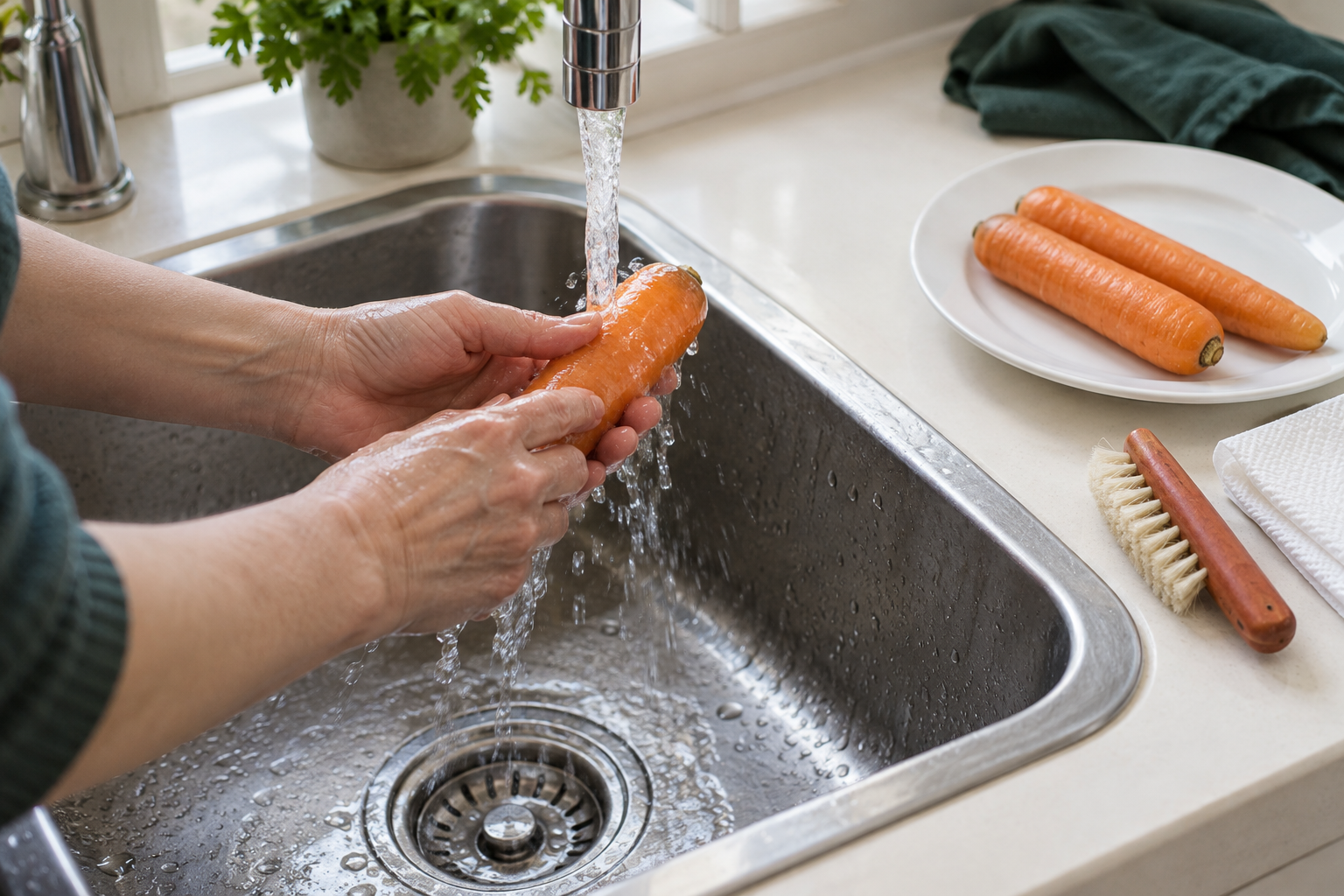
Soil and handling can leave contamination on vegetables even when you cannot see it. Wash fresh produce before eating or preparing it, following the packaging for pre-washed ready-to-eat products. Washing reduces dirt and contamination; it does not sterilise food or make spoiled produce usable.
Prepare vegetables that will be eaten raw before handling raw meat, or use separate cleaned equipment. A washed tomato placed on a raw-chicken board can pick up contamination again. The sequence of jobs matters as much as the rinse.
Set up a clean washing space
- Wash your hands and use a clean sink, bowl or colander. Clear away raw-meat packaging first.
- Use cold drinking-quality tap water, either running gently or in a clean bowl. Food does not need washing-up liquid, bleach or household disinfectant. Set the bowl on a stable surface and keep the food out of dirty sink water.
- Use a clean produce brush for firm muddy vegetables if appropriate. Keep it separate from general cleaning brushes.
- Set out a clean plate or board and a clean cloth or kitchen paper for drying.
- For the first task, have one carrot, a stable board, a suitable sharp kitchen knife, a plate for the prepared food and optional vegetable peeler. A peeler has a narrow sharp blade in a handled frame; it removes a thin surface strip rather than cutting a thick slice. Choose one whose handle and blade direction you can control; a knife is not a substitute for this first peeling practice.
Wash and prepare
- Remove obviously damaged, rotten or mouldy produce. Do not rely on washing or cooking to make it acceptable.
- Rinse under running water or rub the surface in a bowl of fresh water. For muddy items, remove loose soil first and give a final rinse. Change dirty water between batches.
- Separate leafy layers where soil can hide, and wash carefully. Follow the label for bagged salad marked ready to eat rather than automatically handling it repeatedly.
- Dry produce where the next method benefits from it. Wet salad dilutes dressing, and excess surface water can make vegetables steam in a frying pan.
- Peel or trim as the recipe requires, then cut on a clean stable board. Washing before peeling helps avoid moving dirt from the outside to the cut surface.
- Clean the sink, board and tools after preparation and wash hands before moving to another food.
Frozen and ready-prepared vegetables
Frozen vegetables are not automatically ready to eat. Follow the packet cooking instructions, including products intended for cooking that you might otherwise put in a smoothie or salad. For chopped chilled vegetables, follow their use-by and storage instructions. A convenient form does not remove the need to read the label.
Store for the next meal
- Read food labels before you cookFind the storage and after-opening instructions on prepared produce.
- Storage and reheating basicsKeep chilled produce and ready-to-eat food separate from raw meat.
Keep washed delicate leaves dry and refrigerated as appropriate so they do not sit in a wet puddle. Prepare only the amount you can use within the product's limits. Keep raw meat sealed on the bottom fridge shelf, below vegetables and other ready-to-eat food. Label an opened bag if you otherwise forget when it was opened.
A first practice
- Knife confidence: the safe claw gripUse the bridge to make a controlled first cut and the claw for later slicing.
- Boil and steam vegetables without guessingPrepare carrot pieces for a complete first cooking method.
- Roasted vegetables: spacing, oil and donenessUse the larger cut size needed for roasting.
Wash one carrot, rubbing off soil under running water, and dry it with clean kitchen paper. Put it across the stable board. To trim each end, use the bridge hold from the knife lesson with thumb and fingers clear on opposite sides of the cut. Remove the hard top and a thin slice from the tip, cutting down to the board; do not hold the carrot in the air. If it rolls or needs force, stop and reset rather than chasing it with the blade.
Peeling is optional for a well-scrubbed carrot. For an optional first peeling practice, leave it on the board and hold one end away from the peeler's travel. Set the blade lightly on the surface near that end and draw it along the carrot away from the holding hand. Lift the peeler away, turn the carrot slightly and repeat. Put the peeler down before turning the carrot end-for-end to reach the remaining section. Leave an awkward small patch rather than pulling the blade towards your fingers.
For a usable result, put the cleaned, trimmed carrot on the clean plate and follow its storage instructions if not cooking it now. Wash the board, peeler and knife separately as described in the setup lesson. For a cooking task next, use the boiling lesson's flat-face half-round preparation or the roasting lesson's larger pieces; washing does not decide a universal cut size.