Charts And References / Printable guide
Oven temperatures and spoon measures for beginners
How to use oven temperature conversions and spoon measures without getting stuck when a recipe uses different units.
How to use this guide as a complete beginner
Use the chart before the pan is hot. Conversions and measures are most useful when they prevent mid-cooking panic.
Treat charts as starting points. Ovens, pans, air fryers and spoons vary. Look at the food as well as the number.
After cooking, write down what worked in your own kitchen. Your oven, hob and air fryer have personalities, and notes make them less mysterious.
Go slowly enough to notice
Speed hides information. The first few attempts are for seeing the change, hearing the sound, naming the texture and learning what happens when you adjust.
Use the image as a checkpoint
The linked KINALO image is not decoration. Compare it with your pan, board, bowl or tool so you know what stage you are looking for.
Good enough counts
Beginner cooking improves through repeatable attempts. If the food is usable and you learned the cue, the guide has done its job.
First-attempt checklist
Read the whole guide once before starting, then choose the smallest useful version of the task. Put the tools and ingredients where you can reach them. Decide what you will watch for first, such as colour, sound, texture, thickness, smell or how easily food moves.
During the attempt, change only one thing at a time. If the heat feels wrong, fix the heat before adding more ingredients. If the texture feels wrong, name the texture before trying to correct the flavour. This keeps the lesson clear.
Afterwards, write down one sentence: what worked, what changed too quickly, or what you would do earlier next time. That note matters more than a perfect result because it turns one cooking attempt into the next useful attempt.
If you only remember one thing, remember the cue rather than the instruction. Recipes tell you what to do; cooking confidence comes from recognising what is happening. Once you can name the cue, you can slow down, adjust and recover with less guesswork next time.
Why conversions matter
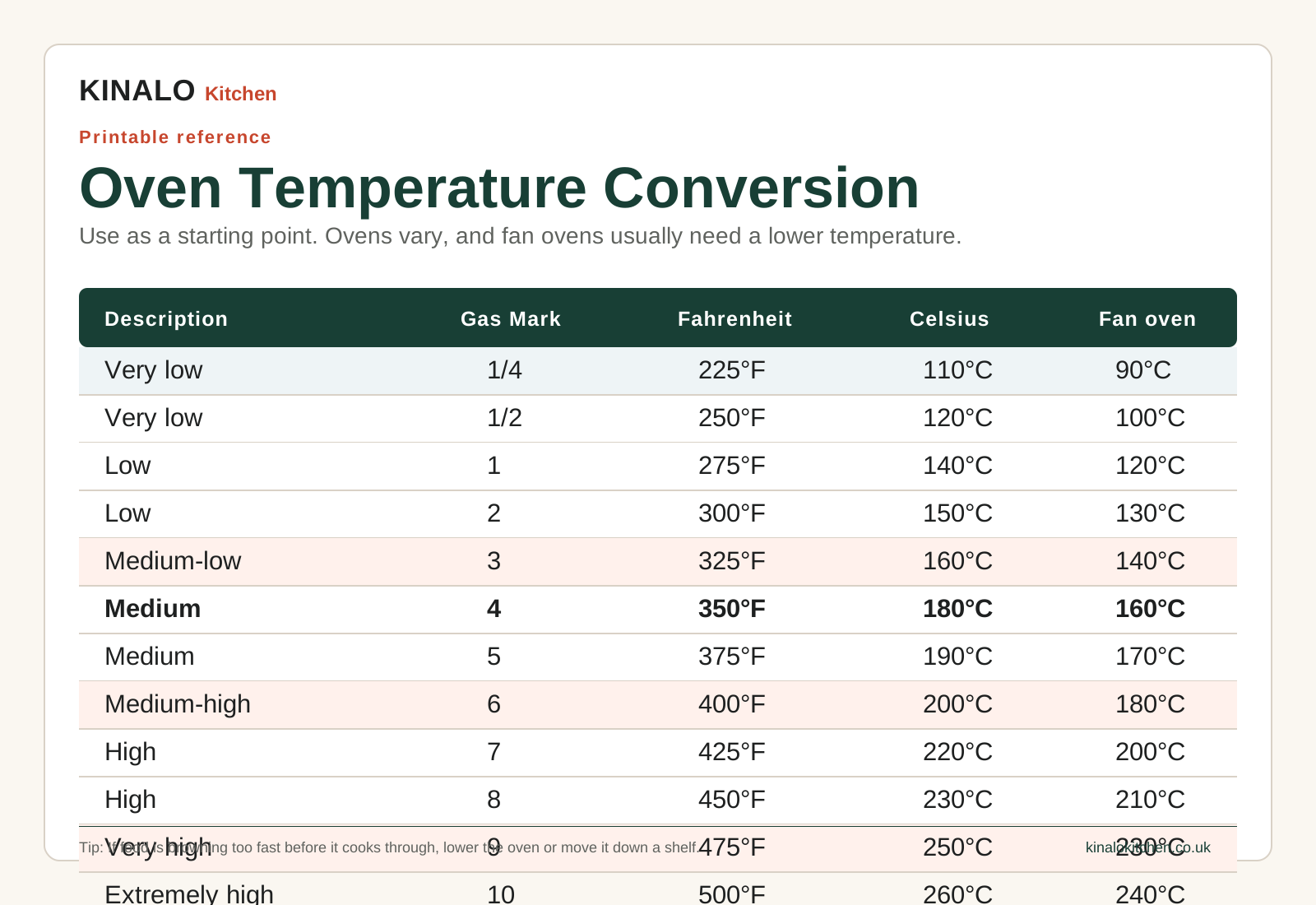
Recipes use different temperature and measurement systems. UK recipes may use Celsius or gas marks. Other recipes may use Fahrenheit. Spoon measures also appear everywhere, especially teaspoons and tablespoons.
A conversion chart keeps you moving when the recipe language does not match your kitchen.
Use conversions as practical guides
Ovens vary, so a conversion is a starting point, not a promise. If food is browning too fast, lower the heat. If it is pale and slow, it may need longer or slightly more heat.
Spoon measure basics
- A teaspoon is a small spoon measure, often written as tsp.
- A tablespoon is larger, often written as tbsp.
- Level spoon means scrape the top flat.
- Heaped spoon means more than level, but it is less precise.
- For baking, proper measuring spoons are safer than random cutlery.
Beginner habit
Before cooking, scan the recipe for units. Convert the confusing parts before the pan is hot. This prevents rushing while food is already cooking.