
First Kitchen Skills
Kitchen cuts, burns and emergencies
Urgent help comes first
For life-threatening illness or injury, call 999 now. For fire, leave the building, warn others, close doors if safe and call 999. Do not wait to finish this lesson or tidy the food. Follow the emergency operator's directions.
For a small heat burn, start cool running water for 20 minutes while getting advice as needed. For a bleeding cut, use firm pressure with a clean cloth or dressing, avoiding any embedded object. The detailed small-injury steps below do not replace emergency help.
For a cut, call 999 or seek A&E immediately if bleeding cannot be stopped, blood spurts bright red, feeling or movement is lost, the wound is very large or deep, it is a bad face or palm cut, or something such as glass is embedded. Do not extract an embedded object. Do not drive yourself to A&E.
For a burn, call 999 or seek A&E for very large or deep burns, burns on the face, genitals or bottom, and chemical or electrical burns. Those are not the simple hot-tray burn route below. Do not drive yourself. If uncertain about severity, get medical advice rather than diagnosing depth from a photograph.
For urgent non-life-threatening advice in England, call NHS 111 or use its online service for ages five and over; call for a child under five. Scotland uses NHS 24 111 and Wales NHS 111 Wales. In Northern Ireland use local urgent-care or GP out-of-hours advice. Use 999 for an emergency wherever you are in the UK.
Stop cooking, recognise when to call for help, and follow basic immediate care for a small cut or heat burn without improvised remedies.
Stop the cooking task
Put a knife down flat and stop using it. Switch off heat only if safely reachable; do not reach through flames or carry a pan while injured. Ask someone nearby to help with safe shutdown when possible. Leave hot equipment supported and clear of other people.
Do not try to finish a meal with a bleeding hand or burn while holding a hot tray. Immediate care takes priority over food. Another uninjured person can later assess unattended food and clean up; nobody should assume it is safe merely because cooking had started.
This guide covers simple first actions, not medical assessment, stitches, chemical-burn treatment or a complete first-aid course. No prior kitchen lesson needs to be completed before getting help.
Cool a small heat burn
- Move away from the heat source. Cool the affected area under cool running water for 20 minutes, starting as soon as possible and within three hours. If running water is unavailable, use cool bottled water or a wet towel. Do not use ice.
- Remove nearby jewellery or clothing if it is not stuck to the affected area. Do not pull away material stuck to skin. Ask someone to help if this is awkward; do not postpone cooling while searching for supplies.
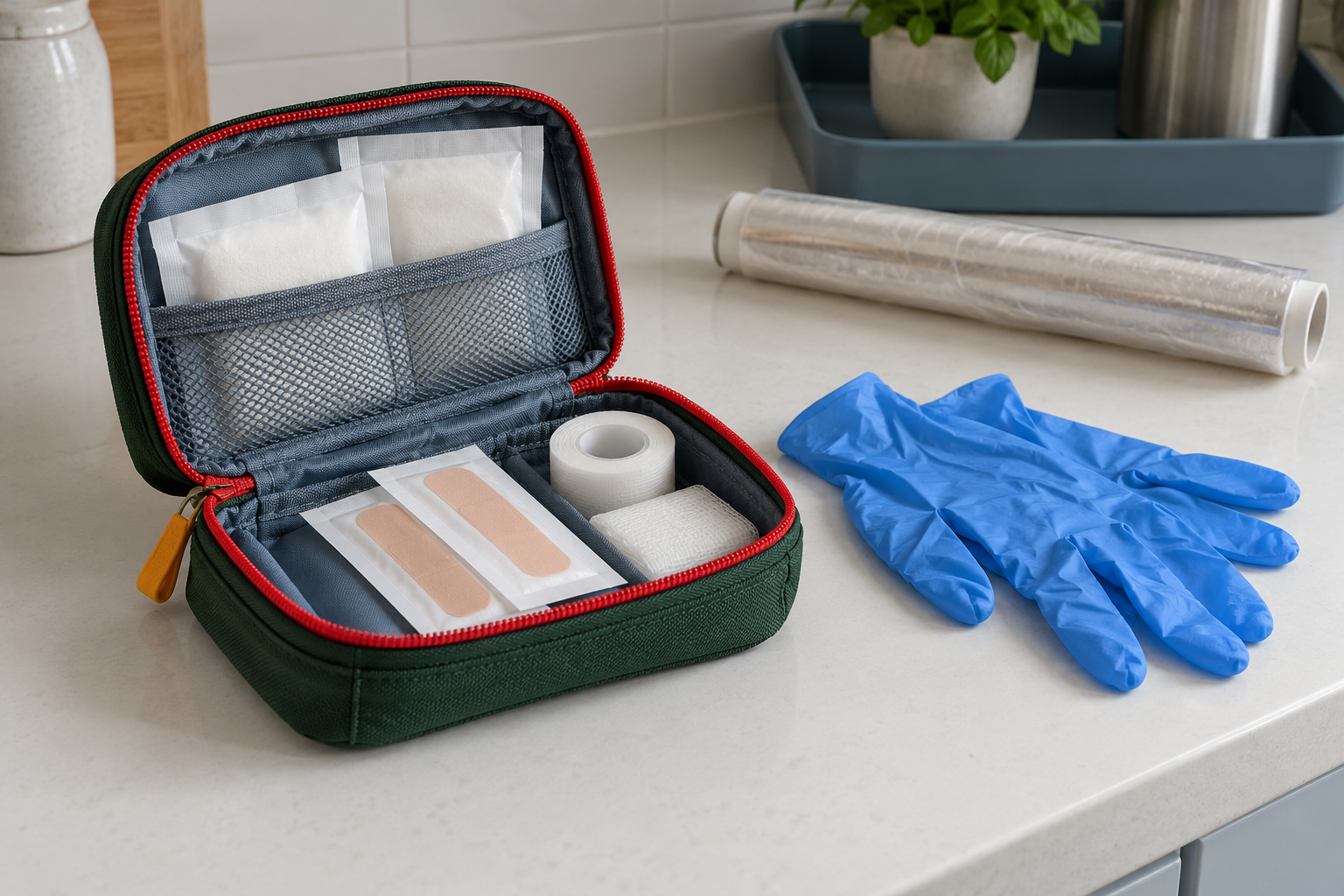
- After cooling, lay cling film over the area if available. Do not wind or tighten it around a finger, hand or limb. Do not put butter, oil or cream on the burn, use sticky plasters, or burst blisters.
- Get urgent advice if unsure what to do or how serious it is. For the emergency features above, arrange emergency help while cooling when safe, rather than delaying that call until the 20 minutes are finished.
Stop bleeding before cleaning a small cut
- For serious or uncontrolled bleeding, call for emergency help immediately. For a small wound you can manage safely, wash and dry hands and use disposable gloves if available. Check whether anything is embedded without probing the wound.
- If nothing is embedded, apply firm pressure with a sterile dressing or clean folded cloth. If an object is stuck, do not remove it or press on it: press firmly beside it and get urgent help. If blood comes through the cloth, add another on top while maintaining pressure.
- Support a cut hand or arm raised above your head. If bleeding cannot be controlled or an emergency feature appears, seek emergency help now. This lesson does not teach tying a pressure bandage or removing glass.
- Only move to the cleaning steps when bleeding has stopped and the wound is small without the serious features above. A plaster is not the response to ongoing heavy bleeding.
Clean and cover a small cut
- With clean hands and gloves if available, rinse the small wound with tap or bottled water. Pat dry gently with sterile gauze or a clean non-fluffy cloth; do not rub. Temporarily cover it with clean gauze while cleaning the surrounding skin.
- Clean the surrounding skin with soap and water, wiping away from the wound and using a fresh clean swab or cloth surface for each stroke. Pat that skin dry, then remove the temporary cover. Do not pour kitchen disinfectant or washing-up liquid into a wound.
- Use a suitable unopened sterile plaster large enough that its pad covers the whole small wound. Hold it by its protective strips, peel them back to expose the pad without touching that pad, place the pad over the wound, then pull the strips away and press the adhesive edges onto surrounding dry skin. Do not bind a finger tightly.
- Keep the covering clean and dry and replace when needed. A dressing that gets wet or dirty needs attention, not another food-preparation session. If the wound still looks dirty, you cannot cover it suitably, or you are uncertain, get medical advice.
Watch for reasons to get medical advice
Seek urgent GP or NHS 111 advice for a cut still dirty after cleaning, containing soil, pus or body fluids, becoming swollen, red and more painful, producing pus, larger than around 5 cm, or accompanied by feeling unwell or a high temperature. Do not continue cooking to see whether it improves.
For a bite, embedded object or concern about tetanus immunisation, seek medical advice. If your health condition or medicines affect bleeding or healing, follow your existing care plan and get professional advice; this page does not change it.
Keep the time and cause of the injury available when asking for help. Follow the professional's treatment and follow-up advice rather than substituting another internet remedy.
Fire is an escape task, not a cooking fix
- Hot oil: shimmer, smoke and when to stopFor a later safe learning attempt, recognise smoking oil before cooking continues.
For a burning pan, do not tackle the fire or move the pan. Never pour water on it. Switch heat off only if safe, leave, close the door if safe, warn others and call 999. Do not fetch a wet towel or carry it to the sink.
If an appliance catches fire, do not open it to inspect the food or attempt repairs. Leave and seek emergency help. Avoid reaching past the hazard to find an OFF button.
For smoking oil without flames, stop heat only if safe and leave the pan stationary to cool. Do not add water or ingredients. The linked hot-oil guide is for learning that distinction before a later attempt, not a reason to remain beside a developing fire.
Prepare supplies and return only when safe
- Clean and set up your kitchen before cookingFor a later restart, clean affected equipment and prepare a safe work area.
- Decide whether food is still safe to useCheck known dates, storage and contamination before choosing food.
- Knife confidence: the safe claw gripRehearse a controlled safe hold only once your hand is fit for the task.
Before a future session, keep a basic first-aid kit in a known accessible dry place, away from food and cleaning chemicals. Suitable sealed sterile dressings and plasters, disposable gloves and a first-aid instruction leaflet are useful starting supplies. Check packet condition and expiry instructions, replace used items and consider proper first-aid training.
Do not resume if pain, movement, grip, dizziness or bleeding makes tools unsafe. Even a minor finger injury can prevent controlling a knife or gripping a tray. A cold snack prepared by someone else is an acceptable end to the cooking session.
Before a later return, keep a small wound appropriately covered and wash hands; a glove is not a substitute for wound care or clean hands. Discard food contaminated by blood and clean affected equipment by the full kitchen-cleaning routine. Do not serve food that has been left unfinished or whose safe history is uncertain.
Sources and further reading
- NHS: burns and scalds; reviewed March 2026
- NHS: cuts and grazes; reviewed April 2026
- NHS: when to use 111 and services elsewhere in the UK
- St John Ambulance: cuts and grazes
- Elastoplast UK: applying an ordinary plaster; follow the instructions on your own product
- St John Ambulance: first-aid kit supplies
- London Fire Brigade: pan fires
- Food Standards Agency: preventing cross-contamination
- St John Ambulance: immediate cooling and no ice
- St John Ambulance: direct pressure and calling for severe-bleeding help; follow current NHS layering advice above
- Food Standards Agency: cleaning equipment and using suitable cleaners