Myths And Confidence
Does cooking remove all the alcohol from wine?
Understand why simmering does not guarantee an alcohol-free dish and choose a replacement when alcohol needs to be avoided.
Before you begin
- Read food labels before you cookConfirm the eater's ingredient requirements before cooking.
- Gravy thickness and lumpsUse its complete 250 ml stock-only sauce and safe finish.
Cooking is not a guarantee of zero alcohol
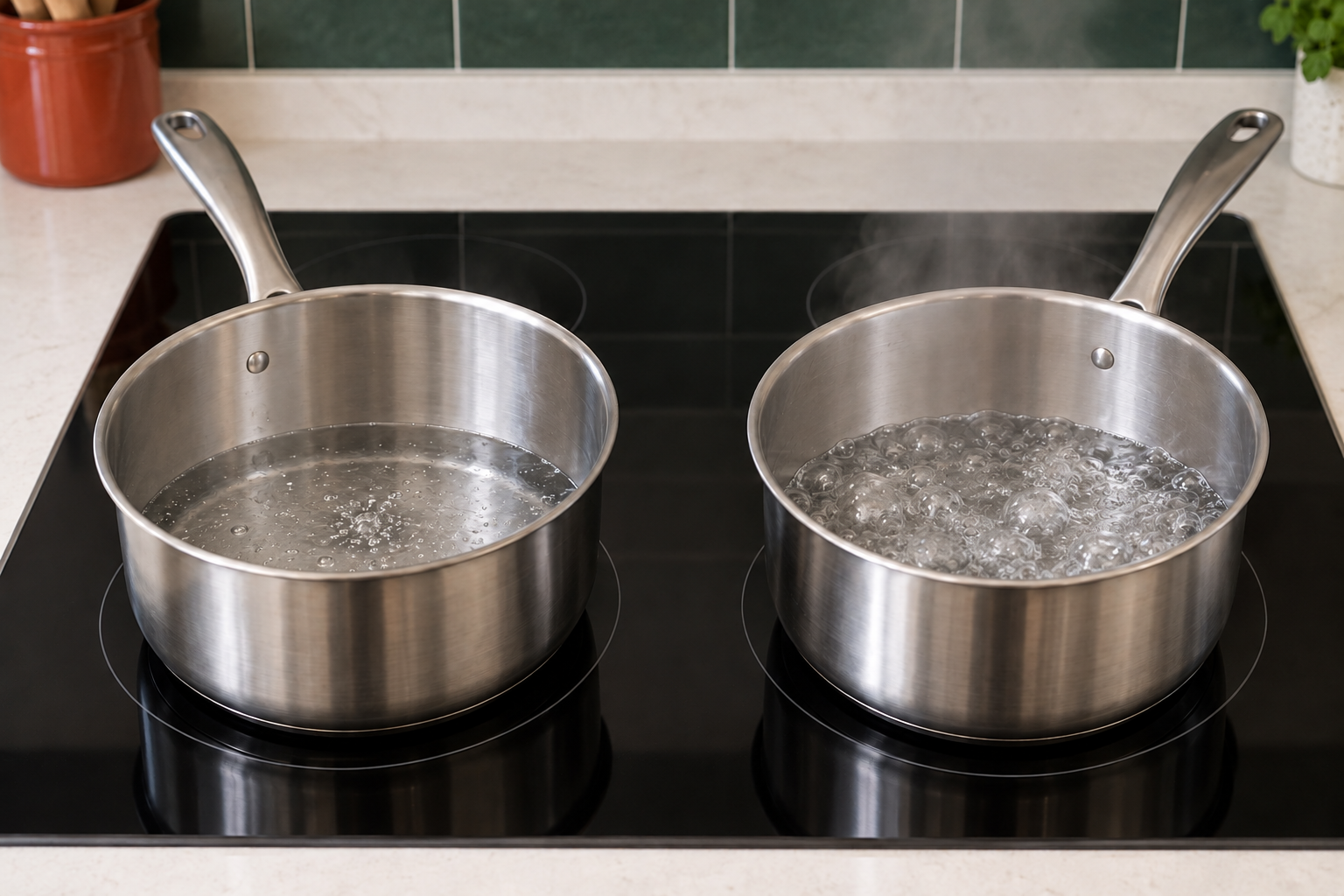
Adding wine or another alcoholic ingredient and cooking it does not guarantee an alcohol-free dish. The USDA retention reference reports alcohol remaining under several tested preparation methods, including flaming and extended cooking. Those factors are not a test of your particular saucepan.
A reduced volume, bubbling surface or absent wine smell does not certify zero alcohol. This lesson never asks you to ignite spirits, taste wine to check suitability or buy alcohol for a comparison. Its first finished task is a fresh vegetable-stock gravy made without adding wine.
When the requirement is no alcohol
- Read food labels before you cookCheck the full ingredient list and each eater's requirements.
- Decide whether food is still safe to useSuitability and known storage history are separate checks.
Ask the person what ingredients they can have before shopping or cooking. Personal, religious, recovery and medical requirements can differ. Do not choose their tolerance for them or reassure them that alcohol will cook off. For a medically prescribed restriction, their clinical team's instructions control the choice.
For example, current NHS liver-transplant advice specifically tells its intended patients to avoid food cooked with alcohol. That is guidance for that patient group, not a diagnosis or a universal diet prescribed by this blog.
An alcohol-free or low-alcohol drink label is not, by itself, proof that it meets an exact-zero requirement or is acceptable for recovery. Check the actual ingredients, strength information and the person's needs. If a required fact remains uncertain, ask the manufacturer or choose an acceptable known alternative before cooking. The same applies to stock, flavourings and any optional acid.
What wine is doing in a recipe
- Liquid: supplies moisture or loosens browned deposits. Suitable stock or water can sometimes provide that liquid role; this is not permission to use an unknown roasting pan on a hob.
- Acidity: supplies sharpness. A small suitable acid addition can be assessed separately after complete cooking, or omitted. Vinegar is not a universal exact-zero substitute.
- Flavour: wine contributes its own character. A stock-only sauce tastes different and can still be useful.
- Reduction: evaporation concentrates flavour and stock salt. A wine-based reduction is not automatically replaced by an equal volume of salty stock.
- For a paper-only example, 50 ml wine plus 100 ml stock totals 150 ml. Replacing only the 50 ml with 50 ml suitable stock keeps 150 ml total; it does not add another 150 ml to the existing stock. This arithmetic is not a complete recipe or a recommendation for every sauce.
Adapt a simple savoury sauce
- Gravy thickness and lumpsFollow the whole 250 ml stock-only task and finish.
- Gravy thickness and lumpsPrepare its actual quantities and equipment.
- Stock cubes, stock pots and strengthFor concentrate only, make its full labelled dilution first.
- Storage and reheating basicsCool the original fresh batch promptly without resetting its clock.
- Use the complete linked gravy lesson with exactly 250 ml suitable fresh ready-to-use liquid vegetable stock, 1 LEVEL teaspoon UK cornflour/cornstarch and 2 teaspoons, 10 ml, COLD drinking water for its first slurry. Choose products acceptable to the eater and follow their actual cooking/after-opening directions. No wine, meat juices or roasting pan is involved.
- Read that entire lesson before heating. Set out its actual saucepan, heat-safe spoon or compatible whisk, jug, marked measuring spoons, separate slurry cup/mixing spoon, dry gloves, trivet, timer, sample cup, clean tasting spoons, utensil plate, standing heatproof serving bowl/jug and small ladle. Have ready-to-eat labelled bread, a clean serving plate and spoon for a finish that needs no extra hot task.
- For a concentrate rather than ready-strength liquid stock, first finish the full stock-dilution lesson using the product's own water amount. Measure only 250 ml of the made-up stock for this task and promptly start the spare stock's separate cooling/storage routine. Do not dissolve a whole concentrate in this gravy's small volume by guesswork.
- Follow the gravy lesson's complete cold-slurry and gentle-bubbling method. Its 60 ml plain-water reserve and any later small slurry batches are conditional texture corrections, not ingredients to add automatically. Finish the full required stock/starch cooking, then switch off and land the pan on the trivet before a clean cooled taste.
- Optional brightness comparison: before starting, also set out a little bottled lemon juice acceptable to the eater, following its label, a clean 15 ml measure, two clean sample cups and separate clean tasting spoons. With the fully cooked pan off and supported, put one tablespoon sauce in each cup. Add ONE small drop of lemon juice only to the second: hold the bottle above the standing cup, gently tilt until one drop falls, then return it upright and cap. If it pours rather than drops, leave that sample aside and use plain sauce; do not call a pour one drop.
- Let both samples cool to comfortable tasting warmth and compare with separate spoons. Eat or discard your own tasted samples, never return them or mouth-used tools to the pan. If the acid is unsuitable, unwanted or uncertain, omit it. The plain finished gravy is already a valid result.
- For a liked whole-pan change, add just a few controlled drops to the off-heat supported gravy, stir fully and check a new clean cooled sample before adding more. Drops vary with the bottle: this is a cautious preference trial, not an exact ratio to multiply. Never replace 50 ml wine with 50 ml vinegar just because both are acidic.
- Use the small ladle to transfer low into the standing serving bowl/jug, following the gravy lesson's supported handling. Spoon a little onto the ready bread on its plate and cool the bite before eating. Serve promptly. Save only untouched spare sauce by the full shallow cooling method: refrigerate within 1 to 2 hours, use within 48 hours or an earlier ingredient limit and reheat only once until steaming throughout. Keep the original cooking clock after the acid addition. Let cookware cool, clean tools/worktop and confirm the heat controls are off.
Know when to choose another dish
A spirit-soaked dessert or wine reduction is harder to change than a modest liquid addition. Choosing a dish designed without alcohol is a sound decision when alcohol is central. Do not promise a measured absence from a home cooking time, smell, image or ingredient list.
Record the actual stock and any lemon product used, the eater's agreed requirements and whether the plain or adjusted sauce was preferred. You have practised ingredient-role thinking, controlled flavour comparison and a finished sauce without an alcohol experiment.