
First Kitchen Skills
Crack an egg and beat it with a fork
Open the shell, remove a fragment without chasing it, and mix white and yolk for scrambled eggs, an omelette or batter.
Before you begin
- Clean and set up your kitchen before cookingPrepare clean hands, a cup, bowl and fork.
Choose what the egg is for
- Egg freshness, storage and separating yolksCheck egg suitability for a lightly cooked result.
Cracking opens the shell; beating mixes the white and yolk. These are separate actions. A fried or poached egg needs an intact yolk, so stop after opening it. Scrambled eggs and omelettes need the contents mixed. A baking instruction to beat until pale or ribbon-like is a different, longer technique than this fork method.
Use clean, undamaged hen eggs and follow the carton's date and storage instructions; choose within the best-before date for this first practice. Read the linked safety section before choosing a lightly cooked style. Do not taste this raw mixture. Shells and packaging can contaminate hands and surfaces as well as spills.
Set out a small practice
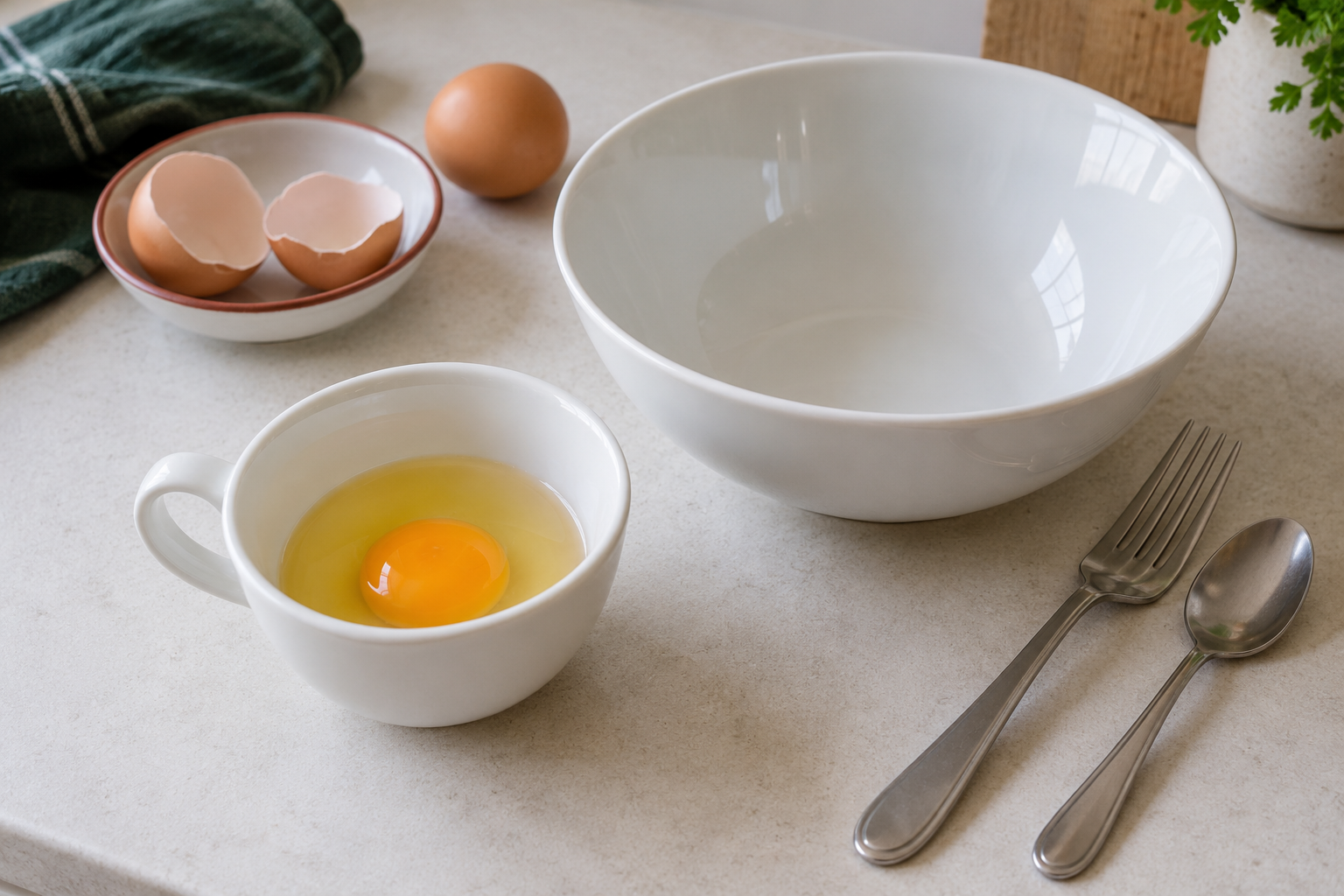
- One or two hen eggs within their best-before date; a clean small cup holding at least 150 ml; and a stable mixing bowl holding at least 500 ml, with plenty of room for a fork to move. Put the cup and bowl on the counter rather than holding them while opening a shell.
- A clean fork and teaspoon, a separate dish for shells, kitchen paper for a spill and suitable cleaning supplies. Keep the carton and shell dish outside the clean mixing area. Wash hands before starting and prepare the surface using the setup lesson.
- If cooking immediately afterwards, prepare the pan and other ingredients first, but leave the heat off until you can focus on it.
Open the shell into a cup
- Hold one egg by its sides over a clear, cleaned part of worktop, away from the mixing bowl. Tap its middle once against the flat surface just firmly enough to crack the shell. Do not use a knife, crush it in your hand or hit it against the bowl's sharp rim.
- Hold it low over the cup. Put both thumbs at the crack with fingers supporting the two ends. Gently pull the two shell halves apart so the contents drop into the cup.
- If the shell has only a hairline crack, tap again lightly instead of digging a finger deeply into the egg. Keep the opening close to the cup to limit splashing.
- Look for any shell fragment. Use a clean teaspoon to lift it out, keeping the spoon low. If it slides away, tip the cup slightly to collect the fragment at one side. Do not fish it out with a dirty piece of shell.
- If an egg looks spoiled, has an unusual discolouration or smells unpleasant, discard it and clean the cup and contaminated area before another attempt. An ordinary appearance is not a safety test: you still need the date, suitable egg choice and safe storage. Once shell fragments are removed and the egg is suitable, tip the cup low over the mixing bowl so the egg slides in without splashing. Check each additional egg separately first.
- Put shells in the waste promptly. Wash and dry hands before touching the clean fork or pan handle. Remove raw residue from the tapping surface and any spill, then use a compatible food-area disinfectant for the full label contact time, rinsing if directed. Do not mix products. The setup lesson explains cleaning and disinfection; wash hands again after handling the cleaning supplies.
Beat until the mixture is even
- Hold the bowl steady with your other hand, keeping fingers outside it. Put the fork tines into the egg and pierce the yolk.
- Move the fork briskly in small circles, lifting it a little through the liquid so it pulls yolk and white together. Keep the movement inside the bowl rather than swinging over its rim.
- Scrape around the edge with the fork and keep mixing until the colour is broadly even and long clear strands of white have mostly disappeared, often about 20 to 40 seconds for two eggs.
- Stop there for an omelette or scrambled eggs unless its recipe asks for something different. A few bubbles are normal; a tall foam is not the goal.
If the yolk breaks when you wanted it whole
You can still use the egg for a thoroughly cooked scramble or another suitable cooked dish. It will not become an intact poached egg again. For the next attempt, hold the egg lower and open the shell slowly. Do not press through the crack into the yolk.
Keep cracked egg covered and refrigerated immediately if there is a short delay; for this beginner practice use it the same day. Do not leave it beside a warm hob. Prepare only what you intend to use and follow the egg storage guidance linked above.
Use the practice mixture
- Scrambled eggs: soft curds, dry curds and when to stopCook the beaten egg with controlled heat.
The cracking-and-beating task is complete when shell fragments are removed and the white and yolk are mixed into an even liquid. For a meal, follow the scrambled egg lesson immediately. If there is a short delay, cover and refrigerate the mixture straight away and use it the same day for this practice. Do not taste it raw or keep it beside a warm hob. Afterwards wash the cup, bowl, fork and contaminated surface using the cleaning routine above.