
First Kitchen Skills
Clean and set up your kitchen before cooking
Prepare hands, worktops, boards and utensils, then keep ready-to-eat food separate from raw ingredients as you cook.
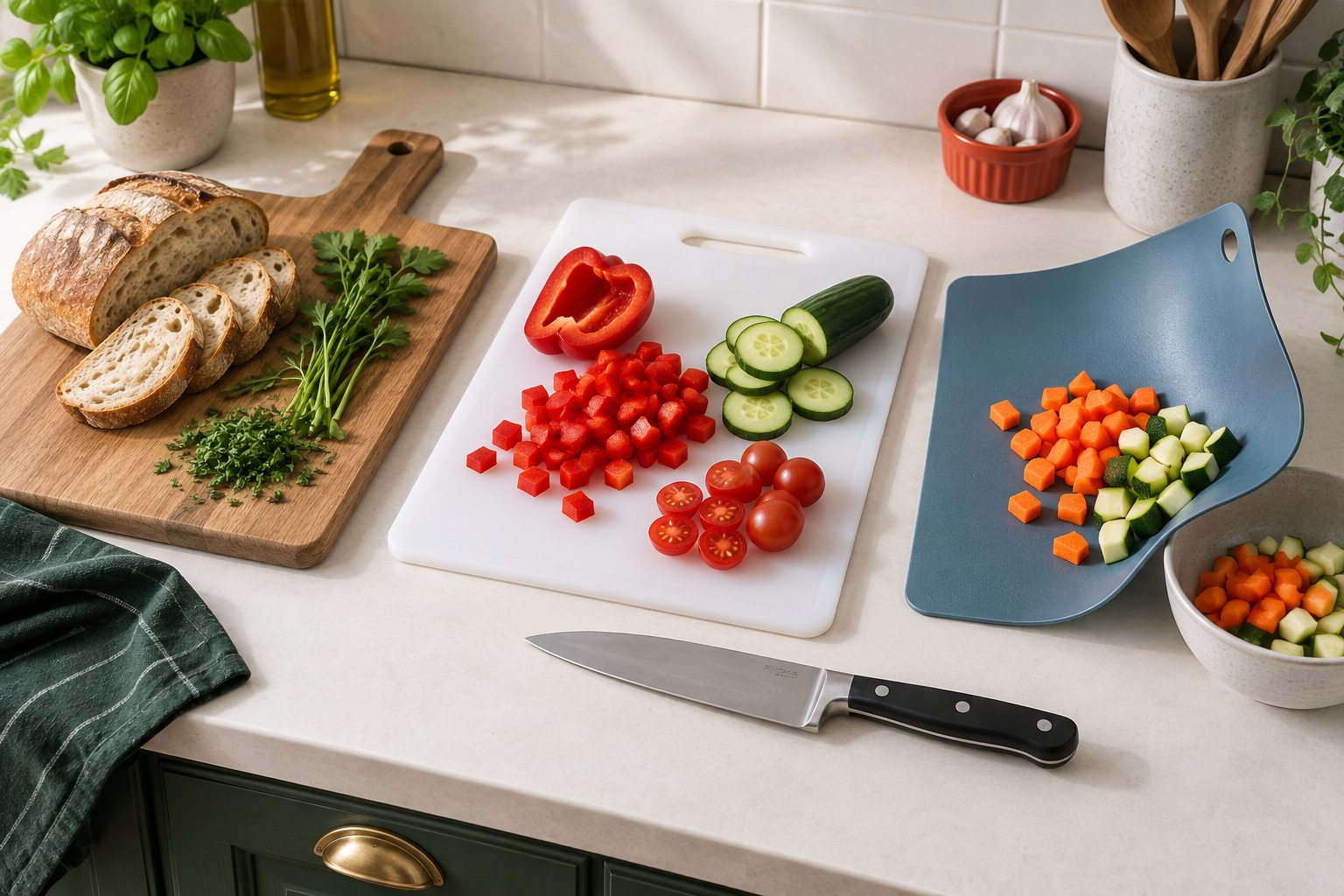
Make one usable preparation space
You do not need a large kitchen. You need a clear area where a board lies flat, a clean place for ready-to-eat food, and somewhere heatproof to put a hot pan. Move post, bags, phones and packaging out of the preparation area. Keep cleaning products away from ingredients.
Set out soap, a clean hand towel, washing-up liquid, a clean washing-up brush or sponge, and a separate clean cloth for surfaces. Choose a cleaning product labelled as suitable for the surface and food-preparation area. Read its instructions before using it; different products have different waiting and rinsing requirements.
Start with hands and surfaces
- Remove scraps and crumbs into the bin. Wash a greasy worktop with detergent as directed, including the places a board or bowl will touch. Rinse or wipe away residue as the product label requires.
- Where disinfection is needed, especially after raw-meat contamination, use a suitable product on the already clean surface. Leave it for the full contact time on its label, then rinse if required. Do not mix cleaning chemicals.
- Wet your hands with comfortably warm water, apply soap and rub for about 20 seconds, covering palms, backs, between fingers, fingertips and thumbs. Rinse and dry with a clean towel. Wash before preparing food and again after raw food, the bin, the toilet or anything that contaminates your hands.
- Tie back long hair and secure loose sleeves. Put the clean board on a flat worktop, with a non-slip mat or a clean damp cloth underneath if it moves. Test it with gentle pressure before putting a knife on it.
- Place ingredients and bowls where you can reach them without passing over a hot ring or an exposed blade. Put dry oven gloves nearby, away from the hob. A damp glove can conduct heat quickly.
Keep raw and ready-to-eat jobs separate
Raw meat, poultry and fish can transfer harmful bacteria to a salad, cooked food or the handle you touch next. Keep them covered on the lowest fridge shelf and prepare them away from ready-to-eat food. Do not wash raw meat, poultry or fish under the tap.
Use separate clean boards and utensils for the two jobs if available. With one board, prepare vegetables and ready-to-eat ingredients first, put them safely aside, and handle raw meat last. Wash the board and tools thoroughly between jobs. A quick wipe is not a clean change of task.
Cleaning removes food residue; disinfection is a separate step when needed. A board that is deeply scored, cracked or impossible to clean needs replacing. If a cloth or board touches raw juices, do not put it under ready-to-eat ingredients without the appropriate cleaning first.
Clean as you go without leaving cooking unattended
- Put waste in the bin promptly. Clear raw-food spills straight away and clean the affected area. Wash your hands before returning to a clean handle or utensil.
- Keep a separate plate for cooked meat. Do not put cooked food back onto the plate that held it raw. Use clean serving utensils.
- Wash used tools when cooking is at a safe pause. If cleaning needs you to leave the hob or grill, turn the heat off first. Never put a knife into a sink where it disappears under water.
- To wash a knife, keep it visible and separate, clean it carefully with the cutting edge directed away from you, rinse, dry carefully and store securely. Follow its care instructions; do not run fingers along the edge.
- Wash dishes in detergent and water suitable for comfortable handling, rinse and let them dry on a clean rack, or use a dishwasher for items marked dishwasher-safe. Follow specialist care instructions for electrical items and cookware.
- Change dirty cloths rather than spreading residue to the next surface. Wash and dry reusable cloths and towels before reuse.
Finish with a reset
Check the hob, grill and oven controls are off. Let cookware cool in a safe place before washing; do not put a very hot pan into cold water. Store food that needs chilling promptly, wash the remaining tools, clean the work surface and leave the board dry. Next time, the first job should be preparing food, not finding yesterday's dirty knife.
A first practice
- Knife confidence: the safe claw gripFor the next practice, learn the grip before cutting your prepared cucumber.
Use one whole cucumber, a clean bowl and a chopping board for a no-heat, no-knife setup practice. Clear and clean the worktop, wash your hands and make the board stable as described above. Rinse the cucumber under running drinking water, rubbing its skin, then dry it with clean kitchen paper and place it in the bowl. No soap or surface cleaner goes on the food.
Check that the bowl and board stayed separate from cleaning products, waste and any raw-meat juices. Put the cucumber away according to its storage instructions, wash the bowl and board, and leave them to dry. You have finished the setup exercise without needing to cut anything. The knife lesson is an optional next task, not a requirement to complete this one.