Heat And Method
Simmer versus boil
A complete beginner guide to small bubbles, rolling bubbles, and why gentle cooking often gives you more control.
Before you begin
- How to use hob heat without guessingFind the ring control and adjust the heat as the food changes.
Watch how the liquid moves
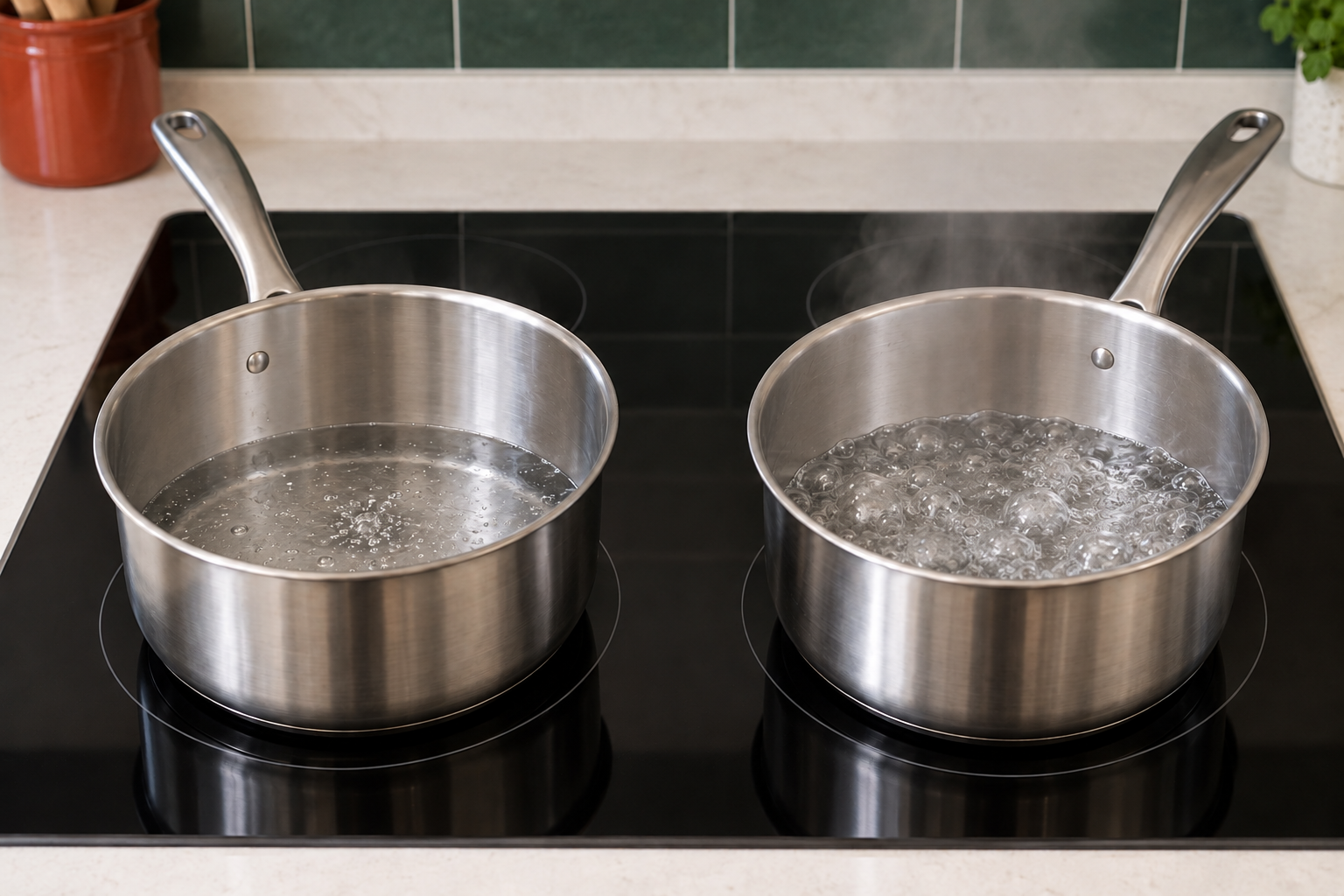
A simmer has gentle movement and occasional small bubbles reaching the surface. A rolling boil produces continuous large bubbles and vigorous movement. The terms describe what the pan is doing, so you can recognise them even when a recipe gives no hob number.
A boil is useful for pasta and bringing water up to temperature. A simmer suits many sauces, stews and delicate foods. Keeping the hob on maximum after a boil begins can waste liquid, splash food and break up tender ingredients.
Prepare a water practice
- Use a saucepan holding at least 1 litre with about 500 ml measured cold water, leaving plenty of room below the rim. Have a dry oven glove for a hot lid or handle and a heatproof trivet for the lid or pan.
- Keep the handle inward, choose a matching ring and have a lid nearby if you want to compare covered heating.
- Keep your face clear of steam. A lid can have hot condensation underneath.
- Use this water-only practice before trying a thick sauce, where bubbles can burst and spit.
Move between the stages
- Warm the water on medium-high heat. Tiny bubbles on the base may appear before the whole pan is boiling.
- Watch until large bubbles continuously break the surface. That is the rolling boil.
- Lower the heat. On a responsive hob, movement slows quickly; a heavy pan or electric ring may need a longer pause.
- Adjust until small bubbles rise gently at intervals. If all movement stops and you need a simmer, raise the setting slightly.
- If trying the optional lid comparison, use dry oven gloves as needed to place the fitting lid on. Watch briefly and lower the setting if bubbling becomes too strong. To remove it, lift the far edge first so steam escapes away from your face, keep hands clear of the gap, then tilt condensed water back into the pan and put the lid on a heatproof surface.
- Switch off and let the pan and water cool fully in a safe place before carrying it level to the clear sink and pouring away slowly, away from yourself. Remember that the ring can remain hot even after bubbling stops.
Use the distinction in a sauce
- Make a simple tomato sauce from passataPractise a simmer in a sauce with measured ingredients and a stopping point.
Bring a tomato sauce up to a clear bubbling stage, then reduce to a gentle simmer. Stir along the base so thick food does not stick. An uncovered pan loses water and thickens the sauce; a lid retains more moisture. A lid partly on may control splashes, but does not remove the need to stir and check.
When gentle bubbling is not enough information
A thick stew can bubble at the edges while a large piece inside remains undercooked. Check the ingredient itself using the appropriate tenderness and safety methods. Poaching an egg needs calmer water than a pan of pasta. A recipe's purpose tells you which movement to maintain.
Common adjustments
If water is disappearing too quickly, lower the heat or use a lid where the method permits. If a sauce catches while the top looks quiet, stir and reduce the heat; heat can concentrate at the base. If a pan is boiling over, turn down immediately and move it only if safe. Do not fill pans so high that there is no room for expansion or stirring.